A FRIENDLIER WAY INTO THE UNIVERSE
The cosmos is
yours to explore.
Start with a question that excites you. Each short, illustrated chapter explains one idea, shows why it matters, and naturally leads to the next.
JUST ADDED
Two new chapters,
ready to explore.
Open either chapter directly. They also remain part of their complete Solar System and Cosmic Evolution field guides.
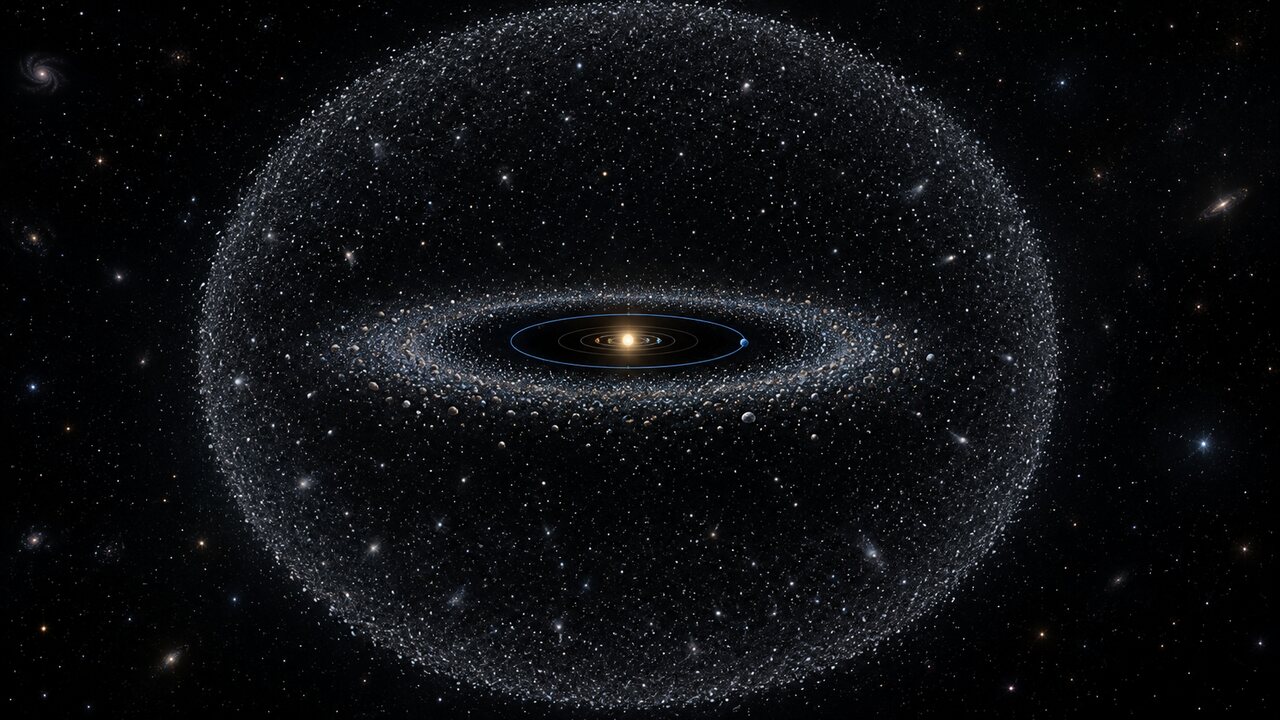
The Kuiper Belt and Oort Cloud
Are these distant icy reservoirs shields for the inner planets—or sources of future comets?
READ THE NEW CHAPTER →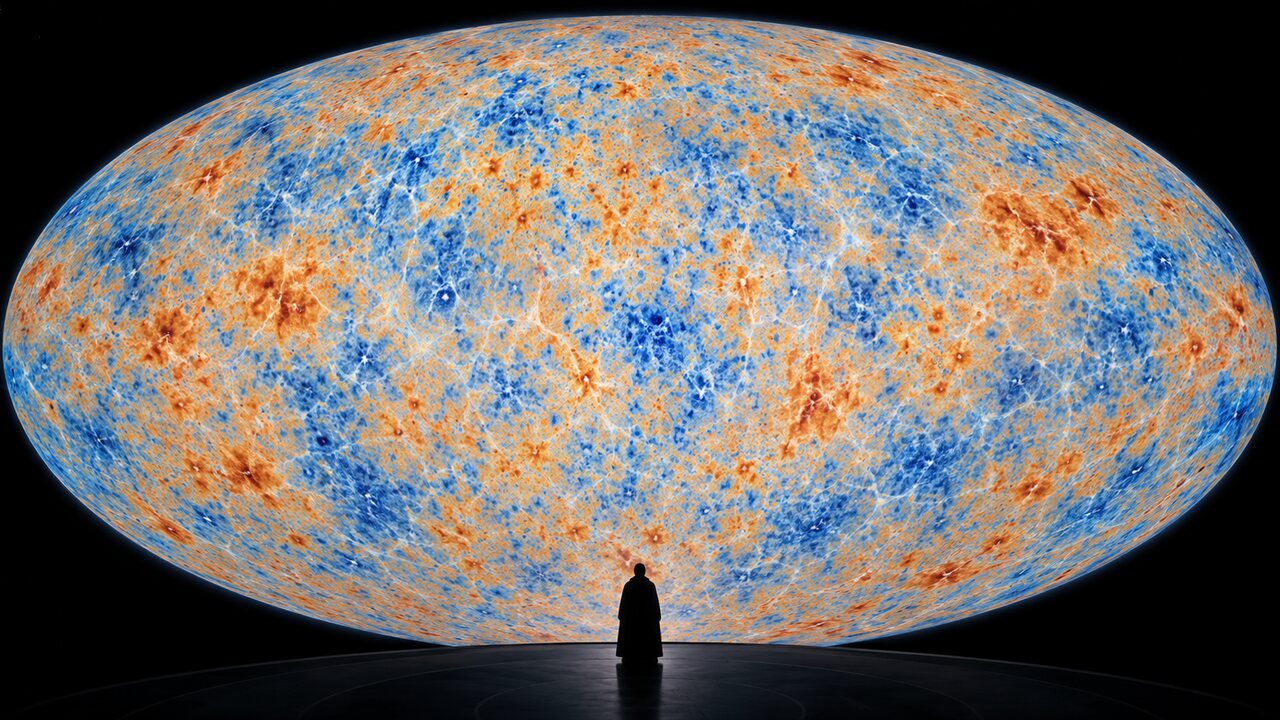
The CMB: the universe’s earliest portrait
Discover what the cosmic microwave background actually shows, how to read its map, and what its tiny variations reveal.
READ THE NEW CHAPTER →CHOOSE A CHAPTER COLLECTION
The universe,
one big picture at a time.
Each field guide begins with the big picture and explains unfamiliar terms before offering deeper detail. Start with whichever question makes you curious.
Quantum Realm
Discover why the tiny world behaves so differently from everyday life, and how probability, particles, and fields help explain it.
Black Holes
Learn how black holes form, why nothing escapes their boundary, and how astronomers detect objects that cannot be seen directly.
Solar System
Travel from the birth of the Sun and planets to ocean moons, comets, distant icy regions, space weather, and the system’s future.
How Earth Was Made
Follow Earth from its violent formation and Moon-making collision to oceans, moving continents, oxygen, climate, and life.
The Big Five
Explore the five greatest losses of life in Earth’s history, what caused them, which organisms survived, and how life recovered.
Cosmic Evolution
Trace the universe from its hot beginning through the first atoms and galaxies to dark matter, dark energy, and its possible future.
The Life Cycle of a Star
Follow a star from a cold cloud through its long fusion-powered life and its final transformation into a compact remnant.
Galaxies
See how enormous communities of stars form, change shape, make new stars, collide, and grow around dark matter and black holes.
The Future Universe
Look far beyond the present era to the fading of stars, the isolation of galaxies, and the extremely slow future of black holes and matter.
Dark Matter & Dark Energy
Understand the evidence for unseen dark matter and mysterious dark energy—and why together they dominate the universe.
Relativity & Spacetime
Build an intuitive picture of how motion and gravity change time, bend light, curve space, and create gravitational waves.
Exoplanets
Learn how we find planets around other stars, what those worlds are like, and how cautiously we search their atmospheres for signs of habitability.
The Invisible Universe
See how telescopes and detectors reveal the cosmos through forms of light and other signals that human eyes cannot see.
String Theory & Higher Dimensions
Explore the idea that particles may be tiny vibrating strings, why extra dimensions appear, and why the theory remains unconfirmed.
Subatomic Particles
Meet the quarks, leptons, and force-carrying particles that build matter and control nearly everything atoms can do.
Astrobiology
Explore what life needs, where it might survive beyond Earth, and how scientists separate a real sign of life from a false alarm.
Observational Astronomy
Learn how astronomers turn faint light, spectra, motion, particles, and gravitational waves into reliable knowledge.
Astrophotography
Move step by step from choosing a target and tracking it accurately to calibration, stacking, and natural-looking processing.
Space Exploration
Follow robotic and human exploration from Earth orbit to the Moon, Mars, the outer planets, and possible future journeys.
YOUR LEARNING ORBIT
Small chapters.
One path at a time.
There is no race and no required order. Mark a guide complete whenever you feel you understand its main story.
A NEW COSMIC CHECK WITH EVERY VISIT
What boundary prevents light from escaping a black hole?
Open the 1,008-question quiz bank →WHEN A WORD GETS IN THE WAY
Clear explanations,
with a picture to help.
Luminosity
Luminosity is the total amount of energy an object gives off each second—its true power output. Unlike apparent brightness, it does not depend on how far away the object is from us.
Apparent Magnitude
Apparent magnitude tells us how bright an object looks from Earth. A nearby dim star can appear brighter than a distant powerful star, so this number describes what we see rather than the object’s true output.
Absolute Magnitude
Absolute magnitude compares the true brightness of objects by imagining that they are all placed at the same distance: 10 parsecs away. This lets astronomers compare stars fairly.
Spectral Line
When light is spread into a spectrum, certain colors appear as bright or dark lines. These lines act like fingerprints, revealing which atoms are present and giving clues about temperature, motion, and magnetic fields.
Doppler Effect
The Doppler effect is the change we observe when a source moves toward us or away from us. In light, motion toward us shifts colors slightly bluer, while motion away shifts them redder.
Parallax
Parallax is the small apparent shift of a nearby object when viewed from two different positions. Astronomers use Earth’s movement around the Sun as a large viewing baseline to measure distances to nearby stars.
Astronomical Unit
An astronomical unit, or AU, is the average distance between Earth and the Sun—about 150 million kilometers. It is a convenient ruler for distances within planetary systems.
Parsec
A parsec is a unit of distance equal to about 3.26 light-years. It comes from the geometry astronomers use when measuring stellar distance by parallax.
SEE THE WHOLE COSMOS AT ONCE
The Astronomy
Mind Map
Use the map when you want to step back and see how the subjects connect. Each branch also links directly to its field guide.
Open the interactive mind map →