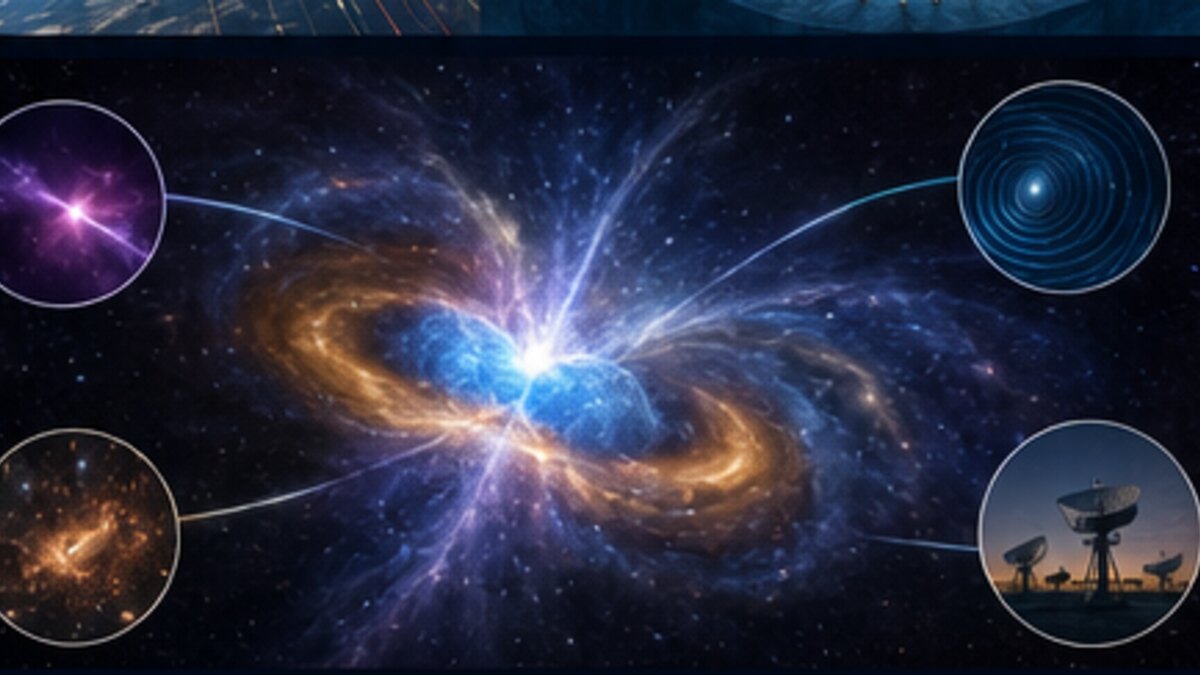
Astronomers cannot usually touch the things they study. Instead, they collect faint signals—light, particles, and ripples in space—and use them as clues. By measuring brightness, color, position, motion, and timing, they can work out what distant objects are made of and how they behave.
Start with the short explanation in each chapter. Open “Go a little deeper” only when you want more detail. The final line shows how the next chapter follows from the one you just read.
01CHAPTER
Astronomers learn without touching their subjects.
The sky is a message
IN PLAIN LANGUAGE
Here is the big picture: Astronomers learn without touching their subjects. The main point to remember is this: Cosmic signals are usually faint.
See the fuller scientific explanation +
Nearly everything we know about the universe arrived as light, particles, or ripples in the connected fabric of space and time. The observer's job is to collect those faint messages without confusing them with the instrument or the atmosphere.
That is why astronomy begins with measurement. A beautiful image is useful, but brightness, position, wavelength, and time carry the physics.
Observatories turn distant signals into measurements that can be checked and compared.
02CHAPTER
A larger aperture catches more of the story.
Telescopes collect light
IN PLAIN LANGUAGE
Here is the big picture: A larger aperture catches more of the story. The main point to remember is this: Aperture controls light gathering.
See the fuller scientific explanation +
A telescope's first job is to gather light. A larger mirror or dish records fainter objects and can usually separate finer detail.
Magnification alone does not create information. Resolution also depends on wavelength, optical quality, atmospheric blur, and the way the data are sampled.
Different telescope designs solve the same basic problem: collect and focus a weak signal.
03CHAPTER
The map of the sky needs a third dimension.
Position and distance
IN PLAIN LANGUAGE
Here is the big picture: The map of the sky needs a third dimension. The main point to remember is this: Parallax is direct geometry.
See the fuller scientific explanation +
Astrometry measures where objects are and how they move. Nearby stars shift slightly against distant ones as Earth orbits the Sun; that parallax gives a geometric distance.
Beyond parallax, astronomers build a distance ladder using objects whose true brightness can be inferred. Each rung is checked against the ones below it.
Tiny changes in position reveal both stellar distance and motion.
04CHAPTER
A light curve turns time into evidence.
Brightness and change
IN PLAIN LANGUAGE
Here is the big picture: A light curve turns time into evidence. The main point to remember is this: Brightness can be measured precisely.
See the fuller scientific explanation +
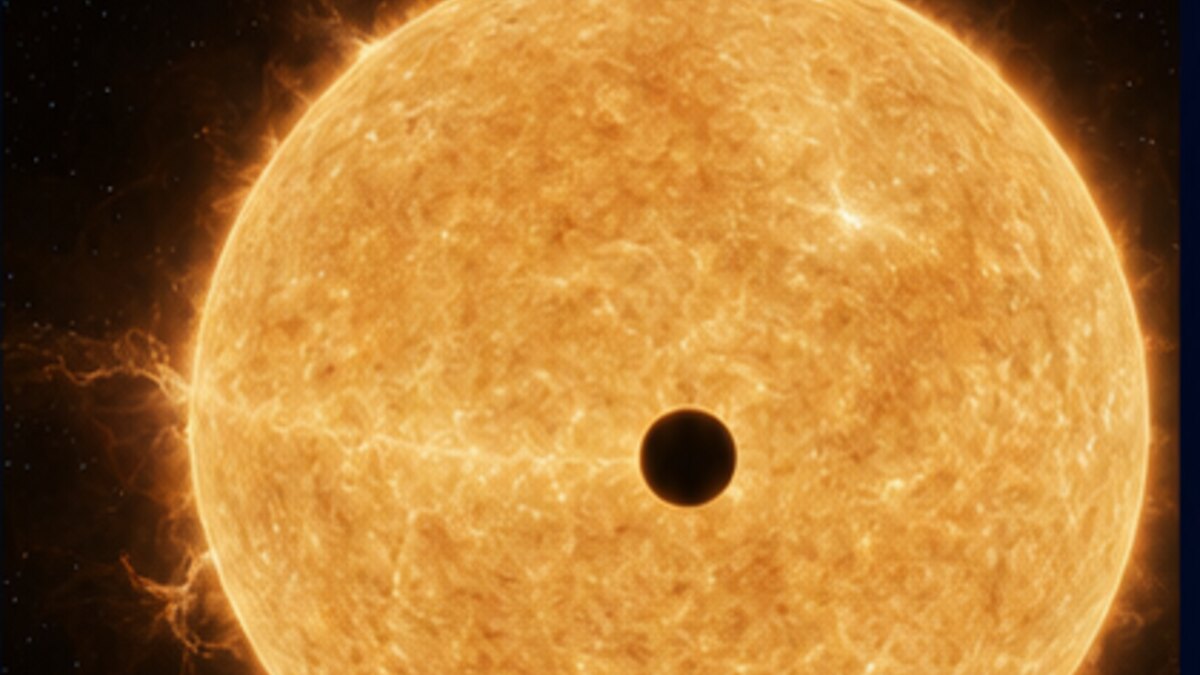
Photometry measures how bright an object appears. Repeated measurements create a light curve that can reveal eclipses, pulsations, rotating spots, explosions, or a transiting planet.
The shape and timing of the change often matter more than one brightness value. Regular patterns suggest clocks; sudden changes point to energetic events.
THE POINTS TO REMEMBER
✦Brightness can be measured precisely
✦Timing reveals hidden structure
✦Variability is information, not noise
NEXT Now that this piece is in place, we can turn to Spectroscopy.
A small dip in starlight can reveal a planet that cannot be seen directly.
05CHAPTER
Spread light out and matter identifies itself.
Spectroscopy
IN PLAIN LANGUAGE
Here is the big picture: Spread light out and matter identifies itself. The main point to remember is this: Spectral lines identify matter.
See the fuller scientific explanation +
A spectrum separates light by wavelength. Atoms and molecules absorb or emit at characteristic wavelengths, leaving lines that reveal composition, temperature, density, and ionization.
Line shifts show motion through the Doppler effect. Line shapes can also hint at rotation, pressure, magnetic fields, and turbulent gas.
A spectrum turns a point of light into a chemical and physical profile.
06CHAPTER
The universe changes when the wavelength changes.
Beyond visible light
IN PLAIN LANGUAGE
Here is the big picture: The universe changes when the wavelength changes. The main point to remember is this: Each band favors different physics.
See the fuller scientific explanation +
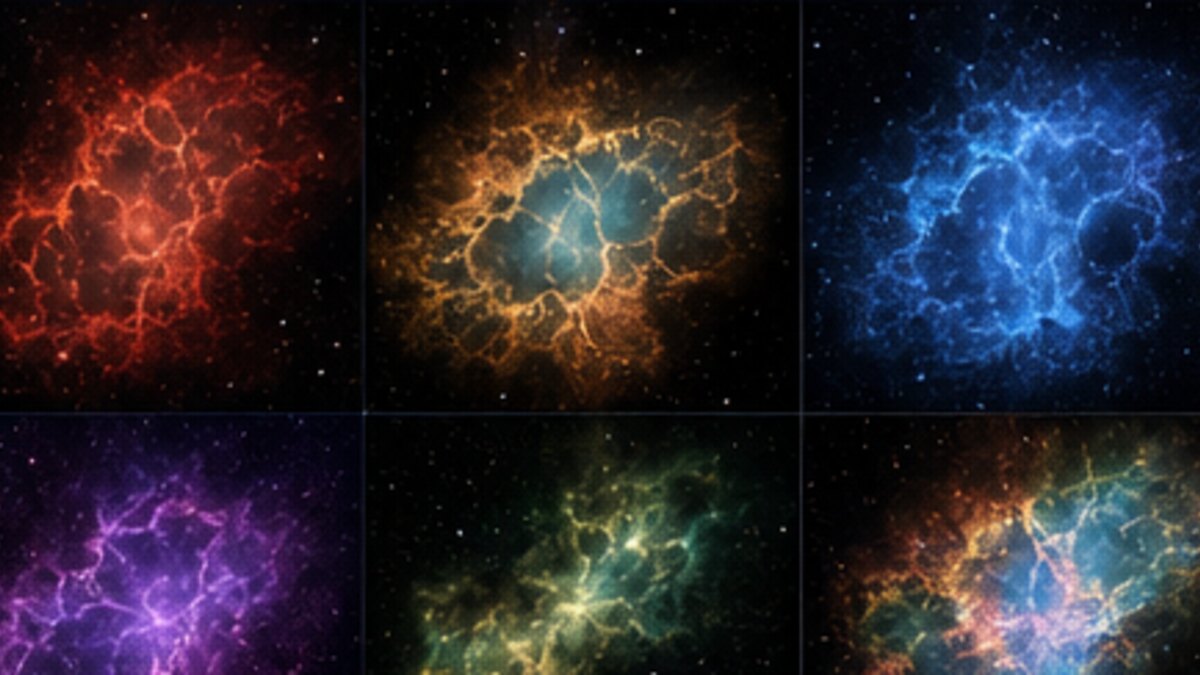
Radio waves trace cold gas and magnetic fields. Infrared light reaches through dust. Ultraviolet, X-rays, and gamma rays reveal progressively hotter and more energetic places.
No band is the complete view. The most reliable story often appears only after several wavelengths are placed side by side.
THE POINTS TO REMEMBER
✦Each band favors different physics
✦Earth's atmosphere blocks many wavelengths
✦Multiwavelength views reduce blind spots
NEXT Now that this piece is in place, we can turn to Interferometry.
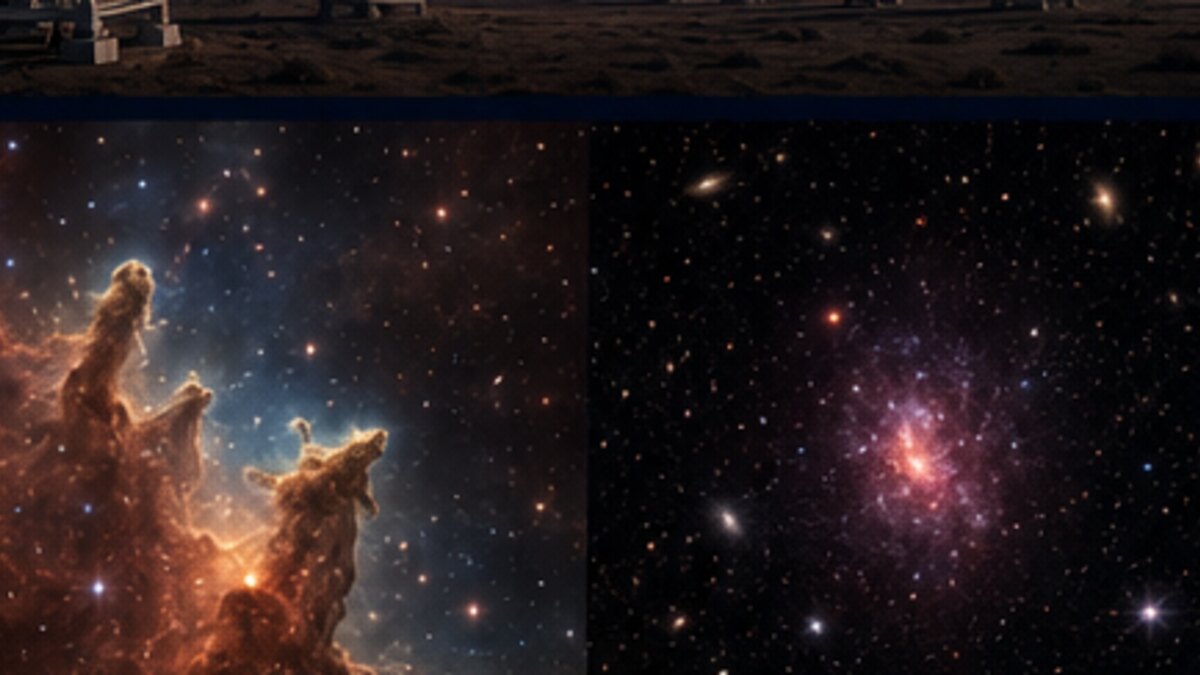
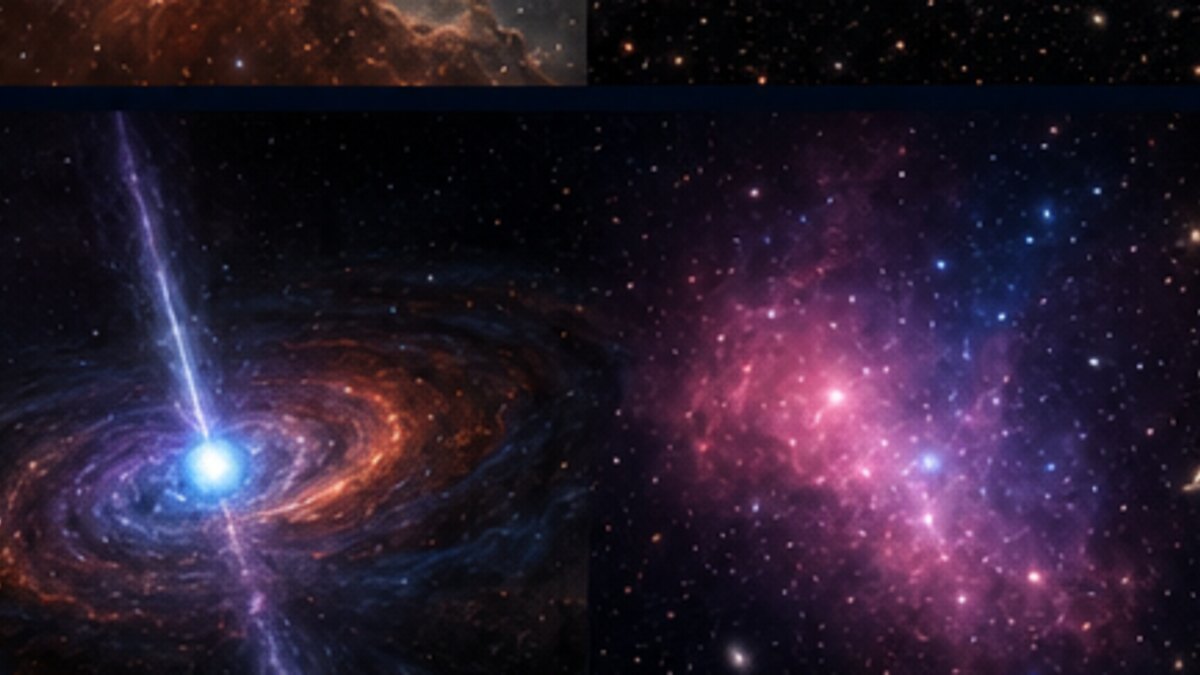
One object can look entirely different in radio, visible, infrared, and X-ray light.
07CHAPTER
Many telescopes can act like one much larger instrument.
Interferometry
IN PLAIN LANGUAGE
Here is the big picture: Many telescopes can act like one much larger instrument. The main point to remember is this: Separation creates a long baseline.
See the fuller scientific explanation +
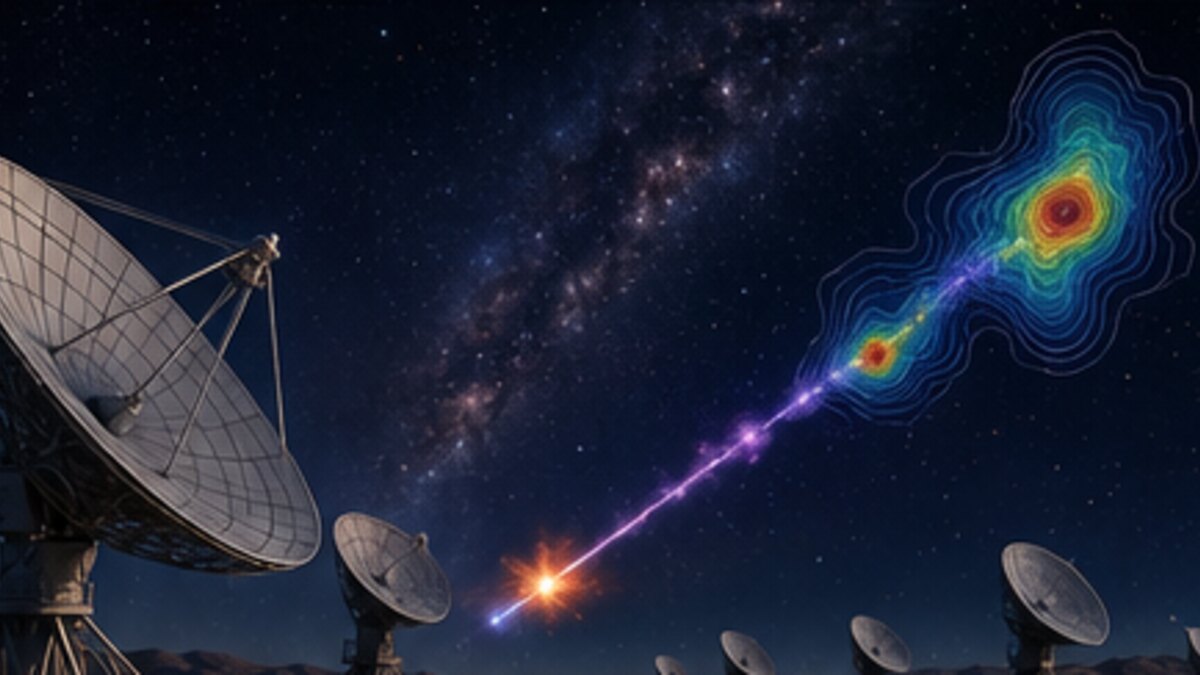
Interferometers combine waves recorded at separated locations. The spacing between instruments creates very fine resolution that a single practical telescope could not match.
The technique requires precise timing and careful reconstruction. It powers radio arrays, optical facilities, and the Event Horizon Telescope's planet-sized view.
Linked observatories can synthesize an aperture as wide as the distance between them.
08CHAPTER
Not every messenger is light.
Particles and spacetime
IN PLAIN LANGUAGE
Here is the big picture: Not every messenger is light. The main point to remember is this: Different messengers escape different regions.
See the fuller scientific explanation +
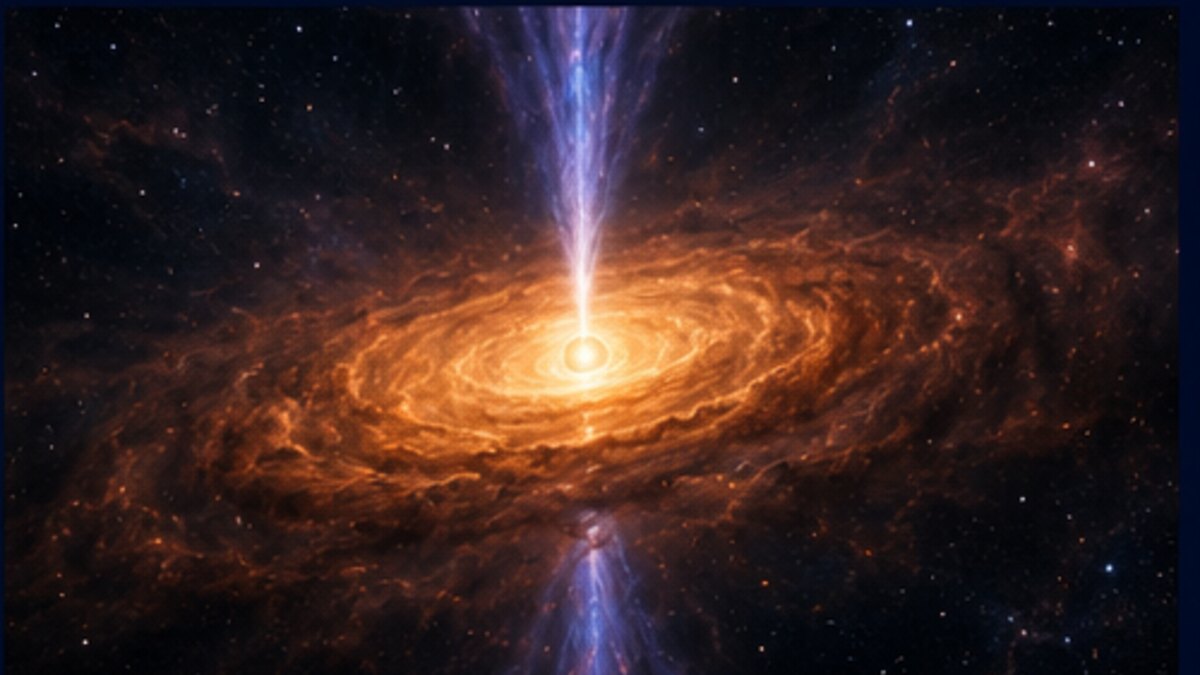
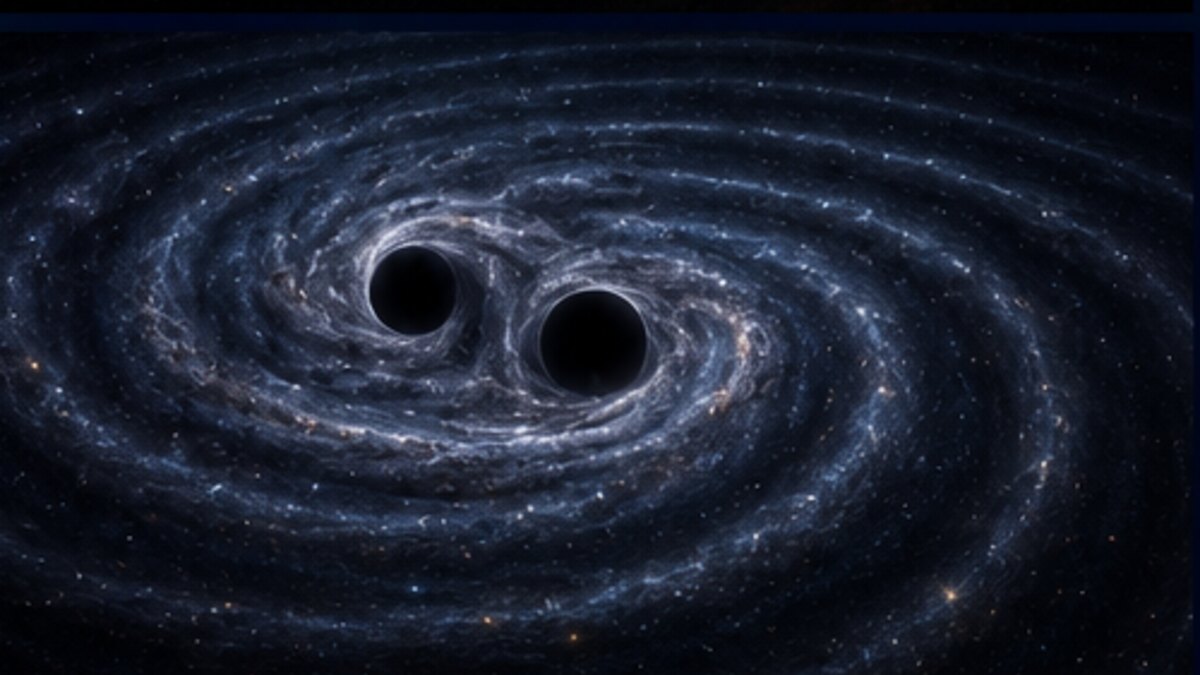
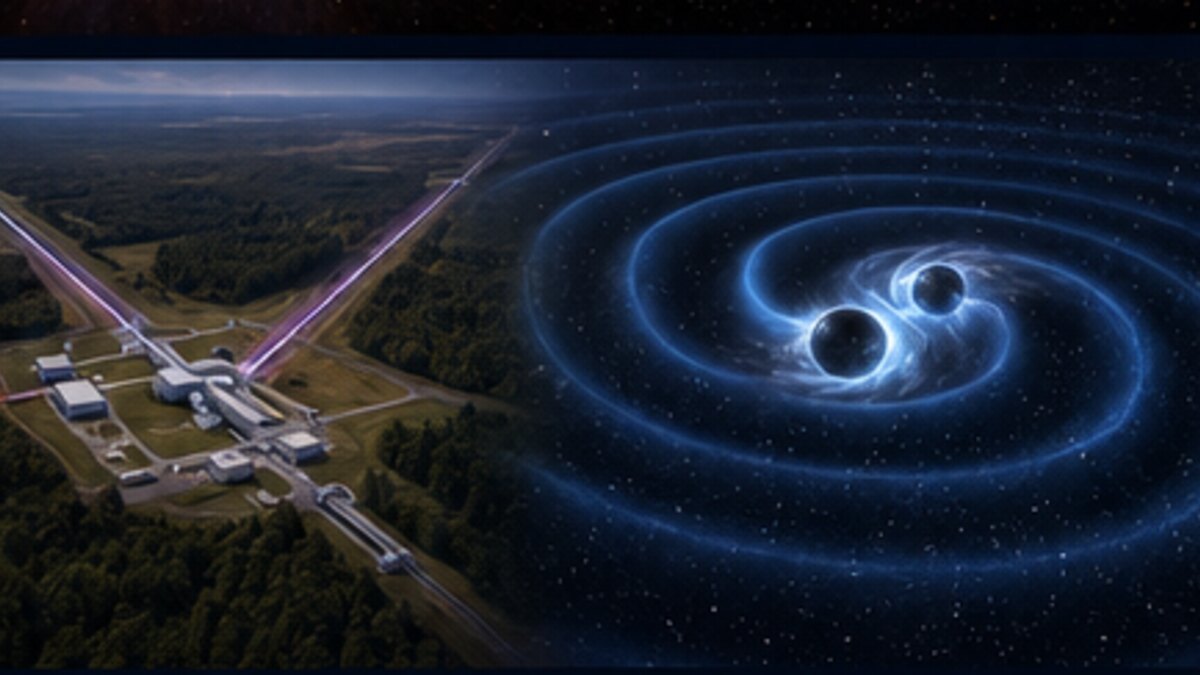
Neutrinos escape dense stellar interiors, cosmic rays sample extreme accelerators, and gravitational waves carry the motion of compact masses. Each messenger reaches us through different obstacles.
They also require very different detectors—from deep ice to kilometer-scale laser interferometers. Together they reveal events that light alone cannot fully explain.
Modern observatories listen for particles and the connected fabric of space and time as well as photons.
09CHAPTER
Calibration is where trust begins.
From raw data to a result
IN PLAIN LANGUAGE
Here is the big picture: Calibration is where trust begins. The main point to remember is this: Raw data contain instrument effects.
See the fuller scientific explanation +
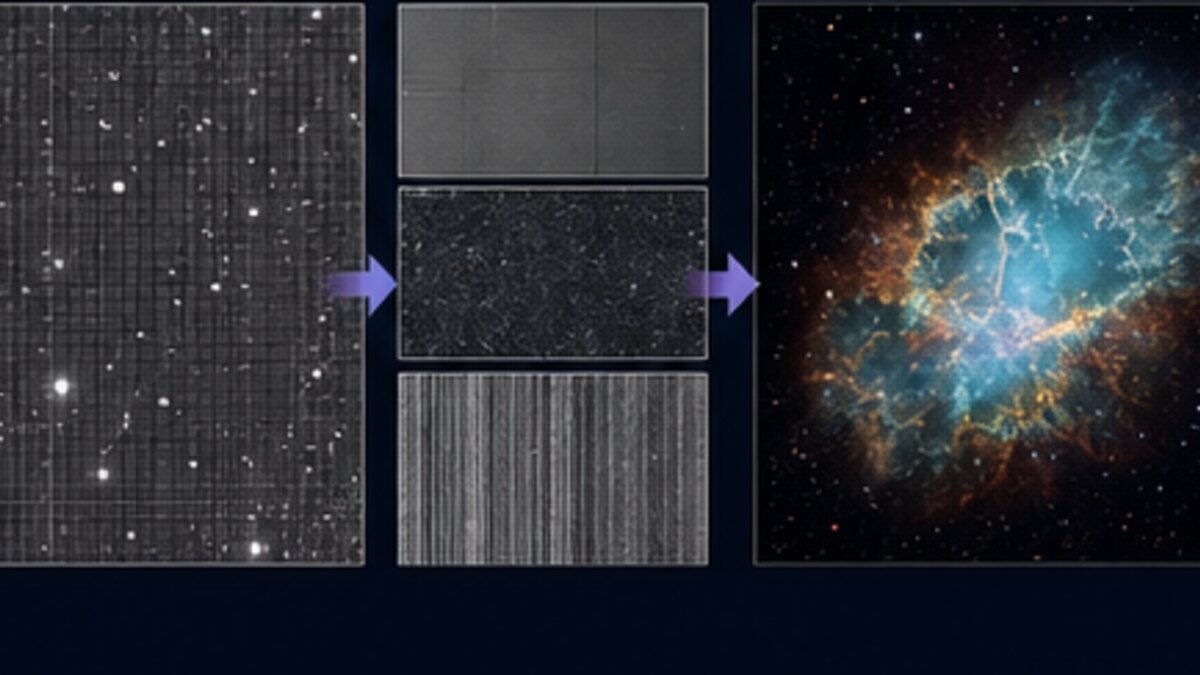
A detector records counts, voltages, times, and background—not a finished truth. Astronomers correct known instrument effects, estimate uncertainty, and compare the result with models.
Processing is not a problem when each step is explained and repeatable. The danger begins when an attractive result hides how it was made.
THE POINTS TO REMEMBER
✦Raw data contain instrument effects
✦Uncertainty belongs with every measurement
✦Repeatable methods make results trustworthy
NEXT Now that this piece is in place, we can turn to A networked sky.
Scientific images are careful translations of measured data.
10CHAPTER
The best observatory is often many observatories.
A networked sky
IN PLAIN LANGUAGE
Here is the big picture: The best observatory is often many observatories. The main point to remember is this: Fast alerts make follow-up possible.
See the fuller scientific explanation +
Transient events do not wait. Automated surveys issue alerts, and telescopes around the world quickly turn toward the same patch of sky.
Combining locations, wavelengths, and messengers creates a fuller timeline. Agreement strengthens the explanation; disagreement points to something we missed.
THE POINTS TO REMEMBER
✦Fast alerts make follow-up possible
✦Global coverage fills time gaps
✦Independent instruments test one another
A worldwide observing network can follow one cosmic event from seconds to years.
THE ESSENTIAL THREAD
Three ideas worth keeping.
01A telescope is a light collector before it is a magnifier.
02Spectra, timing, position, and brightness each reveal different clues.
03The strongest discoveries combine instruments and independent messengers.