Astrobiology asks how life begins, what conditions allow it to survive, and how we might recognize it on another world. The search combines astronomy, biology, chemistry, geology, and planetary science. So far Earth is the only world known to have life, which makes every claim of a possible sign especially important to test carefully.
Start with the short explanation in each chapter. Open “Go a little deeper” only when you want more detail. The final line shows how the next chapter follows from the one you just read.
01CHAPTER
Before we search, we need to know what we mean.
What counts as life?
IN PLAIN LANGUAGE
Here is the big picture: Before we search, we need to know what we mean. The main point to remember is this: Life is a process, not a single ingredient.
See the fuller scientific explanation +
Life is easy to recognize on Earth but surprisingly hard to define. Most working descriptions include chemistry, energy use, self-maintenance, reproduction, and evolution.
No single item is enough by itself. Fire uses energy and crystals grow, yet neither evolves as a living population. Astrobiologists therefore look for several clues that make sense together.
Earth is our only confirmed example of life, so it is both our guide and our biggest bias.
02CHAPTER
Start with chemistry, energy, and a workable home.
The ingredients of life
IN PLAIN LANGUAGE
Here is the big picture: Start with chemistry, energy, and a workable home. The main point to remember is this: Water is useful, not magical.
See the fuller scientific explanation +
Earth life uses liquid water, carbon-rich molecules, and a steady source of energy. Those ingredients are common in space, but they do not automatically assemble into cells.
A world also needs time and a reasonably stable setting. That setting might be a warm surface, a buried ocean, or a chemical boundary around a seafloor vent.
Habitability begins where useful chemistry and sustained energy can meet.
03CHAPTER
The hardest step may be the first one.
From chemistry to biology
IN PLAIN LANGUAGE
Here is the big picture: The hardest step may be the first one. The main point to remember is this: Simple molecules can self-organize.
See the fuller scientific explanation +
Origin-of-life research asks how ordinary chemistry became a system able to copy itself and evolve. Scientists study early-Earth environments, self-forming membranes, catalytic RNA, and networks of reactions.
There is no finished recipe yet. The important point is that life probably emerged through a sequence of workable steps, not one impossible leap.
Laboratory chemistry tests small pieces of the much larger origin-of-life puzzle.
04CHAPTER
A biosphere and its world grow up together.
Life changes its planet
IN PLAIN LANGUAGE
Here is the big picture: A biosphere and its world grow up together. The main point to remember is this: Microbes dominated most of Earth history.
See the fuller scientific explanation +
Early microbes altered Earth long before animals appeared. Photosynthesis eventually filled the atmosphere with oxygen, changing the climate, oceans, minerals, and possibilities for complex life.
That history teaches a useful lesson: life does not merely occupy a planet. Over enough time, it can reshape the planet we observe.
THE POINTS TO REMEMBER
✦Microbes dominated most of Earth history
✦Oxygen was a biological transformation
✦Planets and biospheres co-evolve
NEXT Now that this piece is in place, we can turn to Life at the edge.
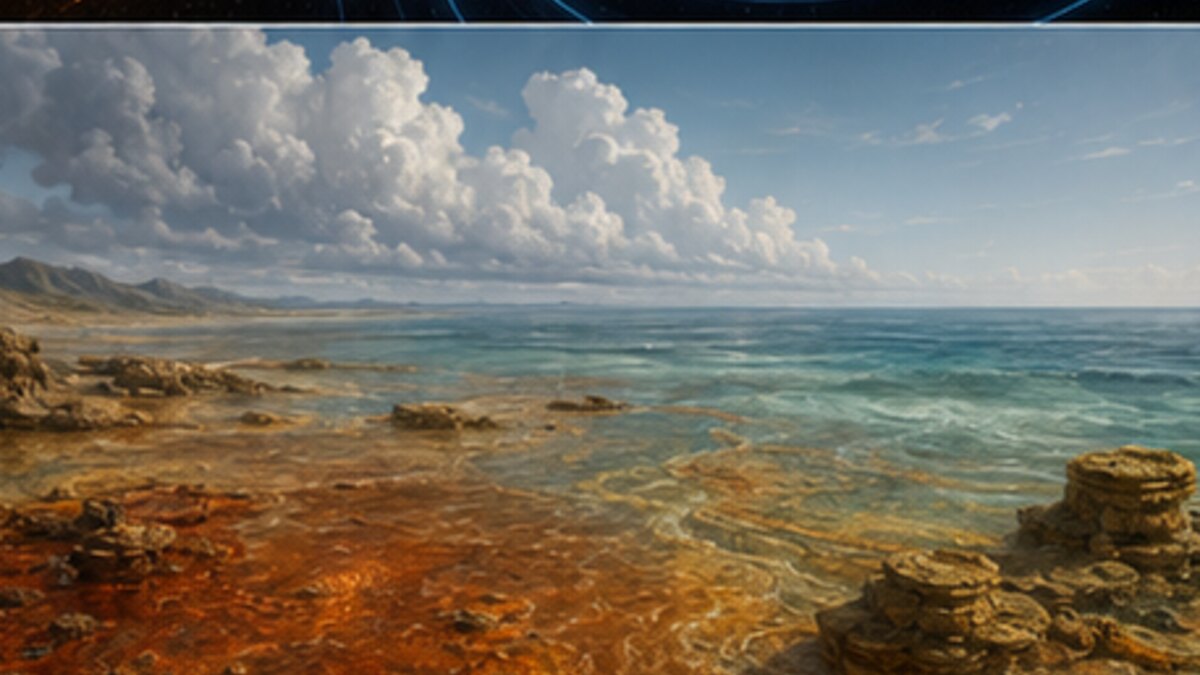
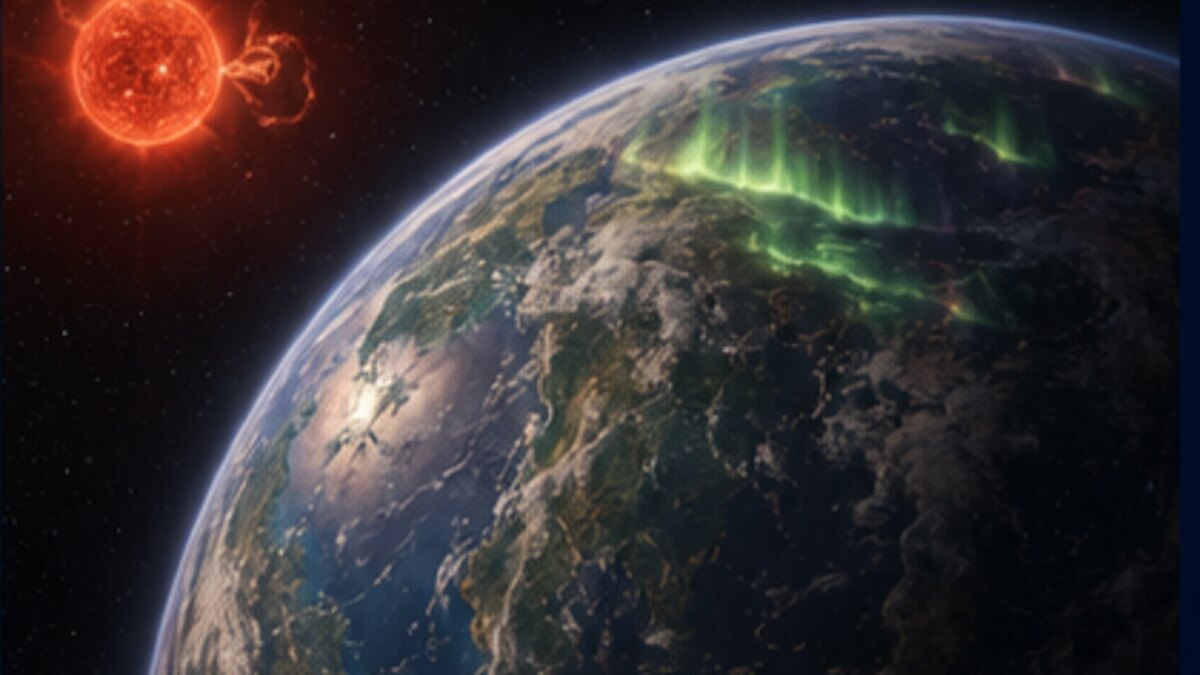
Earth's atmosphere carries a long record of interaction between rock, water, air, and life.
05CHAPTER
Extremes on Earth widen the search.
Life at the edge
IN PLAIN LANGUAGE
Here is the big picture: Extremes on Earth widen the search. The main point to remember is this: Life can tolerate remarkable extremes.
See the fuller scientific explanation +
Organisms live in acidic pools, deep ice, hot vents, dry deserts, and rocks far below the surface. These extremophiles show that familiar comfort is not the same as biological possibility.
They do not prove that life exists elsewhere. They simply give missions better ideas about where to look and what survival strategies are realistic.
THE POINTS TO REMEMBER
✦Life can tolerate remarkable extremes
✦Microbes often define the true limits
✦Earth analogs guide mission design
NEXT Now that this piece is in place, we can turn to Ocean worlds.
Extreme environments on Earth serve as practice grounds for exploring other worlds.
06CHAPTER
Habitable places may hide beneath ice.
Ocean worlds
IN PLAIN LANGUAGE
Here is the big picture: Habitable places may hide beneath ice. The main point to remember is this: Habitability can exist far from the Sun.
See the fuller scientific explanation +
Europa and Enceladus appear to hold salty oceans below frozen crusts. Tidal flexing supplies heat, while rock-water interactions may provide useful chemistry.
The ice makes access difficult, but it can also preserve material. Plumes, surface deposits, radar, and future sampling missions offer ways to investigate without immediately drilling through kilometers of ice.
Icy moons have moved the search for life beyond the traditional habitable zone.
07CHAPTER
The best places to search may belong to the past.
Mars: a once-wetter world
IN PLAIN LANGUAGE
Here is the big picture: The best places to search may belong to the past. The main point to remember is this: Ancient Mars had long-lived water.
See the fuller scientific explanation +
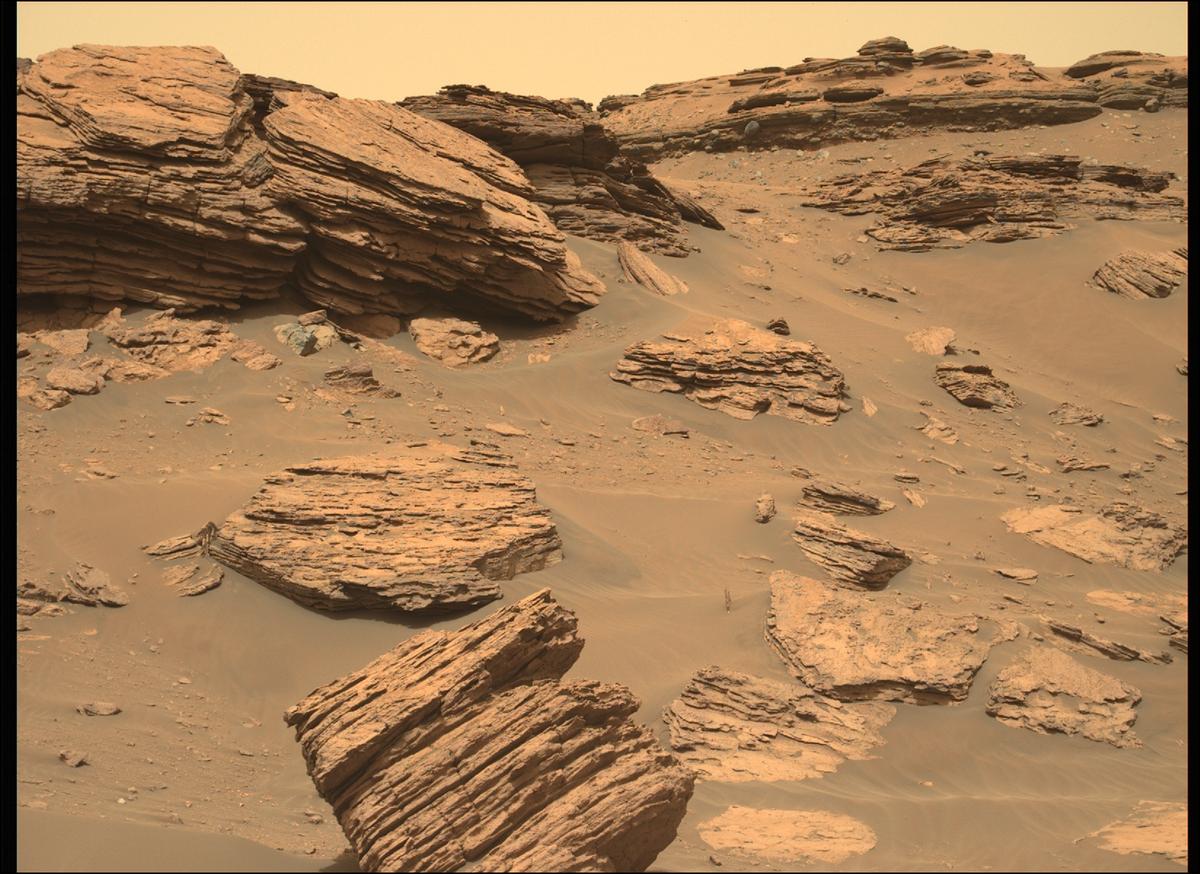
Ancient river valleys, lake beds, and water-altered minerals show that early Mars was warmer and wetter than it is today. Rovers now read those rocks as a record of former environments.
The goal is not to find a convenient Martian fossil on the surface. It is to identify preserved chemical patterns that are difficult to explain without biology.
Layered Martian rocks preserve chapters from a time when surface water was common.
08CHAPTER
A promising orbit is only the beginning.
Exoplanets and habitable zones
IN PLAIN LANGUAGE
Here is the big picture: A promising orbit is only the beginning. The main point to remember is this: Habitable does not mean inhabited.
See the fuller scientific explanation +
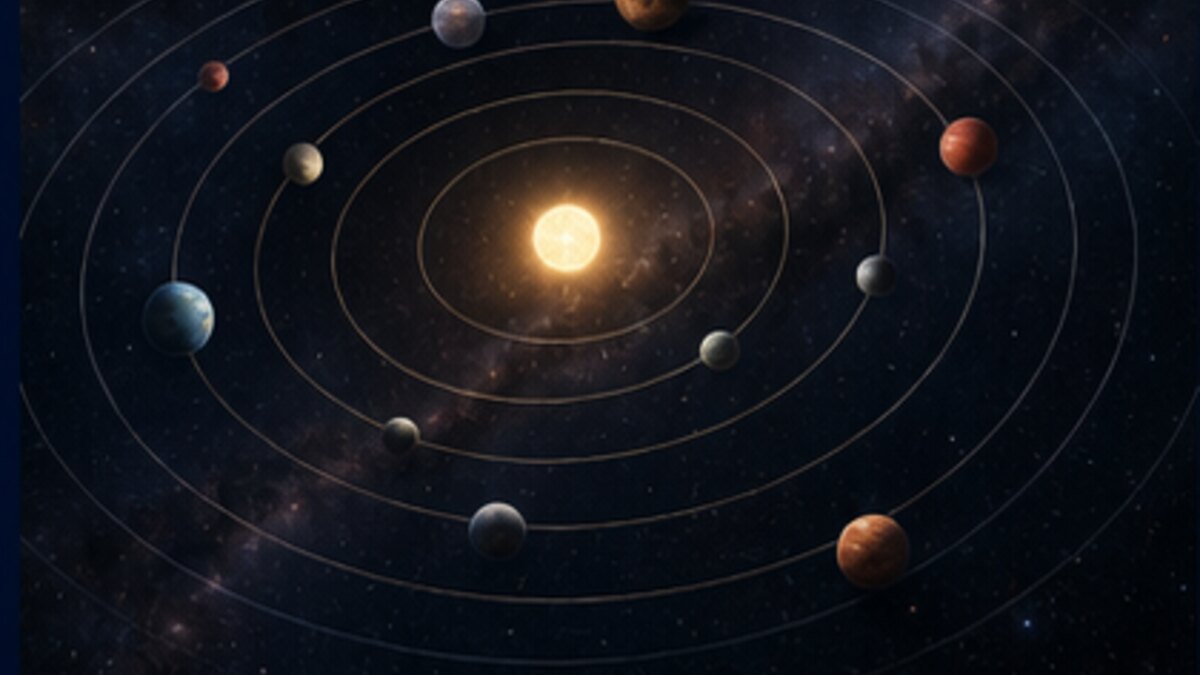
The habitable zone marks distances where liquid surface water could exist under suitable atmospheric conditions. It helps narrow the search, but it does not certify a living—or even comfortable—world.
Atmosphere, mass, clouds, geology, magnetic environment, and the behavior of the host star all matter. Habitability belongs to the whole planetary system.
A planet's distance from its star is one clue within a much larger climate story.
09CHAPTER
A possible sign of life must survive cross-examination.
Biosignatures and false alarms
IN PLAIN LANGUAGE
Here is the big picture: A possible sign of life must survive cross-examination. The main point to remember is this: One gas is rarely decisive.
See the fuller scientific explanation +
Oxygen, methane, unusual pigments, or chemical imbalance could hint at life. Yet volcanoes, sunlight, impacts, and atmospheric escape can imitate parts of the same pattern.
The strongest case would combine several signals with a well-understood environment. Scientists must actively search for nonliving explanations before calling anything a biosignature.
THE POINTS TO REMEMBER
✦One gas is rarely decisive
✦Geological context matters
✦Independent clues build confidence
NEXT Now that this piece is in place, we can turn to Are we alone?.
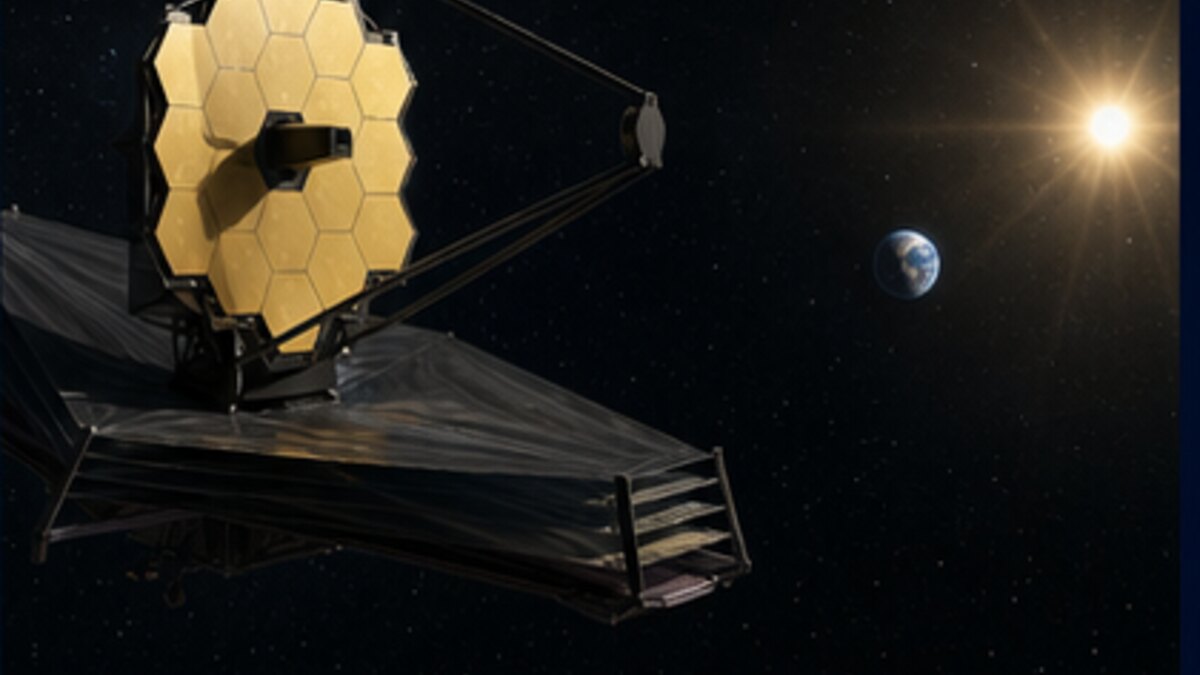
Atmospheric spectra are evidence to interpret, not direct photographs of alien biology.
10CHAPTER
The final answer will require patience.
Are we alone?
IN PLAIN LANGUAGE
Here is the big picture: The final answer will require patience. The main point to remember is this: Biology and technology leave different traces.
See the fuller scientific explanation +
SETI searches for technology, while planetary missions and telescopes search for biology. These approaches ask different questions and cover only a tiny fraction of the possible worlds, signals, and times.
A nondetection is not proof of an empty universe. It tells us where life or technology was not obvious under the conditions we could test.
THE POINTS TO REMEMBER
✦Biology and technology leave different traces
✦The search space is enormous
✦Careful limits are valuable results
The search for company in the cosmos is becoming a measurable scientific program.
THE ESSENTIAL THREAD
Three ideas worth keeping.
01Life needs usable energy, chemistry, and a stable enough environment—not necessarily an Earth twin.
02A biosignature only becomes convincing after nonliving explanations are tested.
03The search connects biology, geology, chemistry, astronomy, and planetary science.