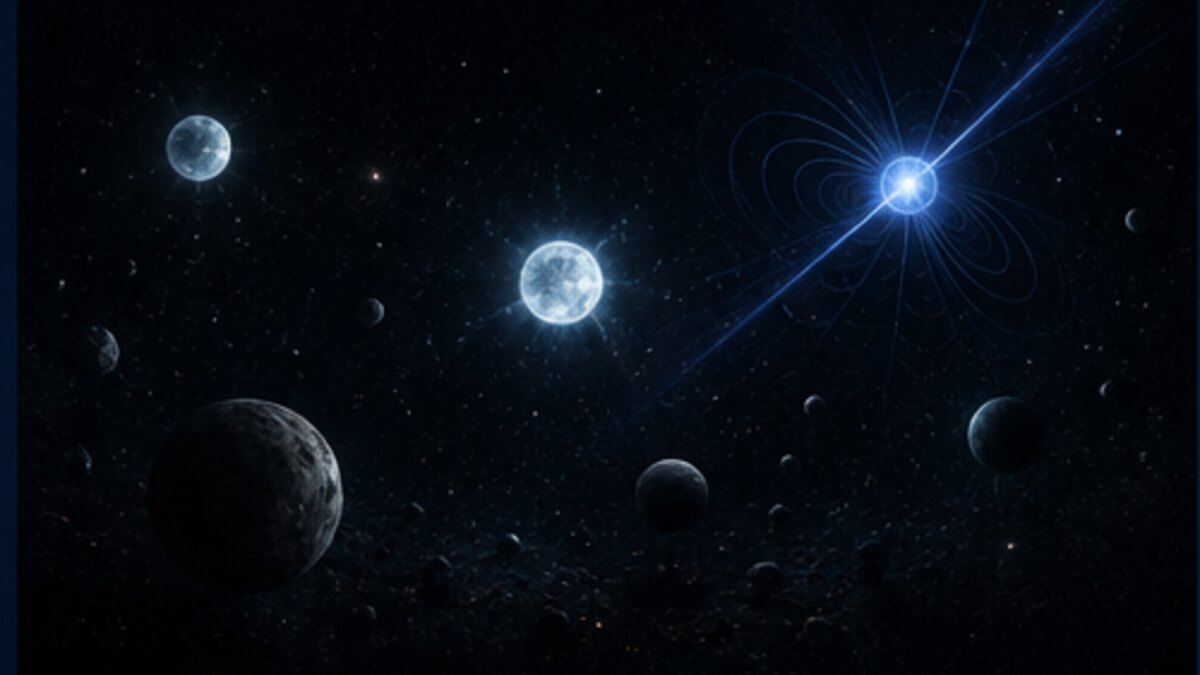
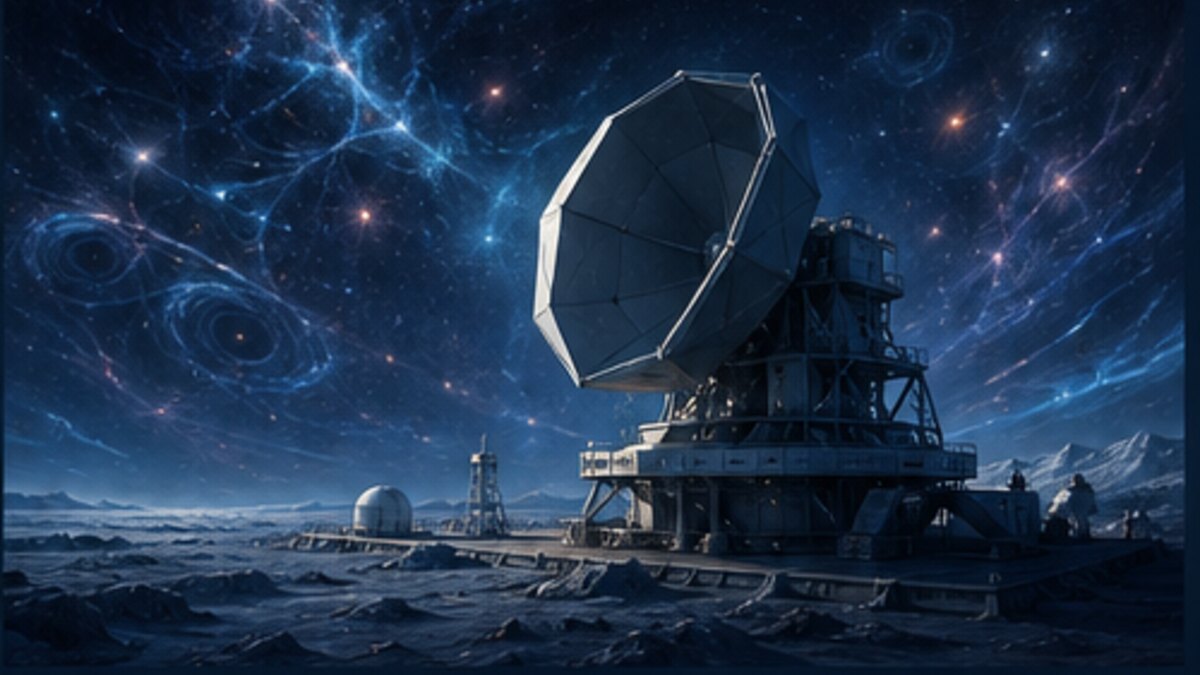
The universe will continue changing long after the last familiar stars have disappeared. Star formation will slow, galaxies will become more isolated, and stellar remains and black holes will dominate. What happens in the very distant future depends on forms of matter and energy that scientists are still trying to understand.
Start with the short explanation in each chapter. Open “Go a little deeper” only when you want more detail. The final line shows how the next chapter follows from the one you just read.
01CHAPTER
Cosmic forecasts begin with measured physics.
Predicting the remote future
IN PLAIN LANGUAGE
Here is the big picture: Cosmic forecasts begin with measured physics. The main point to remember is this: Long forecasts are model-dependent.
See the fuller scientific explanation +
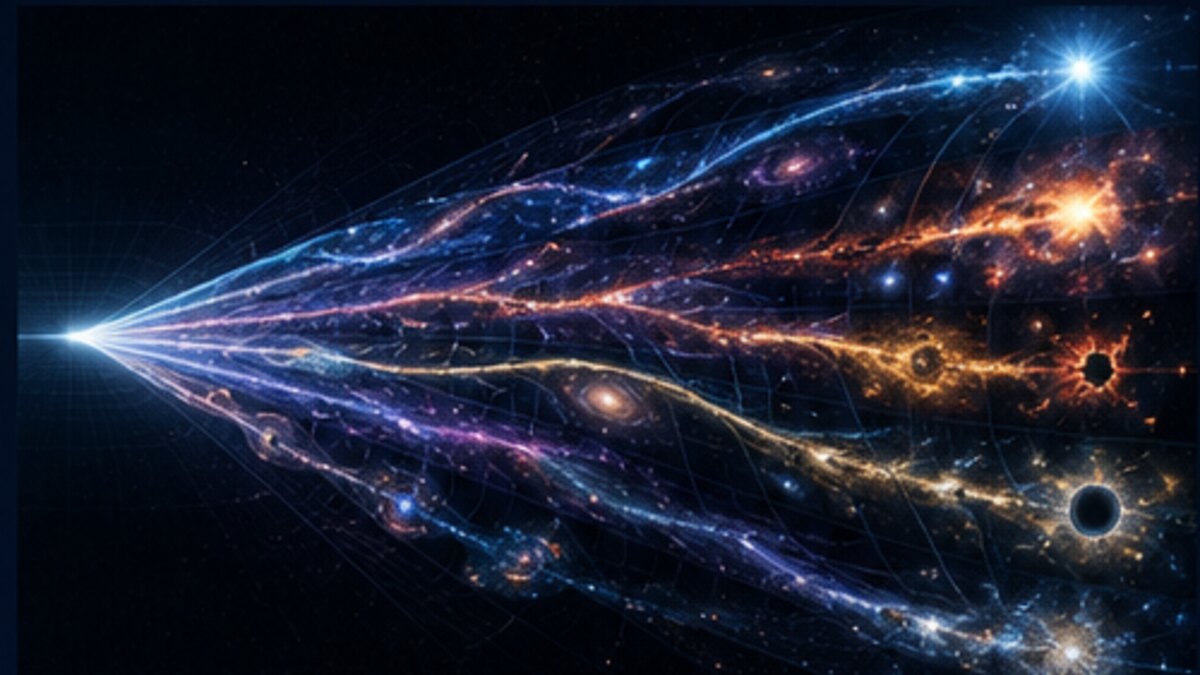
The future is inferred by evolving present laws and cosmic parameters forward. Confidence is strongest over stellar timescales and weaker when predictions depend on unknown dark energy, particle decay, or quantum gravity.
Cosmologists therefore describe conditional futures: what follows if expansion, particle stability, and gravity behave as current evidence suggests.
The farther ahead we project, the more assumptions enter the prediction.
02CHAPTER
Our neighborhood changes first.
The Sun and Local Group
IN PLAIN LANGUAGE
Here is the big picture: Our neighborhood changes first. The main point to remember is this: Stellar evolution transforms the solar system.
See the fuller scientific explanation +
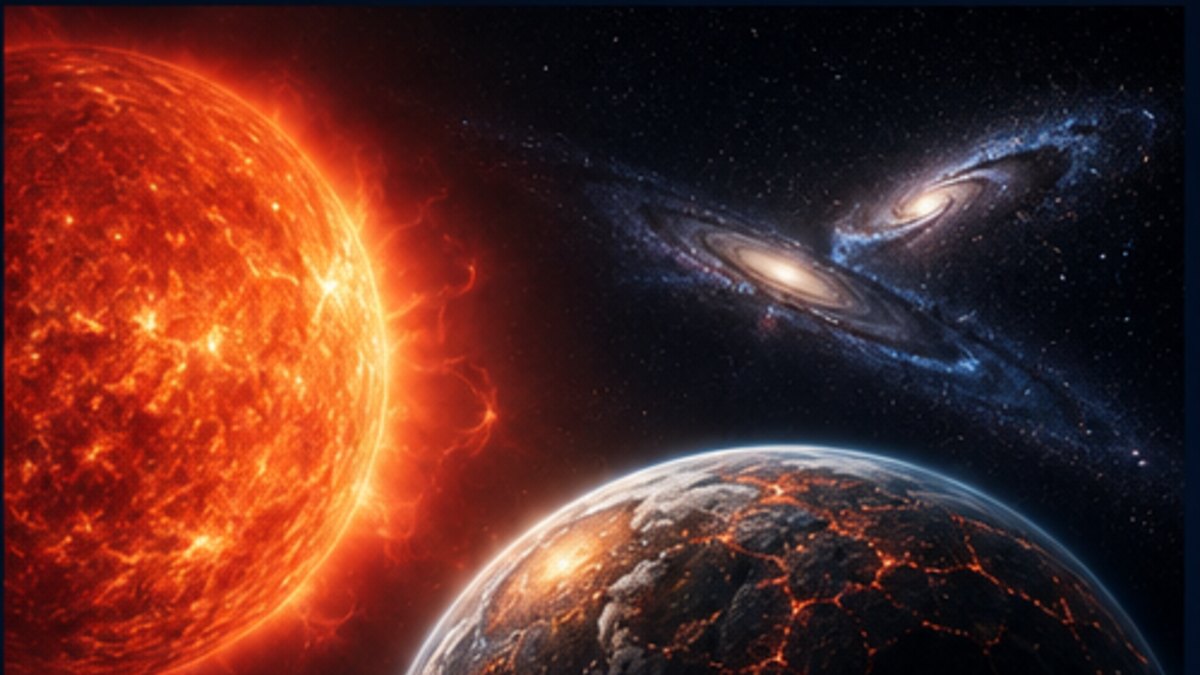
The Sun will brighten, expand into a red giant, shed its envelope, and become a white dwarf. Long before that, Earth’s surface environment will become inhospitable as solar true energy output (luminosity) rises.
The Milky Way and Andromeda will merge over several billion years. Their stars mostly pass without direct collision, while gas and orbital structure are dramatically rearranged.
THE POINTS TO REMEMBER
✦Stellar evolution transforms the solar system
✦Galactic mergers are gravitational, not stellar collisions
Nearby cosmic evolution unfolds well before the universe reaches its darkest eras.
03CHAPTER
The universe gradually runs out of cold fuel.
Declining star formation
IN PLAIN LANGUAGE
Here is the big picture: The universe gradually runs out of cold fuel. The main point to remember is this: Star formation is already past its peak.
See the fuller scientific explanation +
Cosmic star formation peaked billions of years ago and is already declining. Gas is locked in long-lived stars and remnants, expelled, heated, or prevented from cooling into galaxies.
New stars will continue for an immense time, especially low-mass red dwarfs, but the luminous universe becomes progressively dimmer and redder.
THE POINTS TO REMEMBER
✦Star formation is already past its peak
✦Red dwarfs dominate long-term starlight
✦Gas availability controls the decline
NEXT Now that this piece is in place, we can turn to Red-dwarf era.
The stellar era fades gradually rather than ending at one moment.
04CHAPTER
The smallest stars become the last steady suns.
Red-dwarf era
IN PLAIN LANGUAGE
Here is the big picture: The smallest stars become the last steady suns. The main point to remember is this: Low mass produces extraordinary longevity.
See the fuller scientific explanation +
Low-mass red dwarfs burn hydrogen extremely slowly and mix fuel through much of their interiors. Some may shine for trillions of years—far longer than the current age of the universe.
Their slow evolution has never been directly observed to completion. Models predict they grow hotter and brighter late in life before becoming helium-rich white dwarfs.
THE POINTS TO REMEMBER
✦Low mass produces extraordinary longevity
✦Convection makes fuel use efficient
✦No red dwarf has yet had time to die naturally
NEXT Now that this piece is in place, we can turn to The degenerate era.
Tiny stars extend the luminous era far beyond the lives of Sun-like stars.
05CHAPTER
Remnants replace ordinary stars.
The degenerate era
IN PLAIN LANGUAGE
Here is the big picture: Remnants replace ordinary stars. The main point to remember is this: Stellar remnants store the legacy of fusion.
See the fuller scientific explanation +
After star formation effectively ends, white dwarfs, neutron stars, black holes, brown dwarfs, and planets dominate bound structures. Occasional collisions or binary interactions may create brief new light.
White dwarfs cool toward black dwarfs, hypothetical objects that cannot yet exist because the universe is too young. Gravitational encounters slowly eject bodies from galaxies.
Compact remnants become the principal massive objects of a darkening cosmos.
06CHAPTER
Matter’s permanence is not yet known.
Possible proton decay
IN PLAIN LANGUAGE
Here is the big picture: Matter’s permanence is not yet known. The main point to remember is this: Proton decay is hypothetical.
See the fuller scientific explanation +
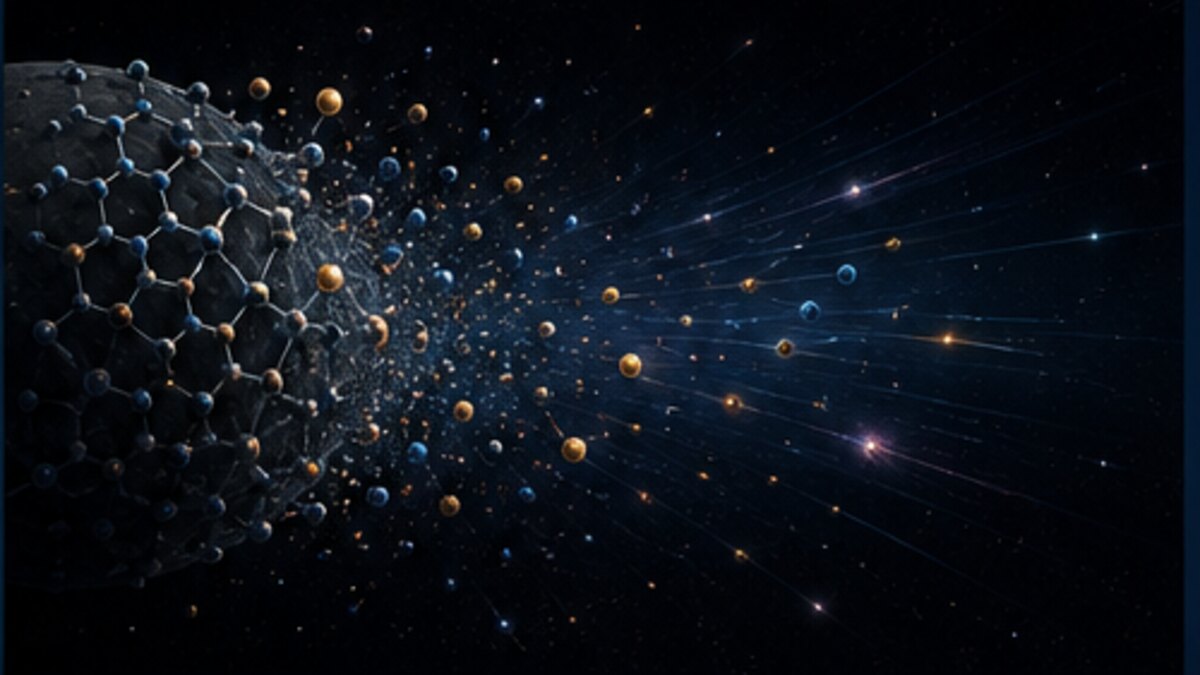
Some grand-unified theories predict that protons eventually decay, but experiments have found no such process and set very long lower limits on proton lifetime.
If decay occurs, planets and stellar remnants ultimately dissolve into lighter particles and radiation. If protons are stable, cold matter can persist through much longer and stranger processes.
THE POINTS TO REMEMBER
✦Proton decay is hypothetical
✦Experiments constrain but do not settle stability
✦Cosmic fate branches on particle physics
NEXT Now that this piece is in place, we can turn to The black-hole era.
The future of matter depends on physics beyond the confirmed Standard Model.
07CHAPTER
Gravity’s darkest objects become the final reservoirs.
The black-hole era
IN PLAIN LANGUAGE
Here is the big picture: Gravity’s darkest objects become the final reservoirs. The main point to remember is this: Black holes outlive ordinary stellar remnants.
See the fuller scientific explanation +
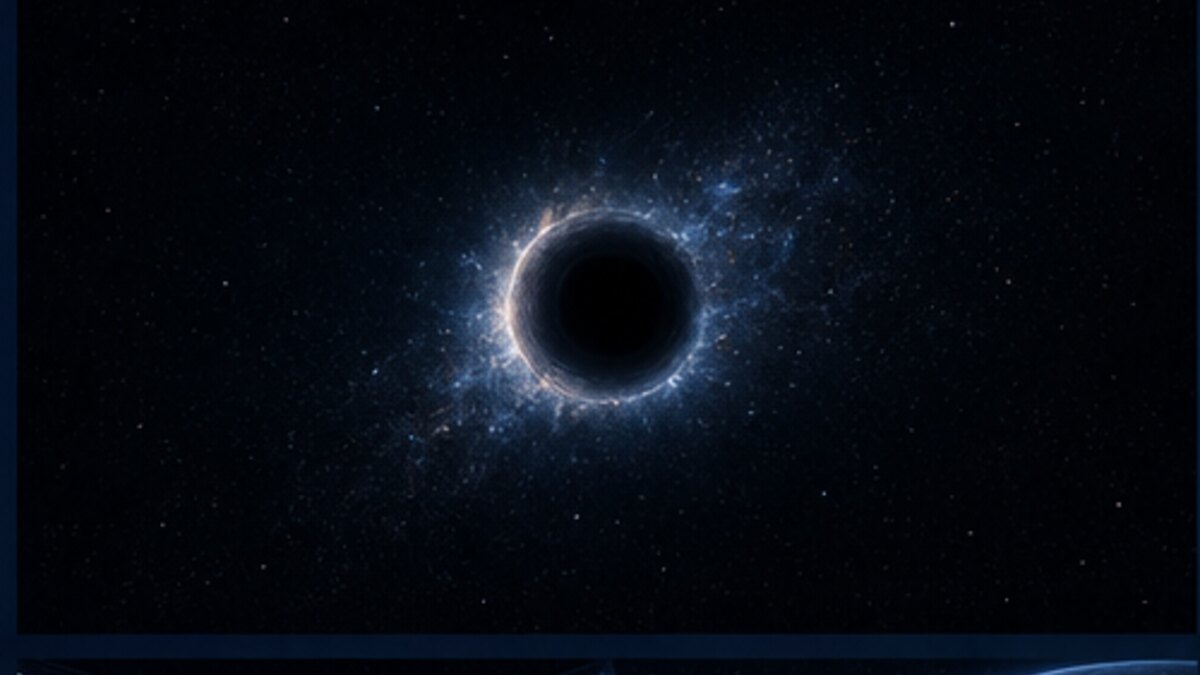
After ordinary matter disperses or decays, black holes may dominate organized mass. Encounters and mergers create larger holes, while isolated ones remain nearly invisible.
Quantum field theory predicts Hawking radiation. Smaller holes evaporate first; supermassive black holes require timescales approaching 10¹⁰⁰ years, releasing a final faint bath of particles.
THE POINTS TO REMEMBER
✦Black holes outlive ordinary stellar remnants
✦Evaporation accelerates as mass decreases
✦The largest holes define enormous timescales
NEXT Now that this piece is in place, we can turn to Heat death.
Black-hole evaporation may close the last great astrophysical era.
08CHAPTER
Usable energy differences disappear.
Heat death
IN PLAIN LANGUAGE
Here is the big picture: Usable energy differences disappear. The main point to remember is this: a measure related to disorder and hidden information growth reduces usable free energy.
See the fuller scientific explanation +
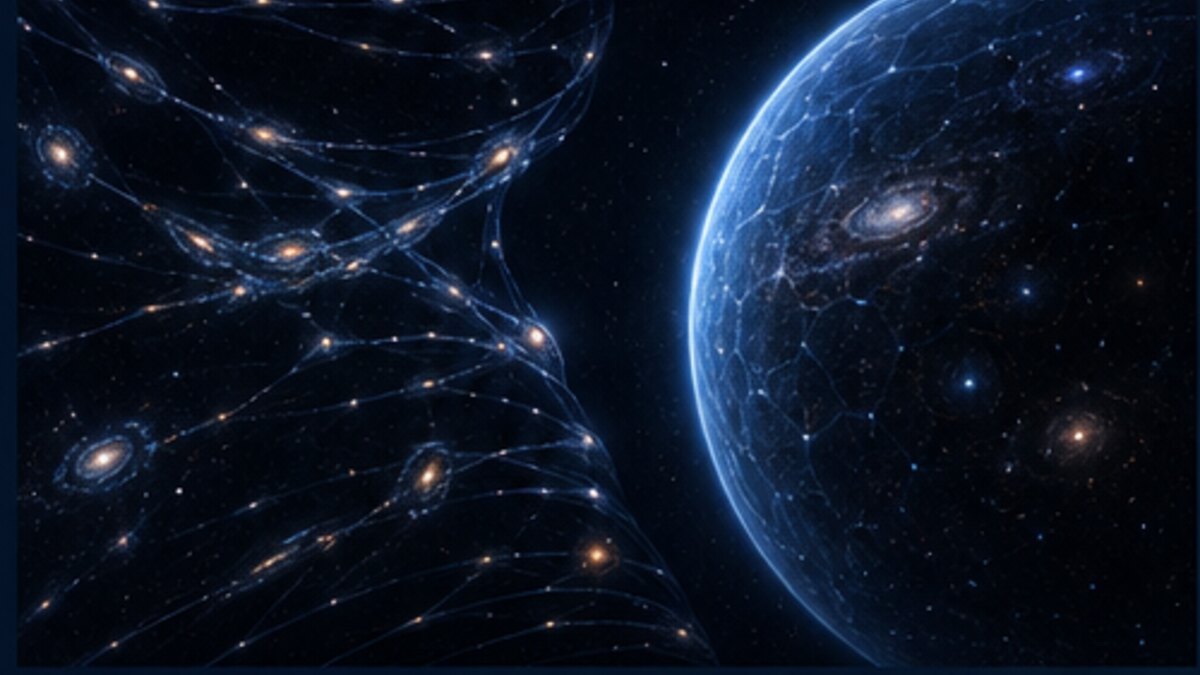
In the standard accelerating model, expansion leaves matter and radiation increasingly dilute. Systems approach states with less free energy available to perform work or maintain complex processes.
Heat death does not mean everything reaches one ordinary temperature at once. It describes the loss of exploitable gradients in a universe approaching maximum a measure related to disorder and hidden information.
THE POINTS TO REMEMBER
✦a measure related to disorder and hidden information growth reduces usable free energy
A nearly empty universe can be cold, dilute, and thermodynamically exhausted.
09CHAPTER
Different fundamental physics produces different endings.
Big Rip, vacuum decay, and alternatives
IN PLAIN LANGUAGE
Here is the big picture: Different fundamental physics produces different endings. The main point to remember is this: The Big Rip depends on evolving dark energy.
See the fuller scientific explanation +
If dark energy strengthens with time, a hypothetical Big Rip could eventually unbind structures. Current evidence does not require this outcome.
A transition to a lower-energy vacuum could propagate at nearly light speed and change physical laws. Cyclic or recollapsing models also exist, but accelerated expansion makes a simple future Big Crunch unlikely under the standard model.
Possible abrupt endings depend on properties not yet measured.
10CHAPTER
The far future exposes today’s unknowns.
What eternity teaches physics
IN PLAIN LANGUAGE
Here is the big picture: The far future exposes today’s unknowns. The main point to remember is this: Far-future cosmology tests conceptual consistency.
See the fuller scientific explanation +
Forecasts connect stellar evolution, gravity, thermodynamics, particle physics, and cosmology. The most uncertain late-time questions are often the same unresolved questions confronting experiments now.
The exercise is scientifically useful even when timescales are unreachable: it reveals which predictions follow robustly from evidence and which depend on speculative extensions.