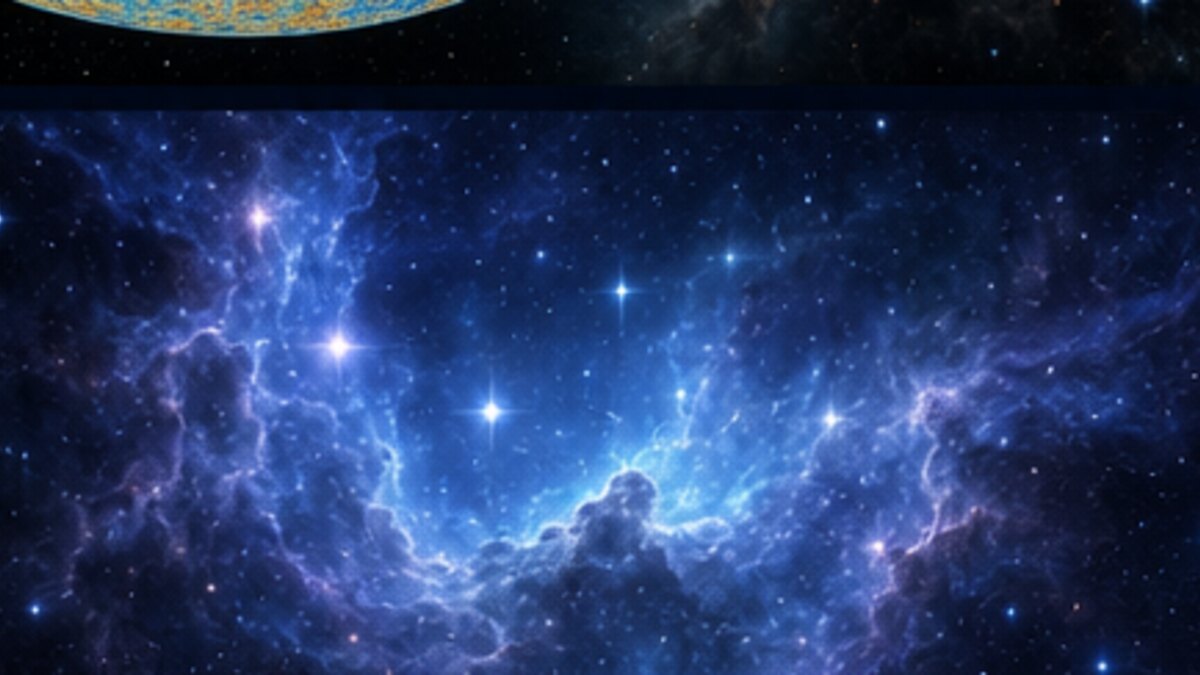
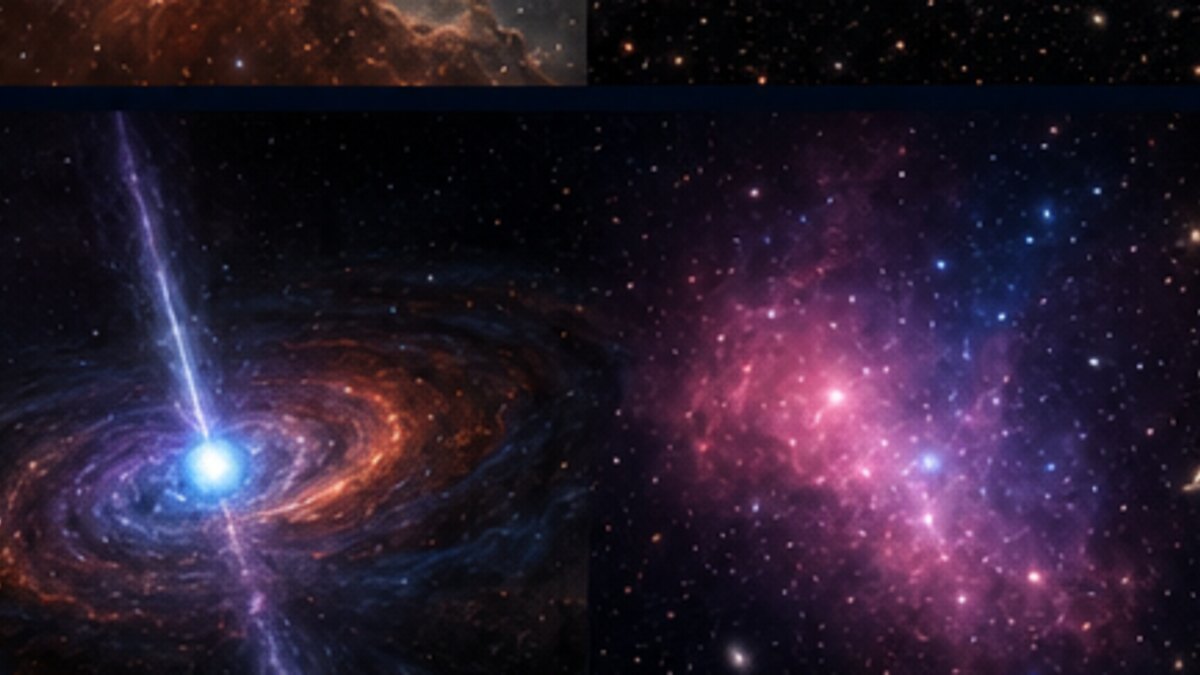
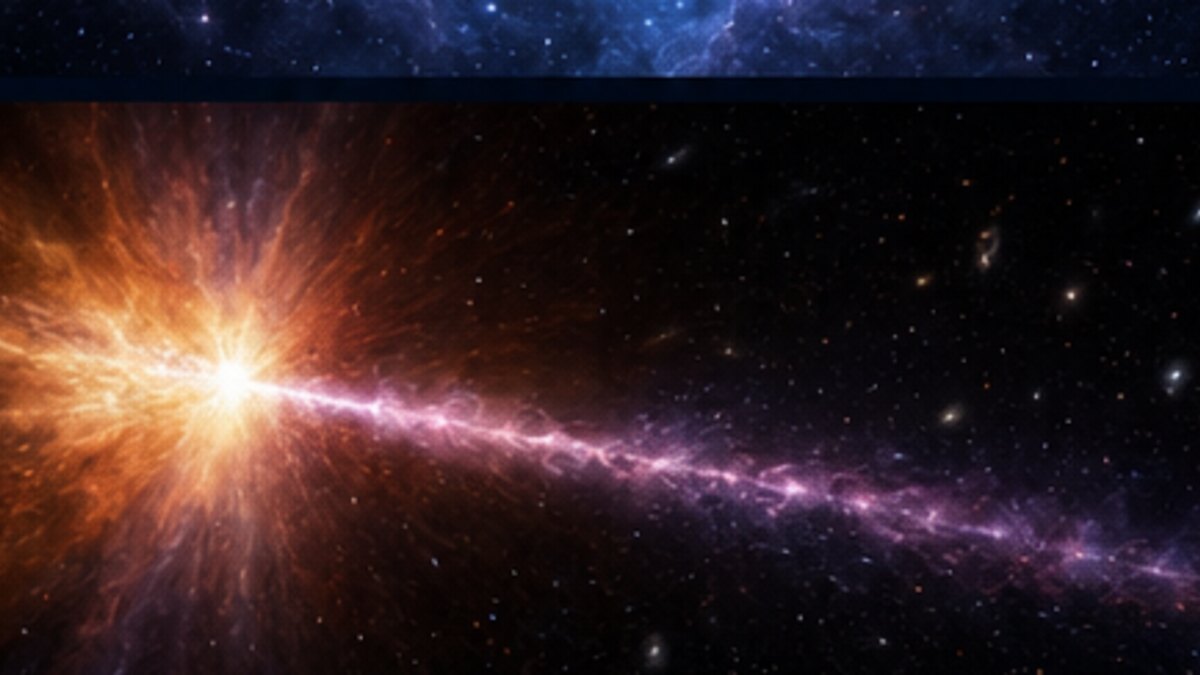
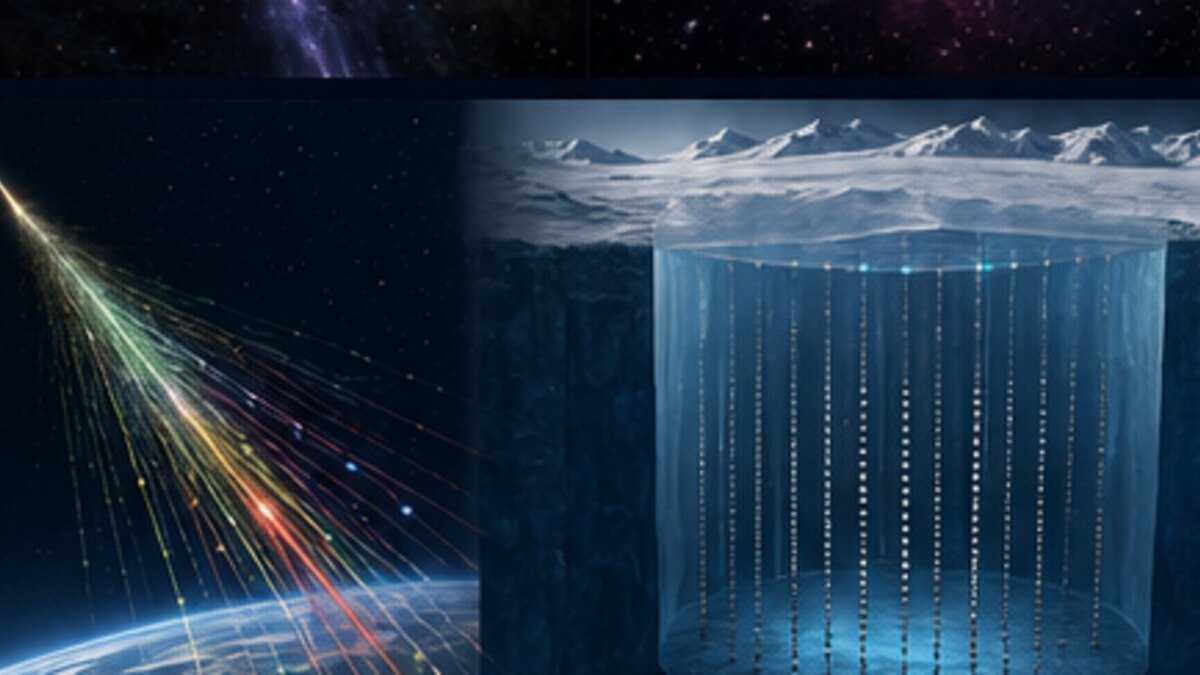
Human eyes can see only a small part of the light that fills the universe. Radio waves, infrared, ultraviolet, X-rays, and gamma rays each reveal different objects and events. Particles, neutrinos, and gravitational waves give us even more ways to study places that ordinary light cannot fully explain.
Start with the short explanation in each chapter. Open “Go a little deeper” only when you want more detail. The final line shows how the next chapter follows from the one you just read.
01CHAPTER
Human eyes sample a tiny cosmic window.
Why visible light is not enough
IN PLAIN LANGUAGE
Here is the big picture: Human eyes sample a tiny cosmic window. The main point to remember is this: Wavelength selects physical processes.
See the fuller scientific explanation +
Electromagnetic radiation spans radio waves through gamma rays. Each range interacts with matter differently and traces different temperatures, energies, magnetic fields, and environments.
Earth’s atmosphere blocks much infrared, ultraviolet, X-ray, and gamma-ray light, making balloons, aircraft, and space observatories essential. The universe changes appearance dramatically with wavelength.
THE POINTS TO REMEMBER
✦Wavelength selects physical processes
✦Atmospheric transparency is limited
✦Multiwavelength views prevent incomplete stories
NEXT Now that this piece is in place, we can turn to Radio astronomy.
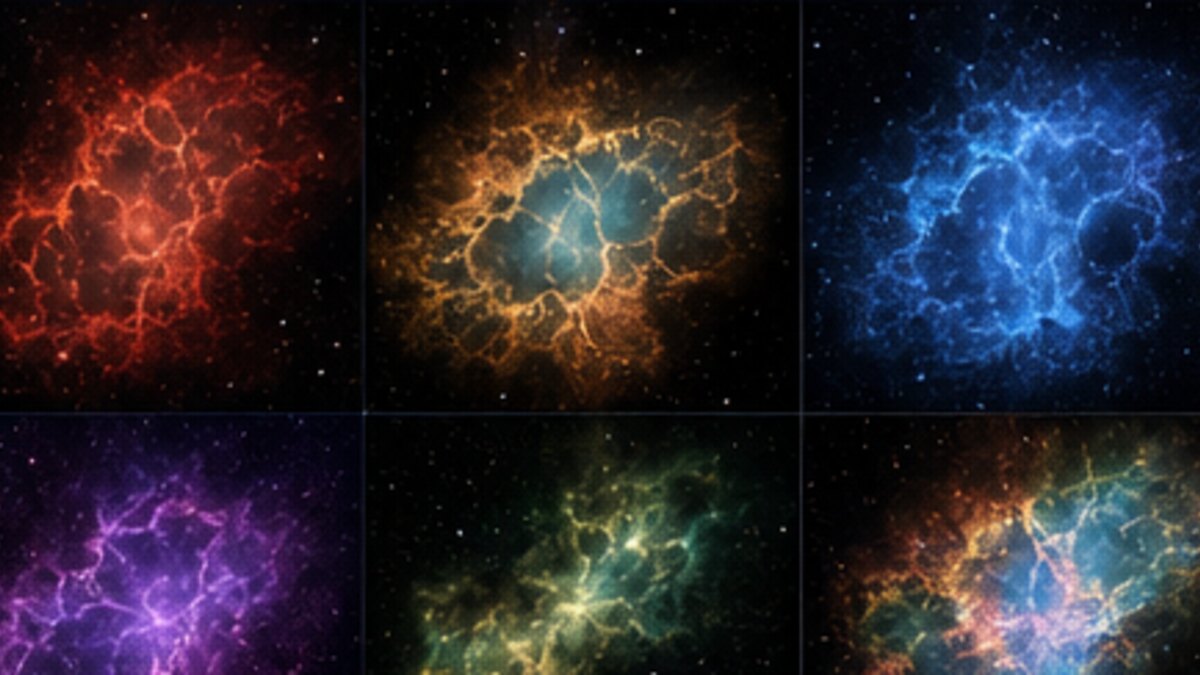
One cosmic object can contain several different physical components revealed by different light.
02CHAPTER
Cold gas, magnetic fields, and relativistic jets.
Radio astronomy
IN PLAIN LANGUAGE
Here is the big picture: Cold gas, magnetic fields, and relativistic jets. The main point to remember is this: Radio traces cold and nonthermal processes.
See the fuller scientific explanation +
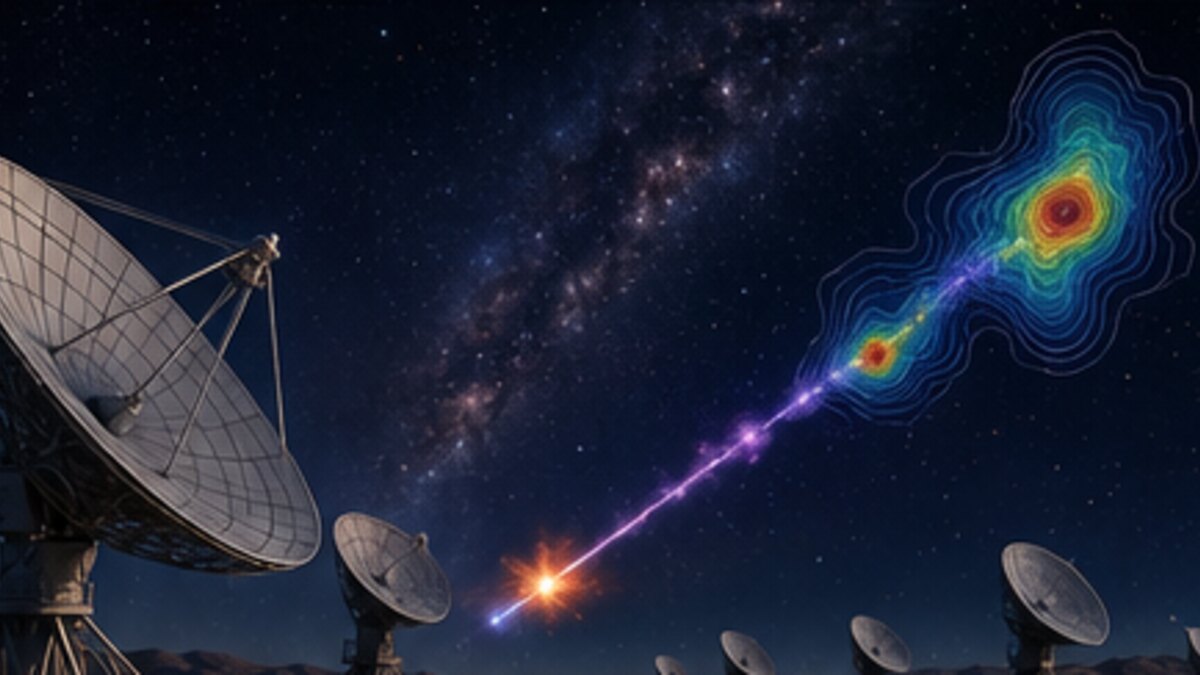
Radio telescopes detect atomic hydrogen, molecular clouds, pulsars, synchrotron emission, and the cosmic microwave background. Long wavelengths allow large antennas to be combined through interferometry.
Very-long-baseline interferometry creates Earth-sized virtual telescopes, enabling horizon-scale black-hole imaging and exquisite position measurements.
Radio observations expose structures that may be completely dark in visible light.
03CHAPTER
Relic radiation and cold molecular structure.
Microwave astronomy
IN PLAIN LANGUAGE
Here is the big picture: Relic radiation and cold molecular structure. The main point to remember is this: The CMB is a microwave fossil.
See the fuller scientific explanation +
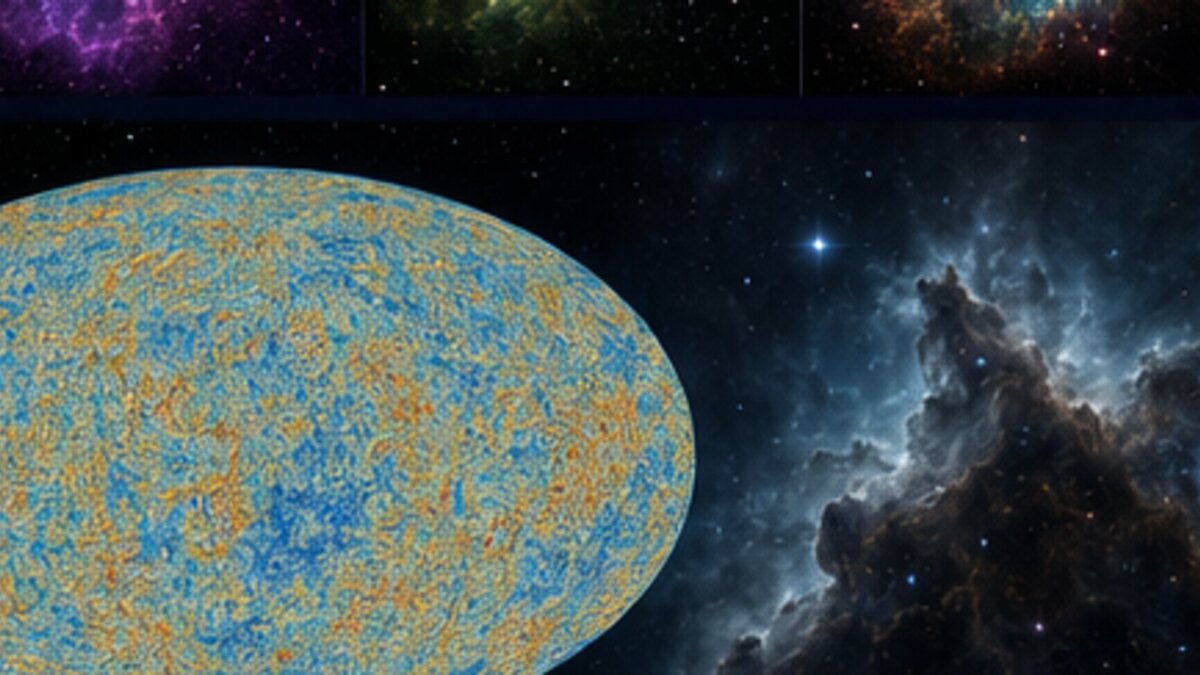
Microwaves include the cosmic microwave background and many molecular rotational transitions. CMB temperature and the orientation of light waves maps constrain cosmic composition, geometry, and early fluctuations.
Foreground emission from our galaxy must be modeled and separated. Precision cosmology depends as much on understanding foregrounds and instruments as on detecting the background.
THE POINTS TO REMEMBER
✦The CMB is a microwave fossil
✦Molecules rotate at characteristic frequencies
✦Foreground separation is fundamental
NEXT Now that this piece is in place, we can turn to Infrared astronomy.
Microwave maps connect local galactic emission with the earliest directly observed light.
04CHAPTER
See through dust and into the early universe.
Infrared astronomy
IN PLAIN LANGUAGE
Here is the big picture: See through dust and into the early universe. The main point to remember is this: Infrared traces cool material.
See the fuller scientific explanation +
Infrared light reveals cool stars, forming planets, molecular clouds, and dust warmed by starlight. It penetrates obscuring dust more effectively than visible light.
Cosmic a shift of light toward longer, redder wavelengths also moves early ultraviolet and visible emission into infrared bands. Cryogenic space telescopes reduce their own thermal glow to observe faint targets.
THE POINTS TO REMEMBER
✦Infrared traces cool material
✦Dust obscuration is reduced
✦a shift of light toward longer, redder wavelengths makes infrared essential for early galaxies
Infrared vision opens stellar nurseries and highly redshifted cosmic history.
05CHAPTER
Hot stars and energetic gas.
Ultraviolet astronomy
IN PLAIN LANGUAGE
Here is the big picture: Hot stars and energetic gas. The main point to remember is this: UV favors hot sources.
See the fuller scientific explanation +
Ultraviolet radiation is strong from massive young stars, white dwarfs, the gradual buildup of matter (accretion) flows, and ionized gas. It probes star formation, stellar winds, and the material between galaxies.
Most UV is absorbed by Earth’s atmosphere, so observations require space instruments. Dust extinction is also strong and must be corrected carefully.
THE POINTS TO REMEMBER
✦UV favors hot sources
✦Absorption reveals intervening gas
✦Atmospheric blocking requires space telescopes
NEXT Now that this piece is in place, we can turn to X-ray astronomy.
Ultraviolet light highlights energetic young populations and ionized matter.
06CHAPTER
The million-degree universe.
X-ray astronomy
IN PLAIN LANGUAGE
Here is the big picture: The million-degree universe. The main point to remember is this: X-rays trace extreme heat and gravity.
See the fuller scientific explanation +
X-rays arise from hot plasma, black-hole and neutron-star the gradual buildup of matter (accretion), supernova remnants, stellar coronae, and galaxy clusters. Grazing-incidence mirrors are needed because ordinary mirrors do not focus high-energy photons efficiently.
Spectra reveal temperatures, ionization, motion, and strong-gravity effects. Rapid timing traces compact regions only light-seconds across.
Here is the big picture: The highest-energy photons. The main point to remember is this: Gamma rays trace particle acceleration.
See the fuller scientific explanation +
Gamma rays come from radioactive decay, pulsars, jets, supernova remnants, particle collisions, and gamma-ray bursts. Some are detected directly in space; the highest energies are inferred from atmospheric particle showers.
Gamma-ray bursts briefly outshine much of the sky and can accompany massive-star collapse or neutron-star mergers. Their afterglows connect high-energy flashes with host galaxies.
The gamma-ray sky is dominated by violent particles and short-lived events.
08CHAPTER
Particles become astronomical messengers.
Cosmic rays and neutrinos
IN PLAIN LANGUAGE
Here is the big picture: Particles become astronomical messengers. The main point to remember is this: Magnetic fields deflect cosmic rays.
See the fuller scientific explanation +
Cosmic rays are charged nuclei and particles accelerated to extreme energies, but magnetic fields scramble their directions. Secondary particles produced in Earth’s atmosphere reveal their arrival.
Neutrinos interact so weakly that they escape dense stellar cores and travel nearly unaltered. Large underground or under-ice detectors use rare interactions to identify astrophysical sources.
Particles carry information unavailable from photons alone.
09CHAPTER
Listen to accelerating the connected fabric of space and time.
Gravitational-wave astronomy
IN PLAIN LANGUAGE
Here is the big picture: Listen to accelerating the connected fabric of space and time. The main point to remember is this: Waves interact weakly with matter.
See the fuller scientific explanation +
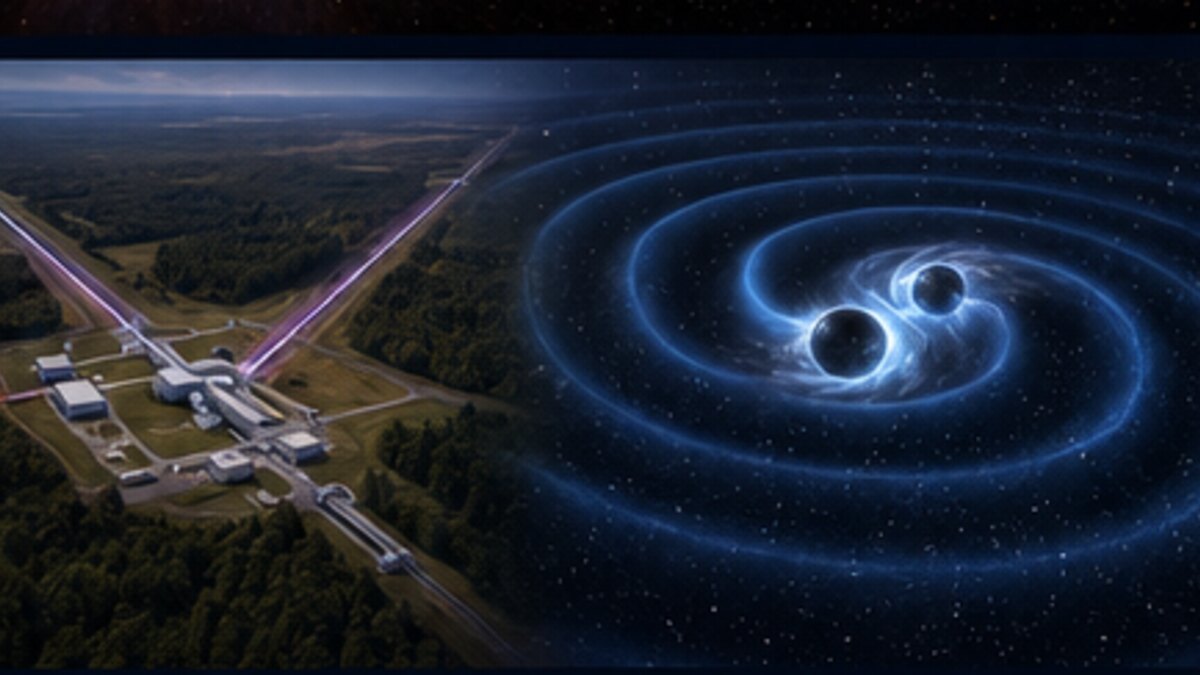
Gravitational waves are not electromagnetic radiation. They are propagating distortions of the connected fabric of space and time generated by changing asymmetric mass distributions.
Merging black holes and neutron stars reveal masses, spins, distances, and strong gravity. Future detectors across different frequency bands will study systems from stellar binaries to supermassive mergers and possible early-universe backgrounds.
Gravitational waves provide a fundamentally different sense of the universe.
10CHAPTER
The strongest story combines independent signals.
Multi-messenger astronomy
IN PLAIN LANGUAGE
Here is the big picture: The strongest story combines independent signals. The main point to remember is this: Messengers probe complementary regions.
See the fuller scientific explanation +
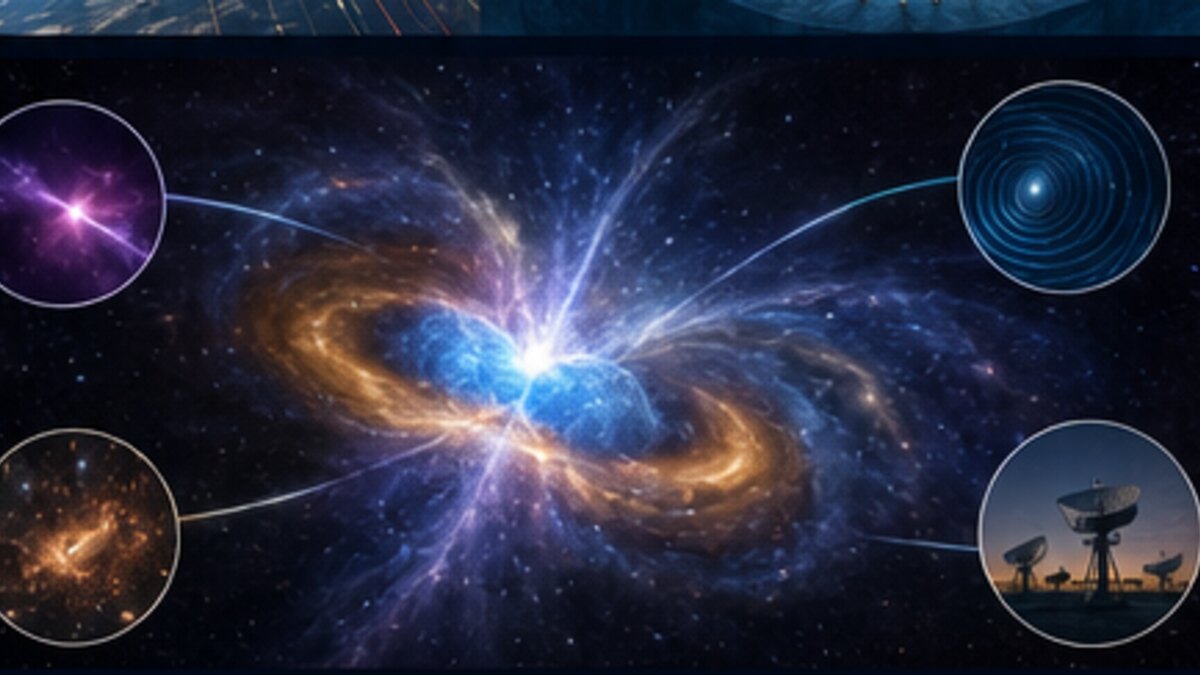
A neutron-star merger can produce gravitational waves, gamma rays, optical and infrared light, radio emission, and neutrinos in principle. Each messenger traces different material and timescales.
Coordinated alerts and rapid observations turn separate instruments into one global observatory. Agreement constrains physics; disagreement reveals missing assumptions.
A complete cosmic event may unfold across light, particles, and the connected fabric of space and time.
11CHAPTER
Every cosmic image is reconstructed data.
Turning signals into knowledge
IN PLAIN LANGUAGE
Here is the big picture: Every cosmic image is reconstructed data. The main point to remember is this: Instruments measure signals, not pictures.
See the fuller scientific explanation +
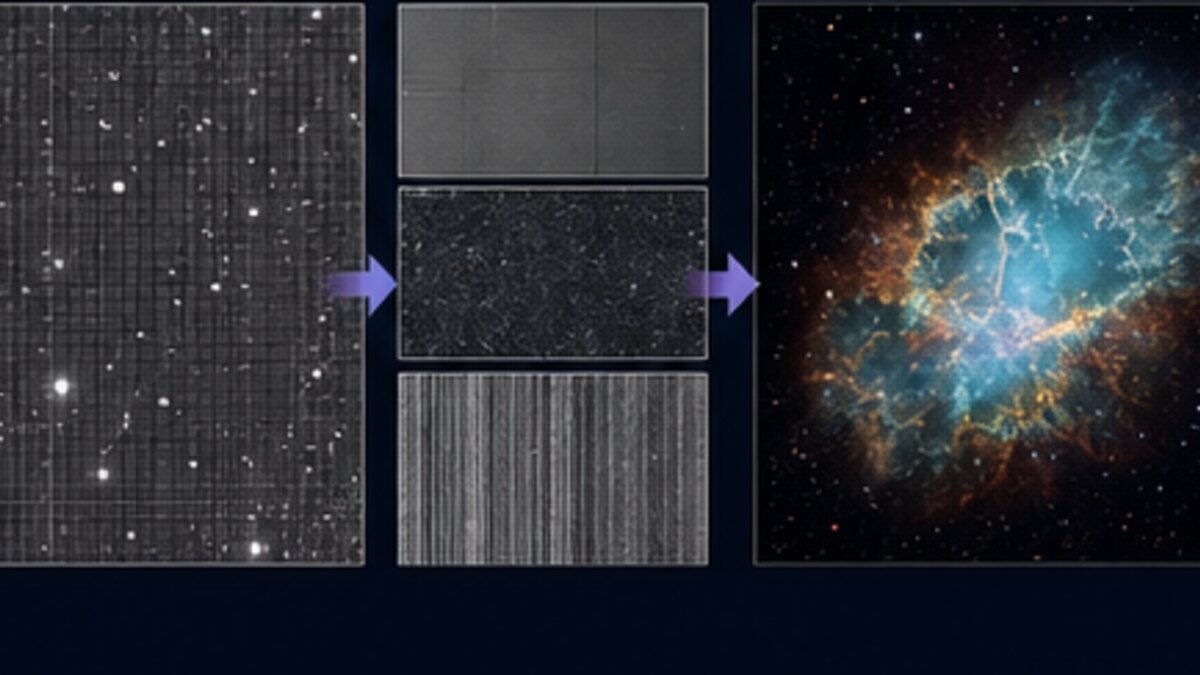
Telescopes record counts, voltages, arrival times, spectra, or interference patterns—not ready-made pictures. Calibration, background removal, statistical modeling, and physical assumptions transform those measurements into scientific products.
False color communicates wavelength or intensity beyond human vision. It can be rigorous when the mapping is explained; understanding that mapping is part of scientific literacy.
THE POINTS TO REMEMBER
✦Instruments measure signals, not pictures
✦Calibration defines trustworthy results
✦Color can encode invisible physical information
Scientific images are visual translations of carefully calibrated measurements.
THE ESSENTIAL THREAD
Three ideas worth keeping.
01Every wavelength reveals different physics.
02Multi-messenger observations connect separate clues.