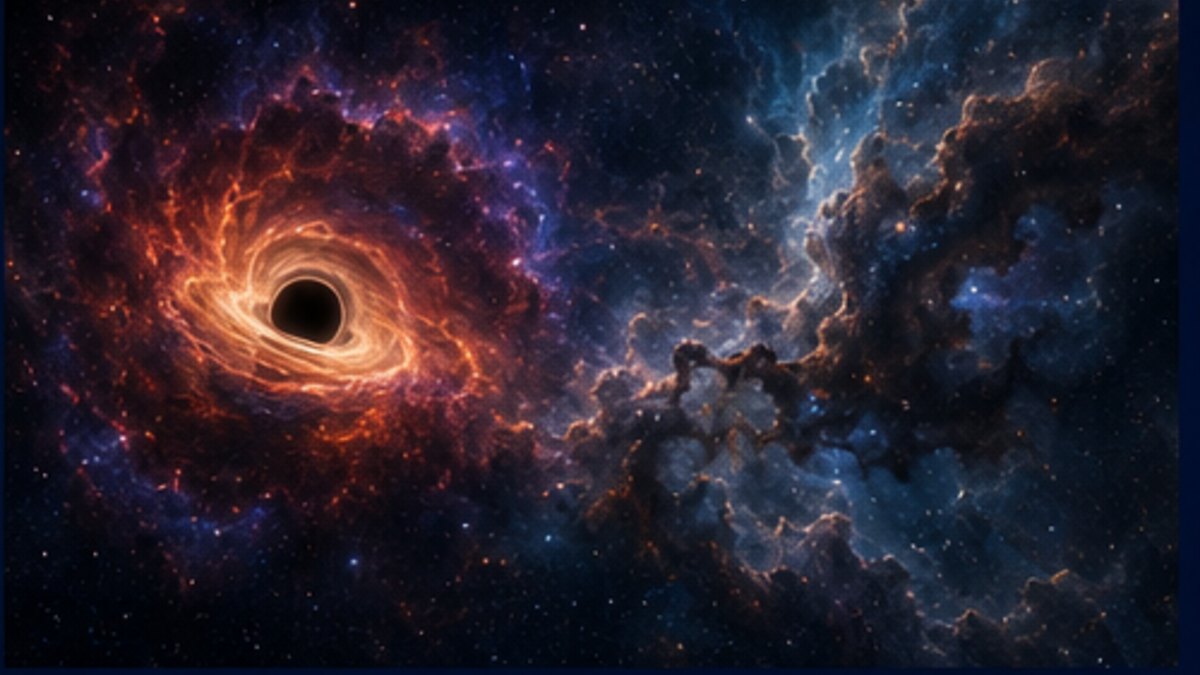
A star begins when gravity gathers a cold cloud of gas and dust. It spends most of its life making energy through nuclear fusion, then changes as its fuel runs low. Its mass decides whether it ends as a white dwarf, a neutron star, or a black hole—and how it enriches space along the way.
Start with the short explanation in each chapter. Open “Go a little deeper” only when you want more detail. The final line shows how the next chapter follows from the one you just read.
01CHAPTER
Stars begin inside cold molecular clouds.
A cloud begins to collapse
IN PLAIN LANGUAGE
Here is the big picture: Stars begin inside cold molecular clouds. The main point to remember is this: Gravity competes with pressure and turbulence.
See the fuller scientific explanation +
Dense pockets inside giant molecular clouds can become gravitationally unstable after compression by turbulence, collisions, or nearby stellar feedback. As a pocket contracts, gravity converts potential energy into heat and the fragment develops a denser center.
rotational motion prevents everything from falling straight inward. A rotating disk forms around the central condensation, often feeding several protostars and creating binary or multiple systems.
THE POINTS TO REMEMBER
✦Gravity competes with pressure and turbulence
✦Fragmentation commonly creates multiple stars
✦Rotation naturally produces an accretion disk
NEXT Now that this piece is in place, we can turn to The protostar.
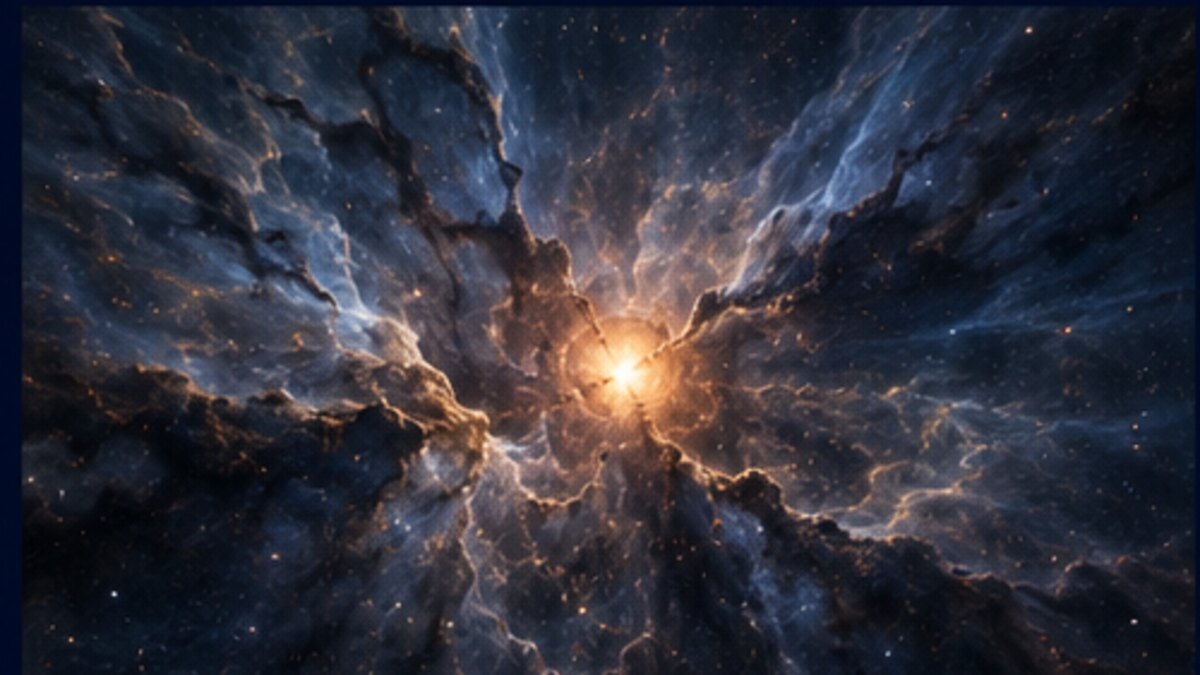
A stellar nursery contains cold gas, dust, collapsing cores, and newborn stars.
02CHAPTER
A growing object shines before fusion begins.
The protostar
IN PLAIN LANGUAGE
Here is the big picture: A growing object shines before fusion begins. The main point to remember is this: the gradual buildup of matter (accretion) supplies mass and true energy output (luminosity).
See the fuller scientific explanation +
A protostar is powered mainly by contraction and the gradual buildup of matter (accretion). Material falling through its disk releases energy, while magnetic fields guide some gas and launch bipolar jets that help remove rotational motion.
The object remains embedded in dust, so infrared and radio observations are especially valuable. When infall slows and the envelope clears, the young star becomes optically visible but is not yet settled on the main sequence.
THE POINTS TO REMEMBER
✦the gradual buildup of matter (accretion) supplies mass and true energy output (luminosity)
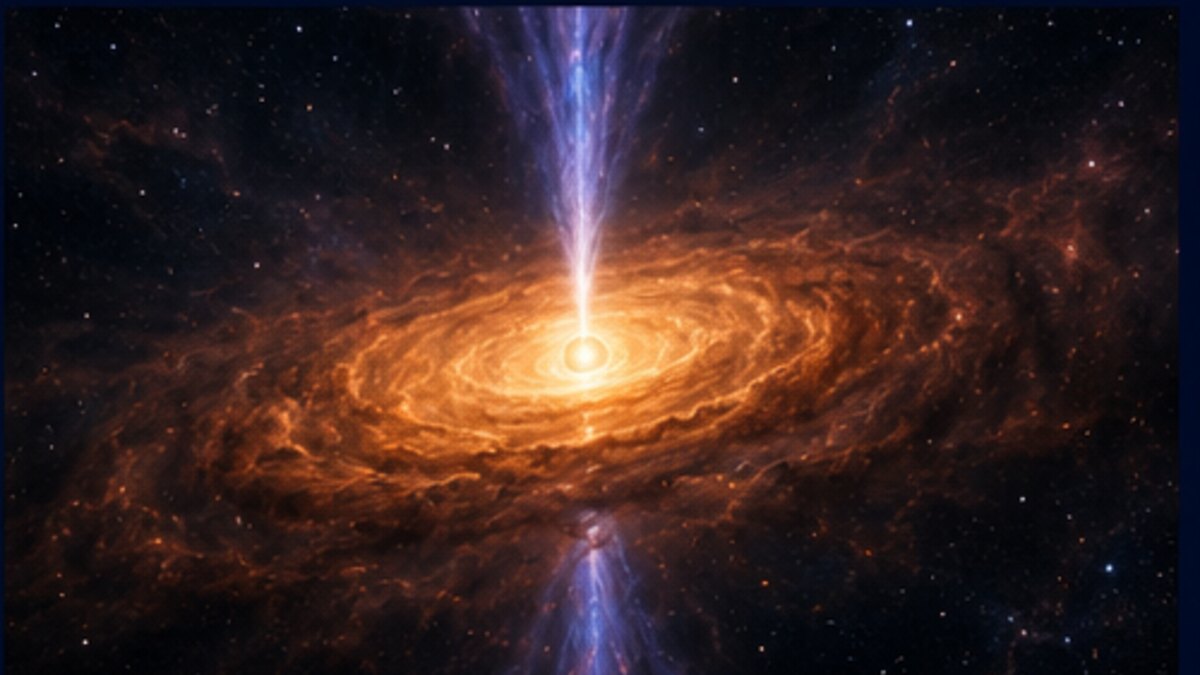
A protostar’s visible surroundings record the gradual buildup of matter (accretion), magnetic fields, and outflow.
03CHAPTER
Core hydrogen fusion creates stellar adulthood.
Ignition and the main sequence
IN PLAIN LANGUAGE
Here is the big picture: Core hydrogen fusion creates stellar adulthood. The main point to remember is this: Fusion begins after sufficient core heating.
See the fuller scientific explanation +
Contraction raises central temperature and pressure until hydrogen fusion becomes self-sustaining. The star reaches a long-lived balance between inward gravity and outward pressure: the balance between inward gravity and outward pressure.
Mass determines the core temperature, fusion rate, true energy output (luminosity), color, and lifetime. Massive stars burn brighter but exhaust fuel far faster; low-mass red dwarfs can persist for trillions of years.
THE POINTS TO REMEMBER
✦Fusion begins after sufficient core heating
✦Massive stars trade longevity for true energy output (luminosity)
✦The main sequence is a stable phase, not a location in space
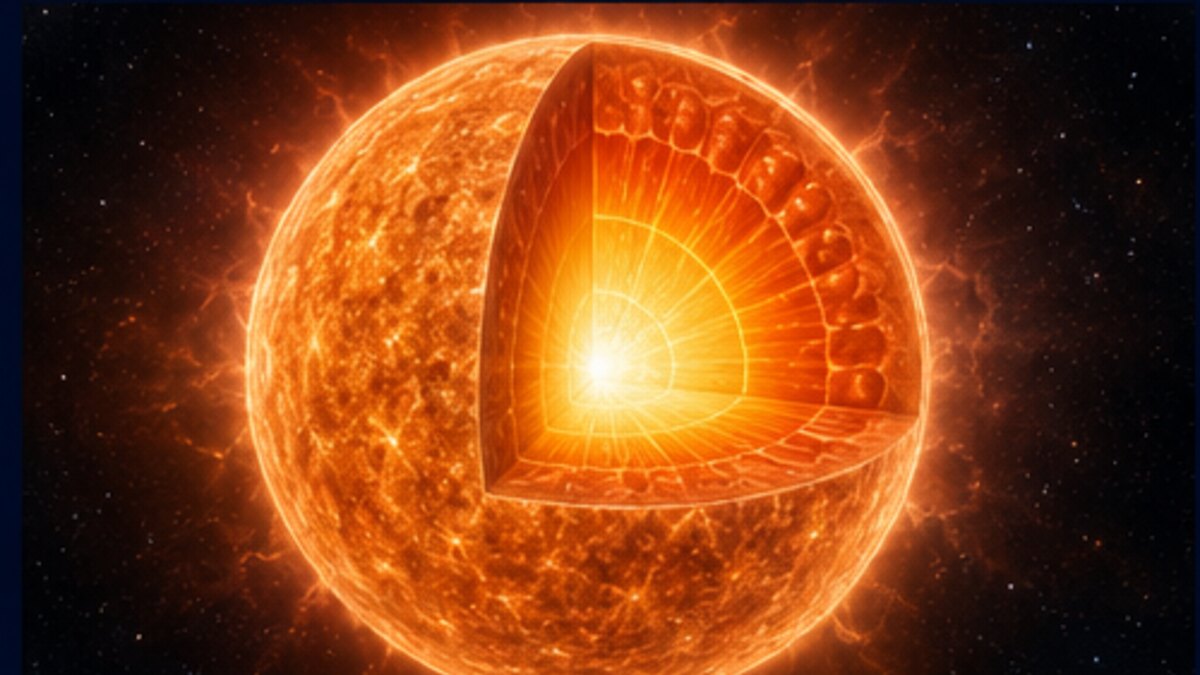
Main-sequence stars occupy most of their lifetimes converting hydrogen into helium.
04CHAPTER
Fusion follows different pathways.
How stars make energy
IN PLAIN LANGUAGE
Here is the big picture: Fusion follows different pathways. The main point to remember is this: Fusion pathway depends on core temperature.
See the fuller scientific explanation +
Sun-like stars convert hydrogen primarily through the proton–proton chain. Hotter massive stars rely more strongly on the carbon–nitrogen–oxygen cycle, whose reaction rate rises steeply with temperature.
A small loss of nuclear mass becomes energy according to E=mc². Photons may take a very long time to diffuse outward, while neutrinos escape the core almost immediately and provide a direct probe of fusion.
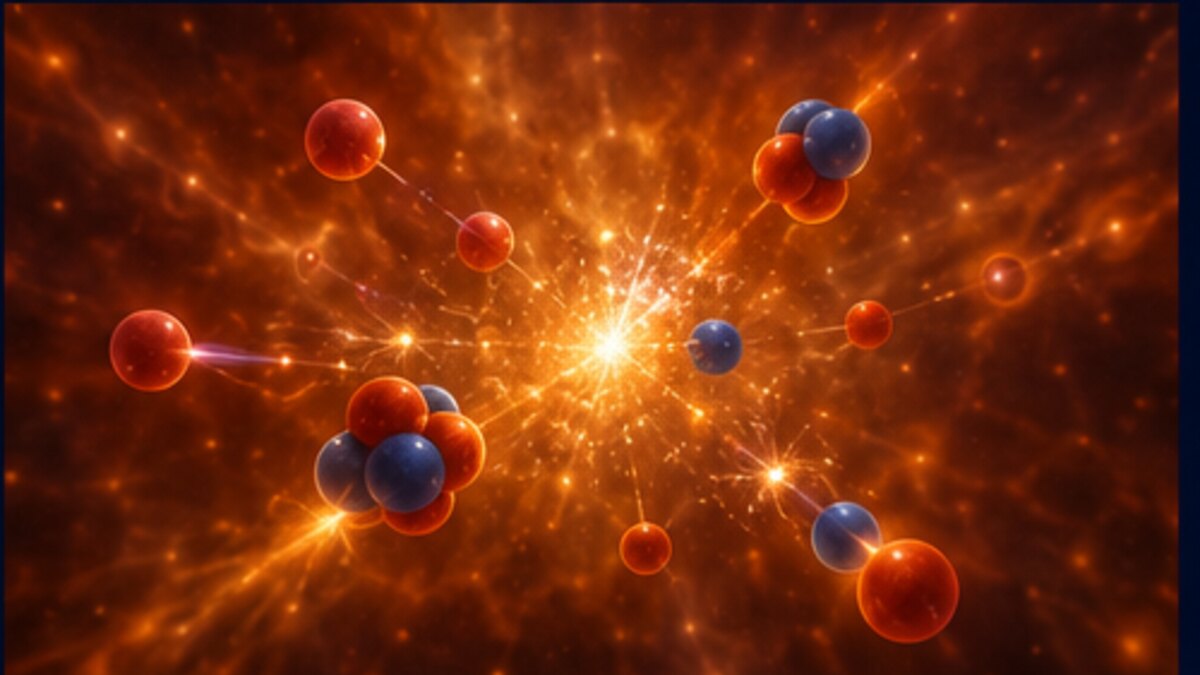
Stellar energy begins with quantum tunneling and nuclear transformation in the core.
05CHAPTER
Core hydrogen depletion rearranges the star.
Red giant transformation
IN PLAIN LANGUAGE
Here is the big picture: Core hydrogen depletion rearranges the star. The main point to remember is this: Shell burning expands the envelope.
See the fuller scientific explanation +
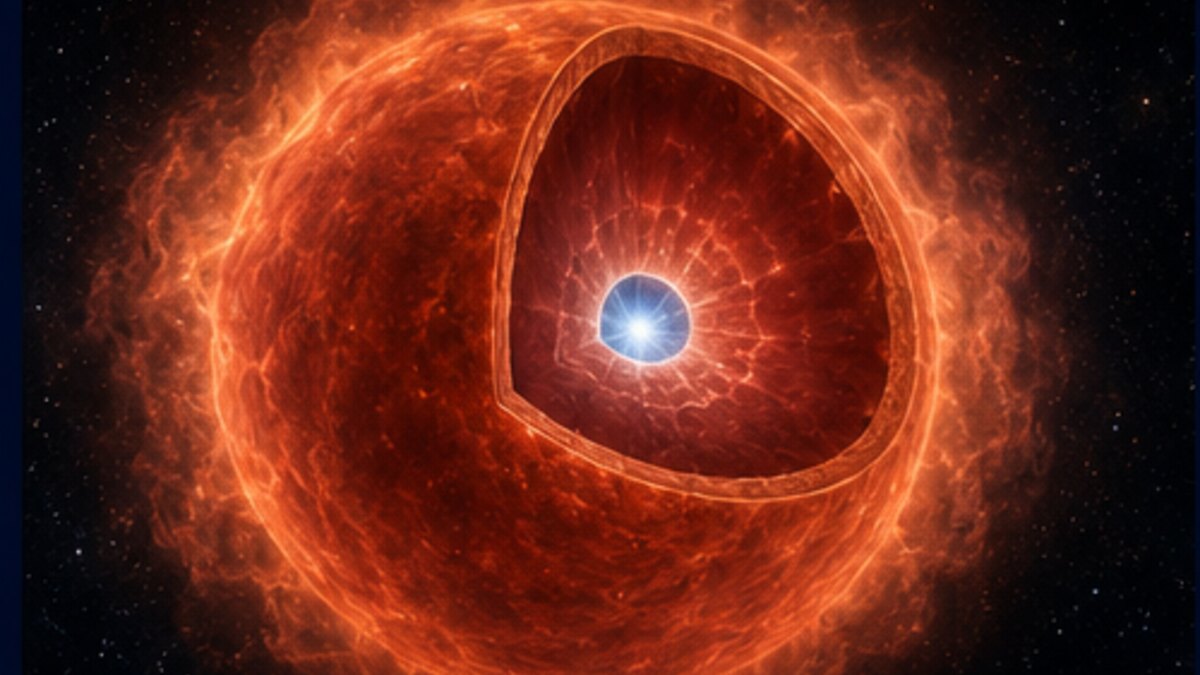
When core hydrogen is exhausted, fusion continues in a surrounding shell. The inert helium core contracts and heats, while the envelope expands and cools, moving the star into the red-giant region of the H–R diagram.
In low-mass stars, helium ignites rapidly in a helium flash; in higher-mass stars it begins more gradually. Helium fusion then builds carbon and oxygen through the triple-alpha process.
A red giant has a compact hot core beneath a vast cool envelope.
06CHAPTER
A gentle ending creates a white dwarf.
Late life of a Sun-like star
IN PLAIN LANGUAGE
Here is the big picture: A gentle ending creates a white dwarf. The main point to remember is this: Mass loss removes the envelope.
See the fuller scientific explanation +
After helium fuel declines, a Sun-like star enters an unstable asymptotic-giant phase. Pulsations and radiation pressure on dust drive powerful winds that remove the envelope and expose the hot core.
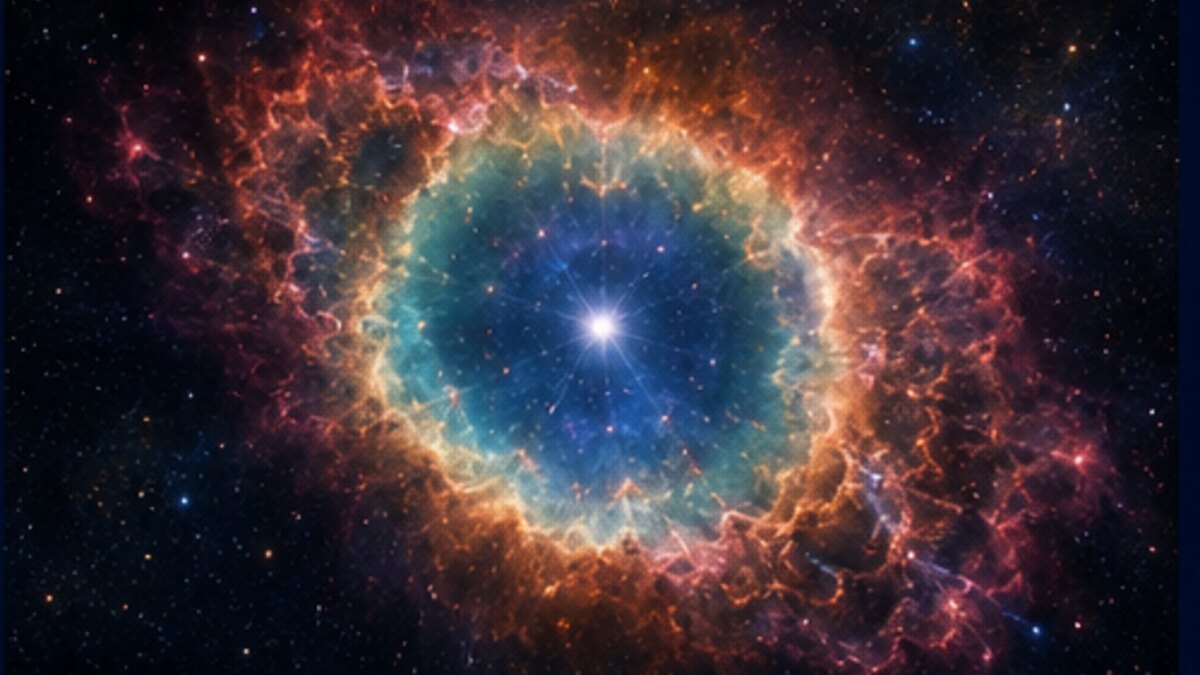
Ultraviolet light from the core illuminates the expanding gas as a planetary nebula. The remaining carbon–oxygen white dwarf is supported by electron quantum pressure that resists further compression and slowly cools for immense spans of time.
THE POINTS TO REMEMBER
✦Mass loss removes the envelope
✦Planetary nebulae have nothing to do with planets
A planetary nebula displays enriched stellar material surrounding a compact remnant.
07CHAPTER
Successive fuels burn on shorter clocks.
Massive stars build layered cores
IN PLAIN LANGUAGE
Here is the big picture: Successive fuels burn on shorter clocks. The main point to remember is this: Higher mass unlocks advanced burning stages.
See the fuller scientific explanation +
Massive stars reach temperatures that fuse carbon, neon, oxygen, and silicon, producing onion-like shells of nuclear burning. Each later fuel supplies less energy per reaction and is consumed more quickly.
Fusion cannot extract energy by building nuclei beyond the iron group. Once an iron-rich core grows beyond support, collapse begins abruptly, turning the final seconds into the most dramatic stage of the star’s life.
A massive star develops multiple fusion shells before catastrophic core collapse.
08CHAPTER
A stellar core implodes and the envelope explodes.
Core-collapse supernova
IN PLAIN LANGUAGE
Here is the big picture: A stellar core implodes and the envelope explodes. The main point to remember is this: Collapse happens in less than a second.
See the fuller scientific explanation +
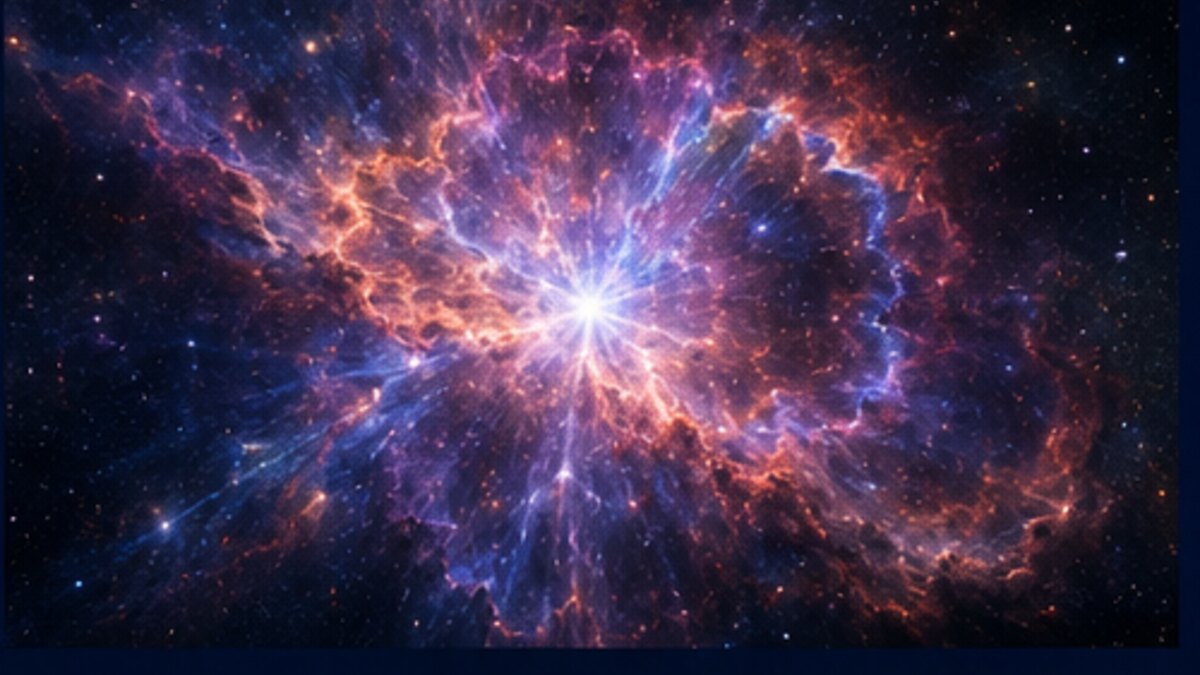
Electrons combine with protons, nuclei break apart, and the core collapses toward nuclear density. The inner core rebounds and floods the region with neutrinos; complex hydrodynamics and neutrino heating help revive a shock that ejects the star’s outer layers.
The explosion disperses oxygen, silicon, iron-group material, and newly produced radioactive nuclei. Its expanding remnant shocks interstellar gas and may trigger or suppress later star formation.
A supernova connects stellar death with the chemical evolution of galaxies.
09CHAPTER
Some collapsed cores become ultra-dense remnants.
Neutron stars, pulsars, and magnetars
IN PLAIN LANGUAGE
Here is the big picture: Some collapsed cores become ultra-dense remnants. The main point to remember is this: Neutron stars probe extreme-density matter.
See the fuller scientific explanation +
If the collapsed core remains below the black-hole threshold, neutron pressure and nuclear interactions halt further collapse. A neutron star packs more than a solar mass into a city-sized sphere.
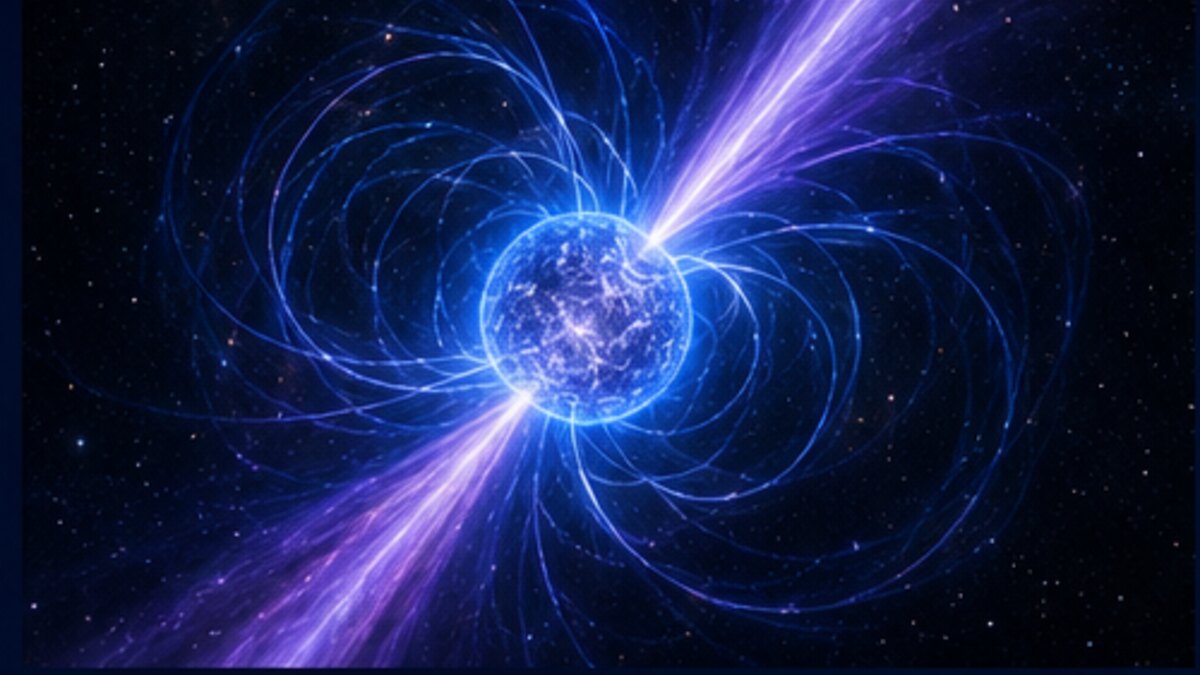
Rotation and magnetic fields create pulsars whose beams sweep past Earth. In magnetars, magnetic energy powers bursts and giant flares, providing tests of matter under conditions unreachable in laboratories.
Compact stellar remnants reveal physics at enormous density and field strength.
10CHAPTER
The ending becomes a new beginning.
Black holes and stellar recycling
IN PLAIN LANGUAGE
Here is the big picture: The ending becomes a new beginning. The main point to remember is this: Remnant outcome depends on core mass and structure.
See the fuller scientific explanation +
More massive collapsing cores can form black holes, sometimes with a visible supernova and sometimes through quieter fallback. Binary interaction can later feed the black hole, merge compact remnants, and produce gravitational waves.
Ejected gas, winds, and supernova debris mix into future molecular clouds. Every stellar generation changes the composition of the next, so stellar life cycles are also the chemical biography of galaxies.
THE POINTS TO REMEMBER
✦Remnant outcome depends on core mass and structure
✦Binaries reshape nearly every evolutionary stage
✦Stellar material is recycled into new stars and planets
Stellar death returns enriched matter to space while leaving a compact remnant.
THE ESSENTIAL THREAD
Three ideas worth keeping.
01Mass is the master variable of stellar evolution.
02Stars create and distribute the elements needed for planets and life.
03Stellar death seeds new generations of cosmic structure.