Choose any word that has slowed you down. You will get a short explanation, a useful image, and enough context to return to the larger story.
43CLEAR EXPLANATIONS
01Light & Measurement
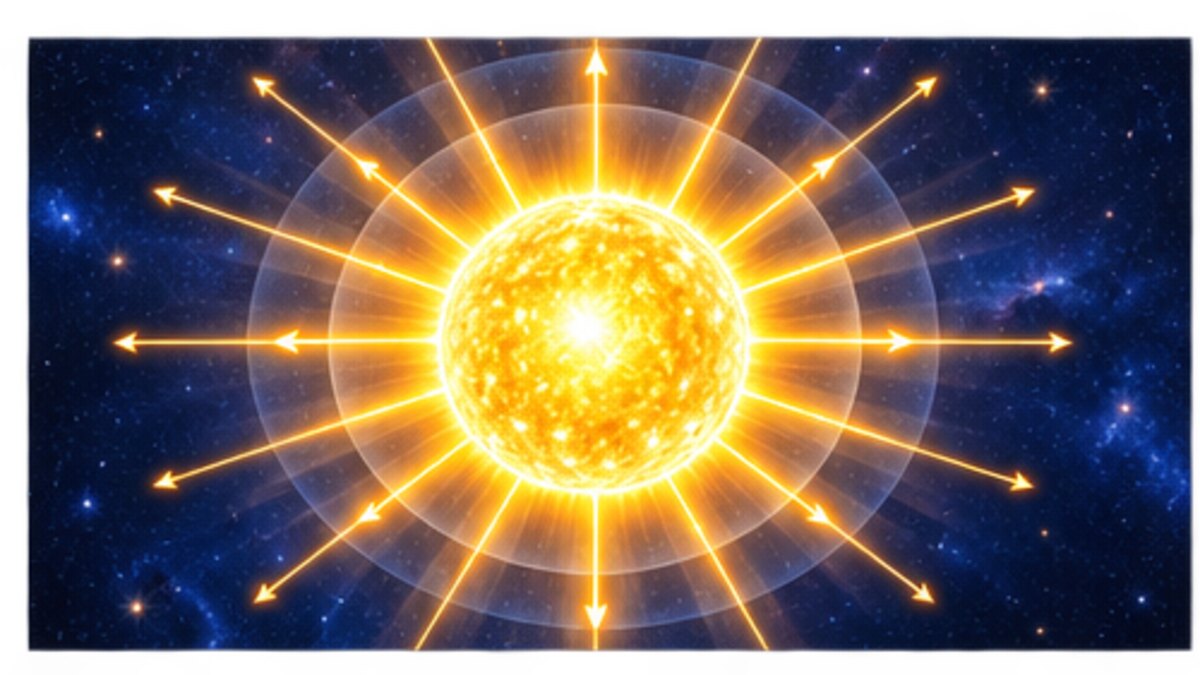
Luminosity
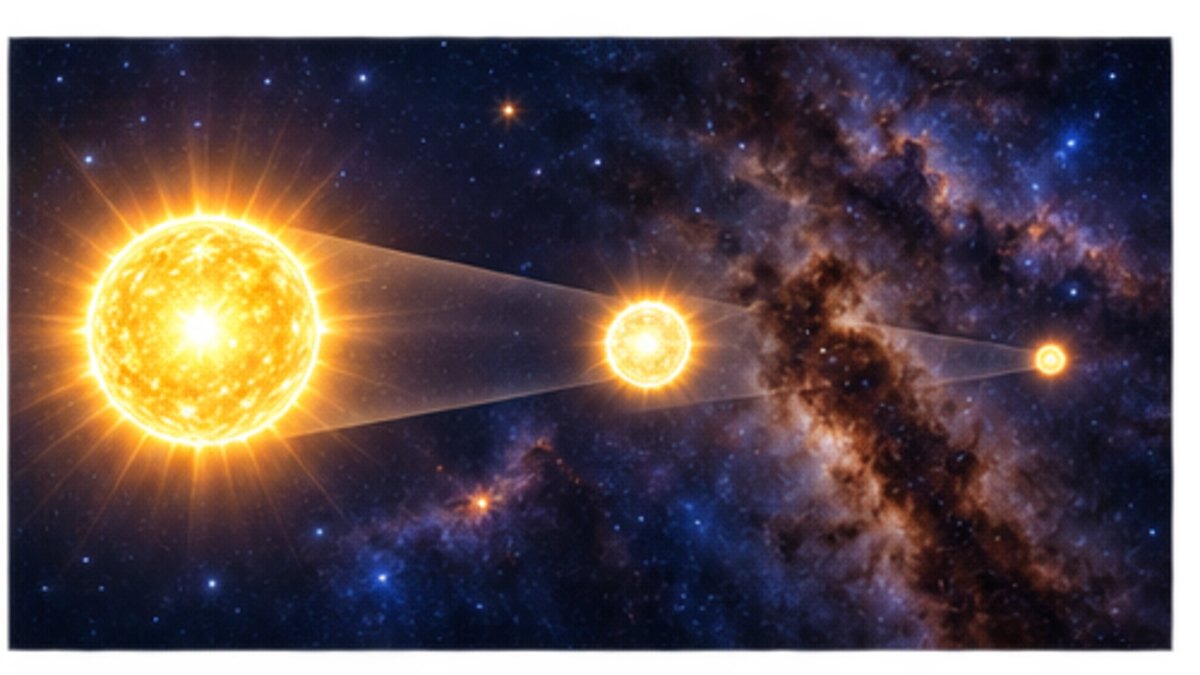
Luminosity is the total amount of energy an object gives off each second—its true power output. Unlike apparent brightness, it does not depend on how far away the object is from us.
More scientific detail +
The total energy an astronomical object radiates per unit time, independent of the observer’s distance. A star’s true energy output (luminosity) depends strongly on its radius and surface temperature, making it a fundamental measure of intrinsic power.
02Light & Measurement
Apparent Magnitude
Apparent magnitude tells us how bright an object looks from Earth. A nearby dim star can appear brighter than a distant powerful star, so this number describes what we see rather than the object’s true output.
More scientific detail +
A logarithmic measure of how bright an object appears from Earth. Smaller and more negative values are brighter; the measurement combines intrinsic true energy output (luminosity), distance, and any dimming by intervening material.
03Light & Measurement
Absolute Magnitude
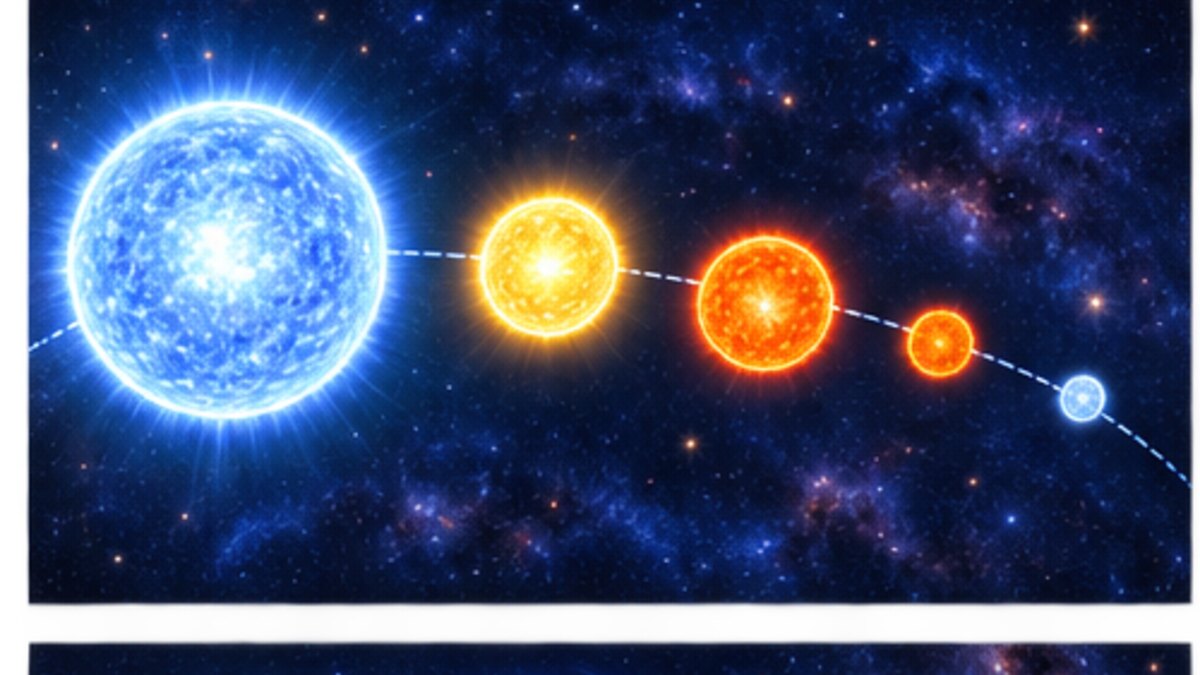
Absolute magnitude compares the true brightness of objects by imagining that they are all placed at the same distance: 10 parsecs away. This lets astronomers compare stars fairly.
More scientific detail +
The apparent magnitude an object would have at a standard distance of 10 parsecs. It allows astronomers to compare intrinsic visible brightness without the distorting effect of different distances.
04Light & Measurement
Spectral Line
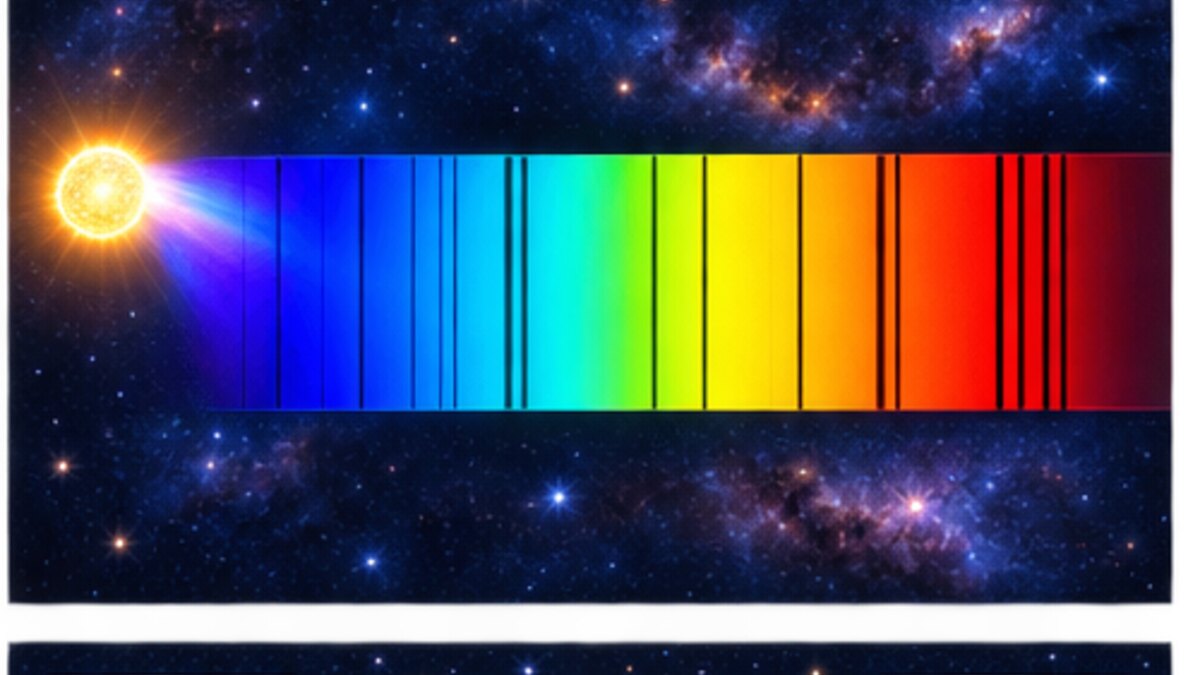
When light is spread into a spectrum, certain colors appear as bright or dark lines. These lines act like fingerprints, revealing which atoms are present and giving clues about temperature, motion, and magnetic fields.
More scientific detail +
A narrow feature in a spectrum produced when atoms or molecules emit or absorb specific photon energies. Line patterns reveal composition, temperature, density, magnetic fields, and motion.
05Light & Measurement
Doppler Effect
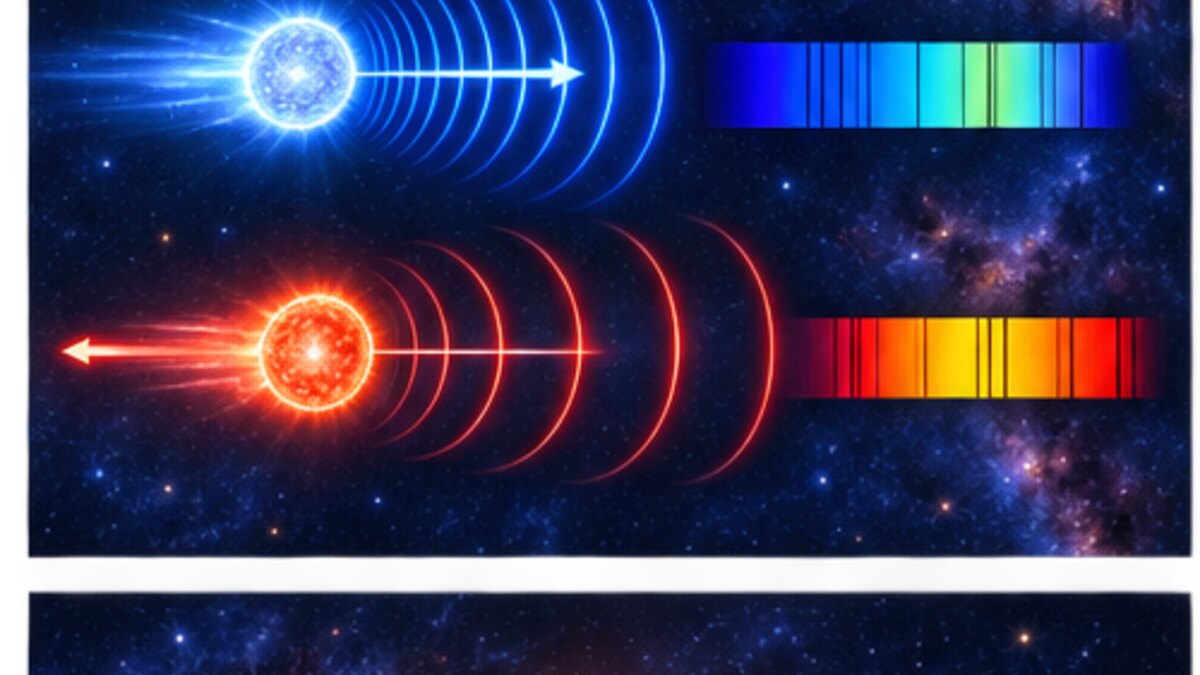
The Doppler effect is the change we observe when a source moves toward us or away from us. In light, motion toward us shifts colors slightly bluer, while motion away shifts them redder.
More scientific detail +
The change in observed wavelength caused by relative motion along the line of sight. Approaching sources are blueshifted and receding sources redshifted, allowing measurement of stellar velocities and exoplanet-induced wobbles.
06Distance
Parallax
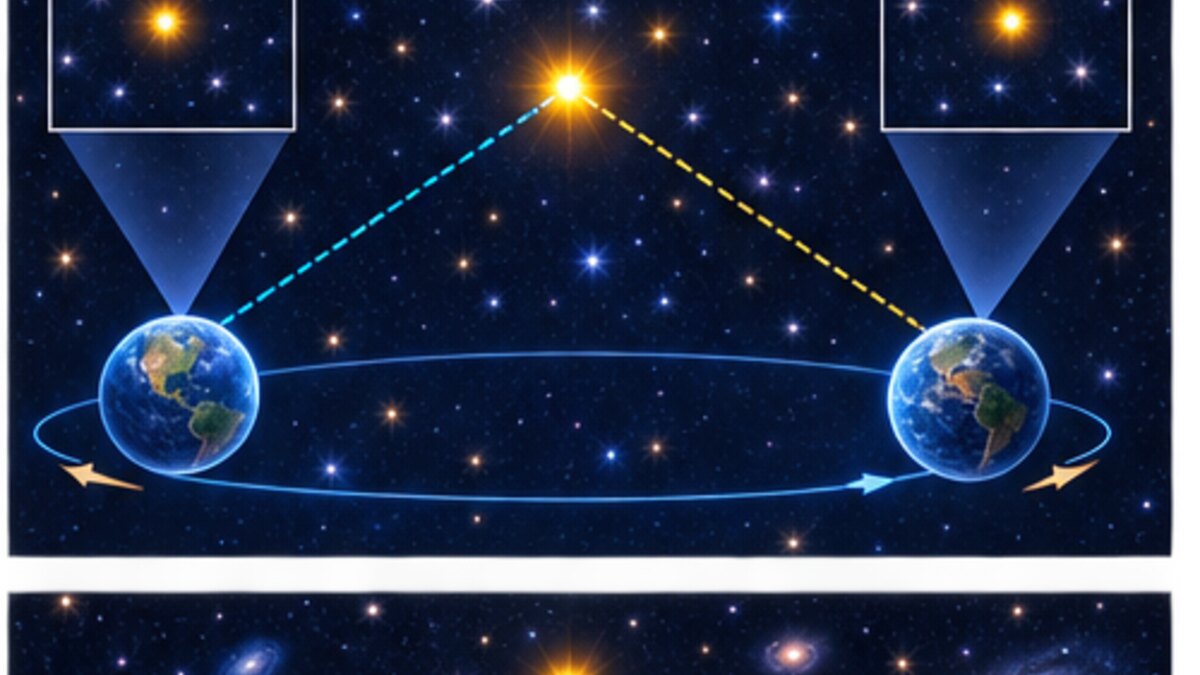
Parallax is the small apparent shift of a nearby object when viewed from two different positions. Astronomers use Earth’s movement around the Sun as a large viewing baseline to measure distances to nearby stars.
More scientific detail +
The apparent shift of a nearby object against a distant background when viewed from different positions. Earth’s orbit supplies the baseline for stellar parallax, creating the first direct rung of the cosmic distance ladder.
07Distance
Astronomical Unit
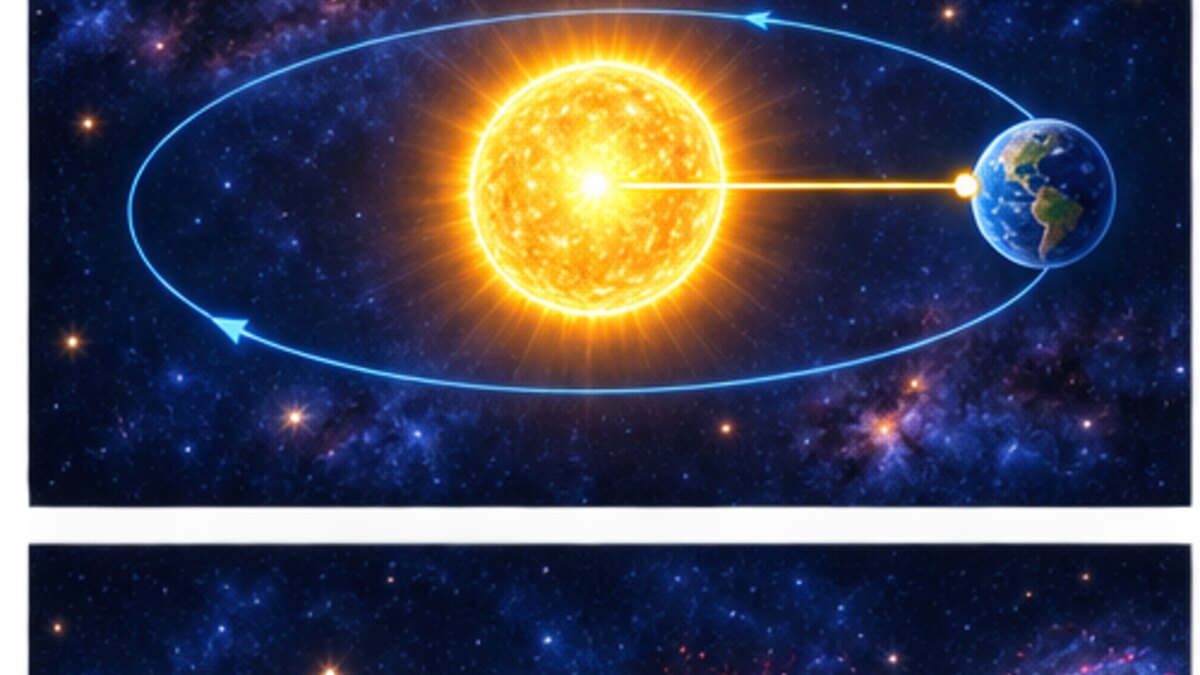
An astronomical unit, or AU, is the average distance between Earth and the Sun—about 150 million kilometers. It is a convenient ruler for distances within planetary systems.
More scientific detail +
A unit equal to the average Earth–Sun distance, exactly 149,597,870,700 meters by definition. It is convenient for describing the scale of planetary systems.
08Distance
Parsec
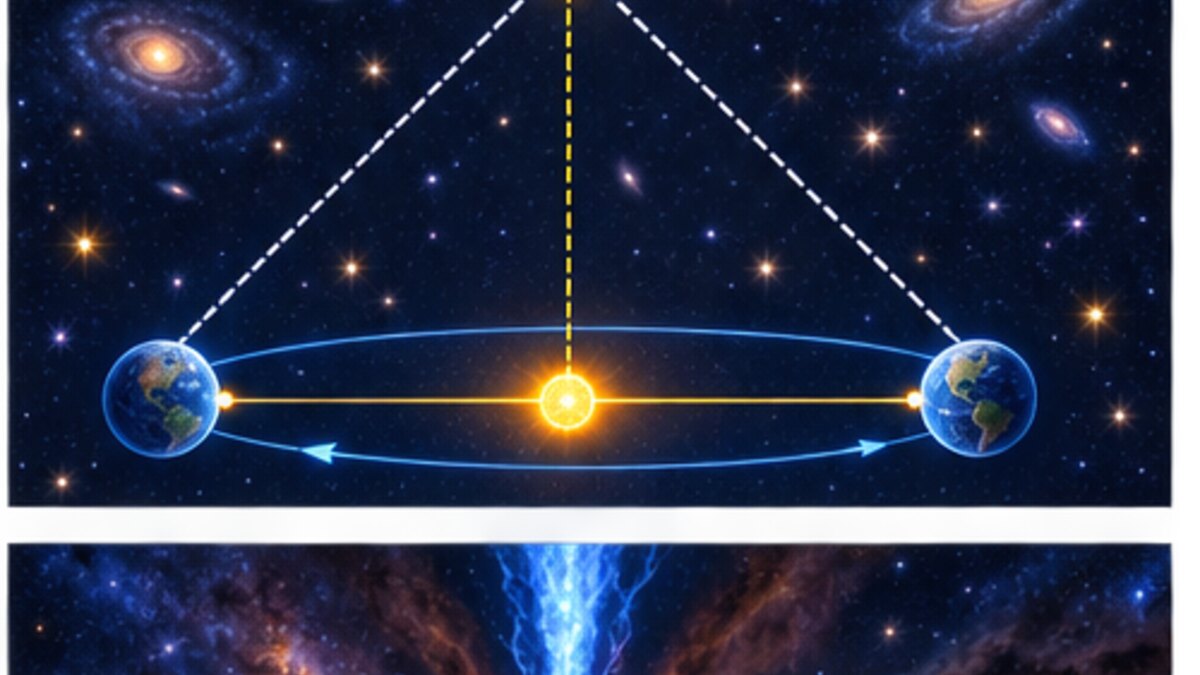
A parsec is a unit of distance equal to about 3.26 light-years. It comes from the geometry astronomers use when measuring stellar distance by parallax.
More scientific detail +
The distance at which one astronomical unit subtends an angle of one arcsecond, equal to about 3.26 light-years. The unit arises naturally from parallax geometry and is widely used in professional astronomy.
09Distance
Cosmic Distance Ladder
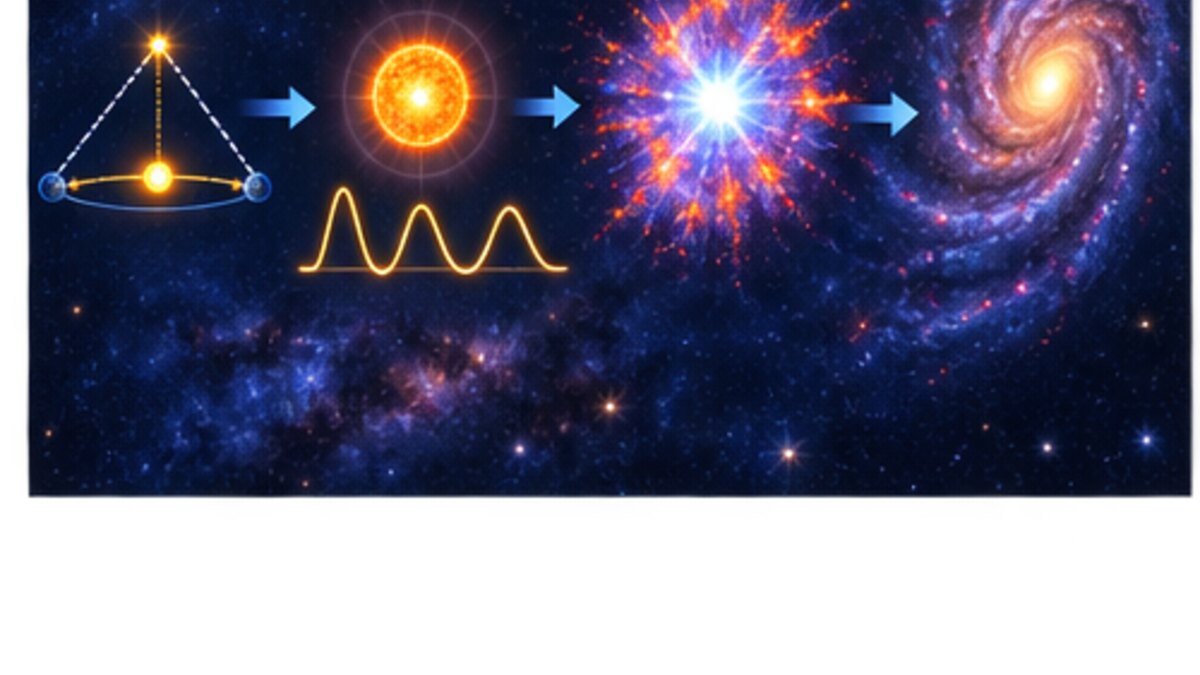
No single method can measure every cosmic distance. The cosmic distance ladder is a chain of overlapping methods: nearby measurements calibrate techniques that can reach progressively farther into space.
More scientific detail +
A linked sequence of methods used to measure increasingly distant objects. Parallax calibrates standard candles such as Cepheid variables, which help calibrate supernova distances and the expansion scale.
10Stars
Protostar
A protostar is a young star that is still gathering material from its birth cloud. It glows mainly because gravity is squeezing and heating it; steady hydrogen fusion has not yet begun in its center.
More scientific detail +
A contracting concentration of gas and dust that has not yet begun stable hydrogen fusion in its core. It grows by the gradual buildup of matter (accretion), radiates gravitational energy, and is often hidden inside a dusty stellar nursery.
11Stars
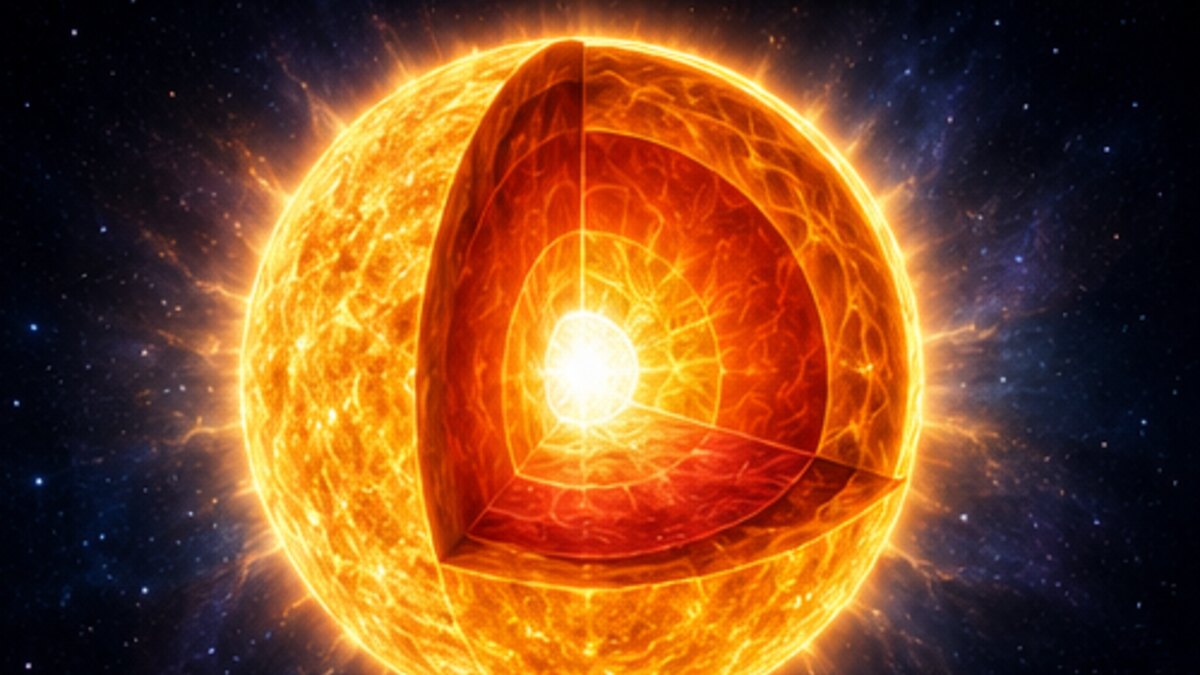
Main-Sequence Star
A main-sequence star is in the long, stable period when it turns hydrogen into helium in its core. Our Sun is currently in this stage.
More scientific detail +
A star in the long-lived phase when core hydrogen fusion supplies enough pressure to balance gravity. Its mass largely determines its temperature, true energy output (luminosity), lifetime, and later evolution.
12Stars
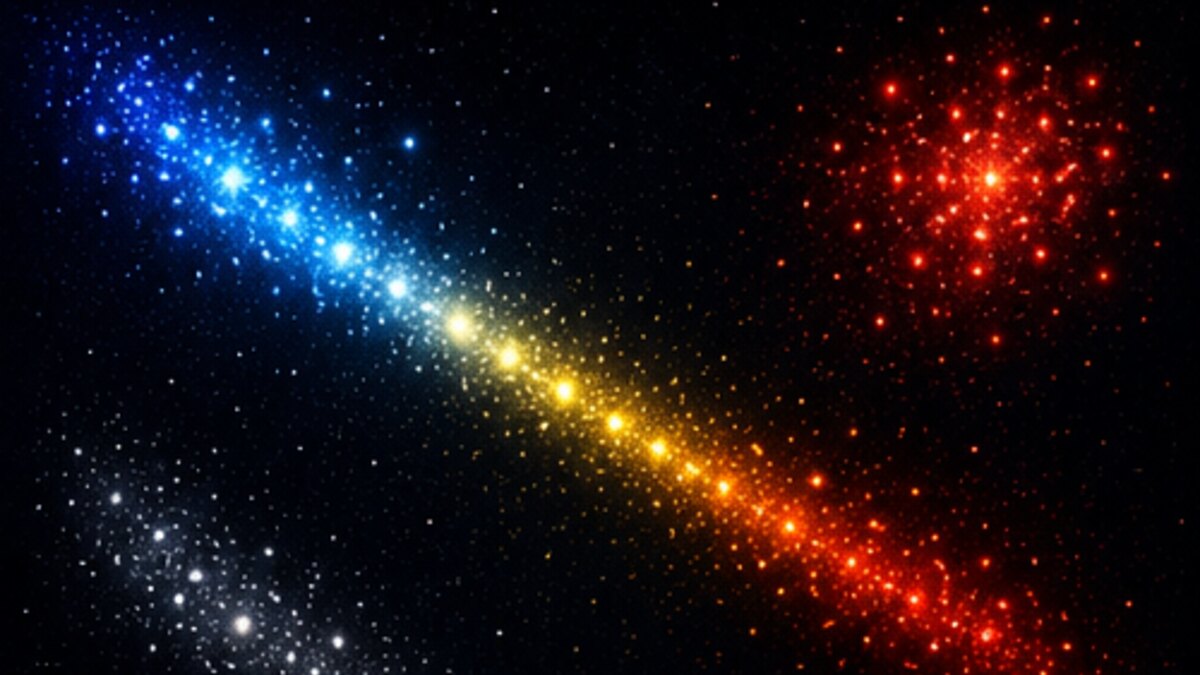
Hertzsprung–Russell Diagram
The H–R diagram is a chart that organizes stars by brightness and surface temperature. Where a star appears on the chart helps astronomers understand its size, life stage, and likely future.
More scientific detail +
A plot of stellar true energy output (luminosity) or absolute magnitude against surface temperature or spectral type. It organizes stars into groups such as the main sequence, giants, supergiants, and white dwarfs, revealing evolutionary relationships.
13Stars
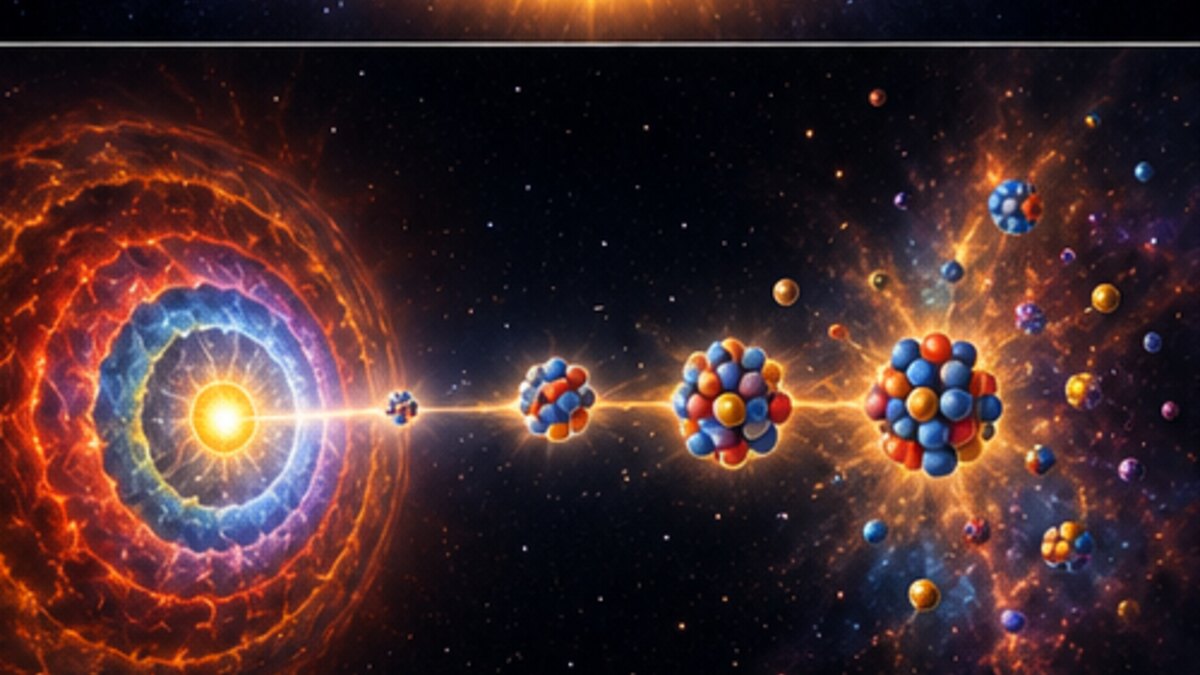
Stellar Nucleosynthesis
Stellar nucleosynthesis means making new atomic elements inside stars. Fusion builds many elements, and stellar explosions or collisions help create and spread some of the heaviest ones.
More scientific detail +
The production of new atomic nuclei through fusion and related nuclear reactions inside stars. Stars build many elements up to iron, while stellar explosions and neutron-capture events create and disperse numerous heavier elements.
14Stars
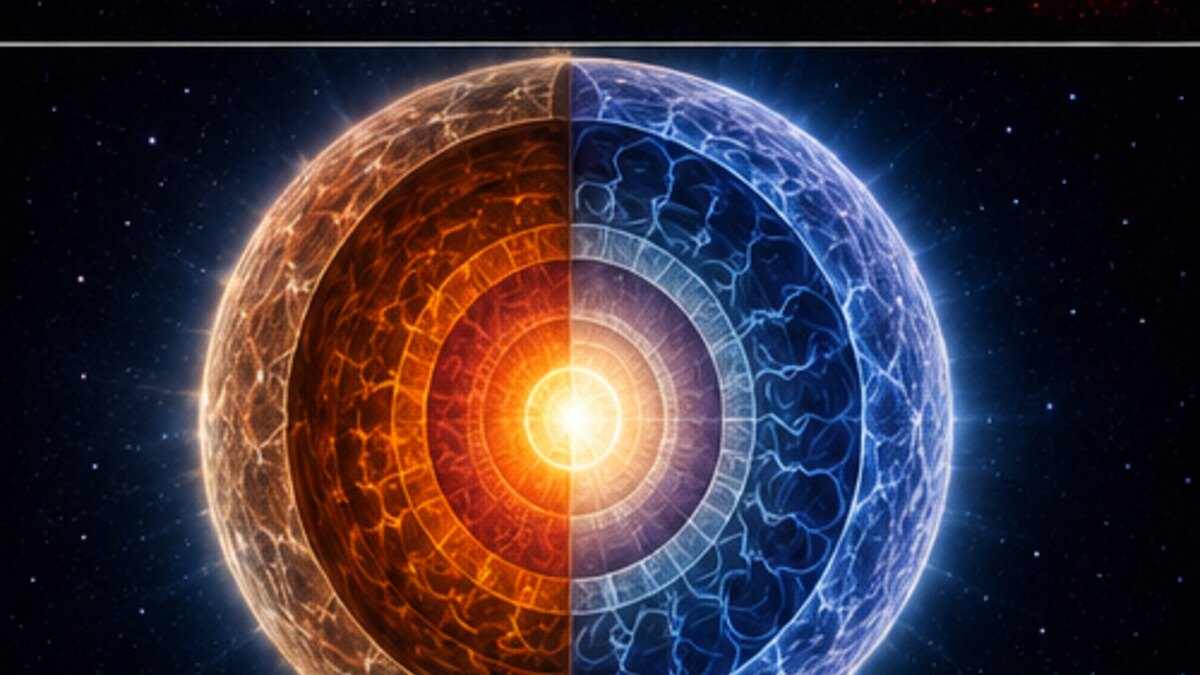
Hydrostatic Equilibrium
A stable star is held in a balance: gravity pulls its material inward while hot gas and radiation push outward. This balance is called hydrostatic equilibrium.
More scientific detail +
The balance between inward gravity and an outward pressure gradient inside a star or other self-gravitating body. A stable star spends most of its life near this balance; losing it can trigger contraction, expansion, or collapse.
15Stellar Remnants
Chandrasekhar Limit
A white dwarf can support itself only up to about 1.4 times the Sun’s mass. Above this Chandrasekhar limit, it must collapse or explode, depending on what is happening around it.
More scientific detail +
The maximum mass—about 1.4 solar masses—for a nonrotating white dwarf supported by electron quantum pressure that resists further compression. Above it, a white dwarf cannot remain stable and may collapse or explode depending on its circumstances.
16Stars
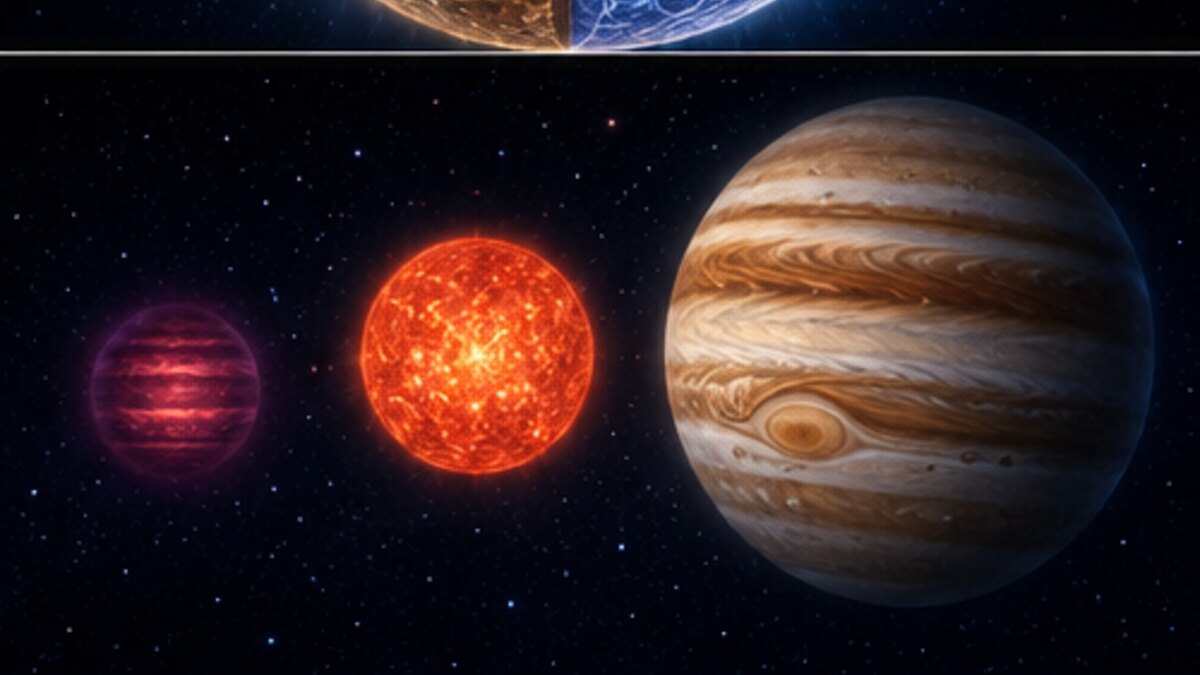
Brown Dwarf
A brown dwarf forms much like a star but never becomes massive enough to sustain ordinary hydrogen fusion. It sits between the largest planets and the smallest true stars.
More scientific detail +
An object formed like a star but too low in mass to sustain ordinary hydrogen fusion. Brown dwarfs bridge the mass range between giant planets and the smallest stars and may briefly fuse deuterium.
17Stars
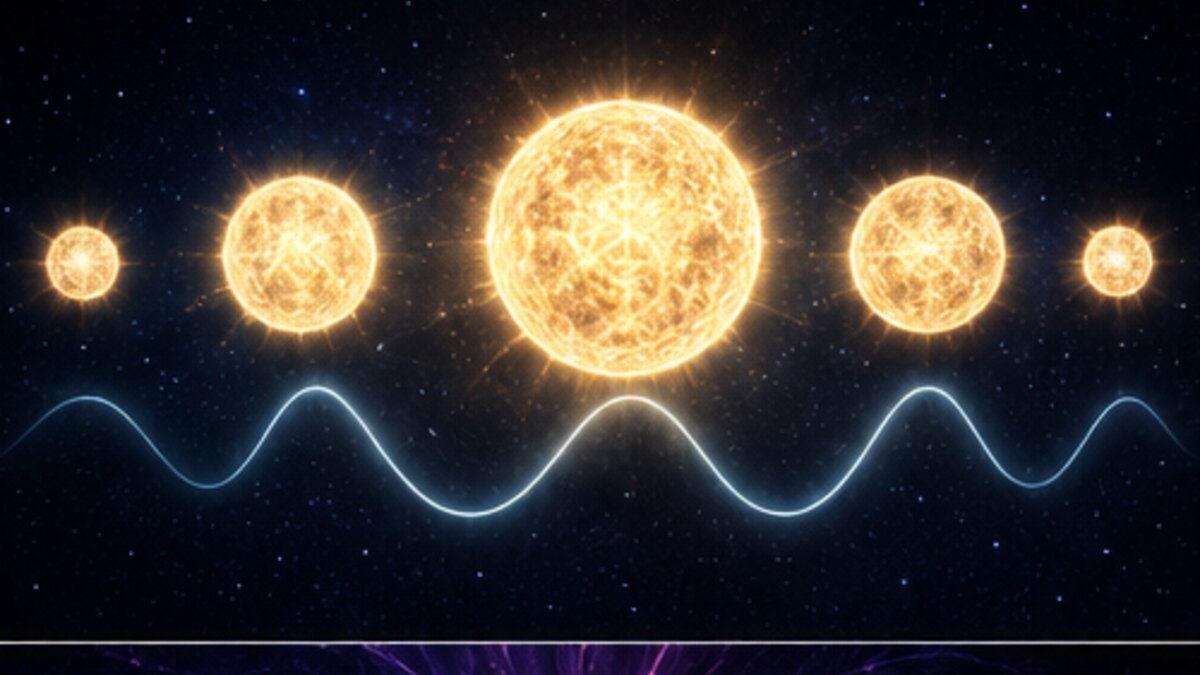
Variable Star
A variable star changes in brightness over time. The cause might be pulsation, rotation, an eclipse by a companion, or an eruption; some predictable variables are valuable tools for measuring distance.
More scientific detail +
A star whose observed brightness changes with time because of pulsation, rotation, eclipses, eruptions, or other causes. Certain pulsating variables have predictable luminosities and are essential distance indicators.
18Stellar Remnants
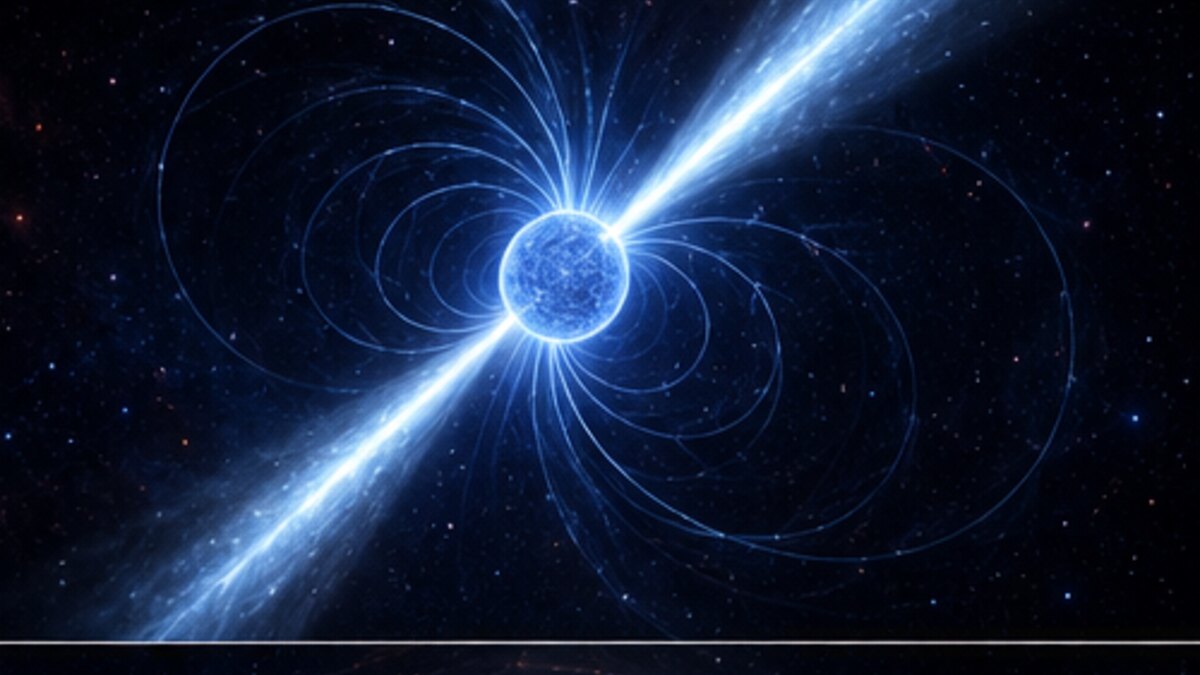
Pulsar
A pulsar is a rapidly spinning neutron star with beams of radiation sweeping through space. When a beam crosses Earth, we detect a regular pulse—like seeing the flash from a cosmic lighthouse.
More scientific detail +
A rapidly rotating neutron star whose magnetic beams sweep across space. When a beam crosses Earth, telescopes record highly regular pulses from radio to gamma-ray wavelengths.
19Stellar Remnants
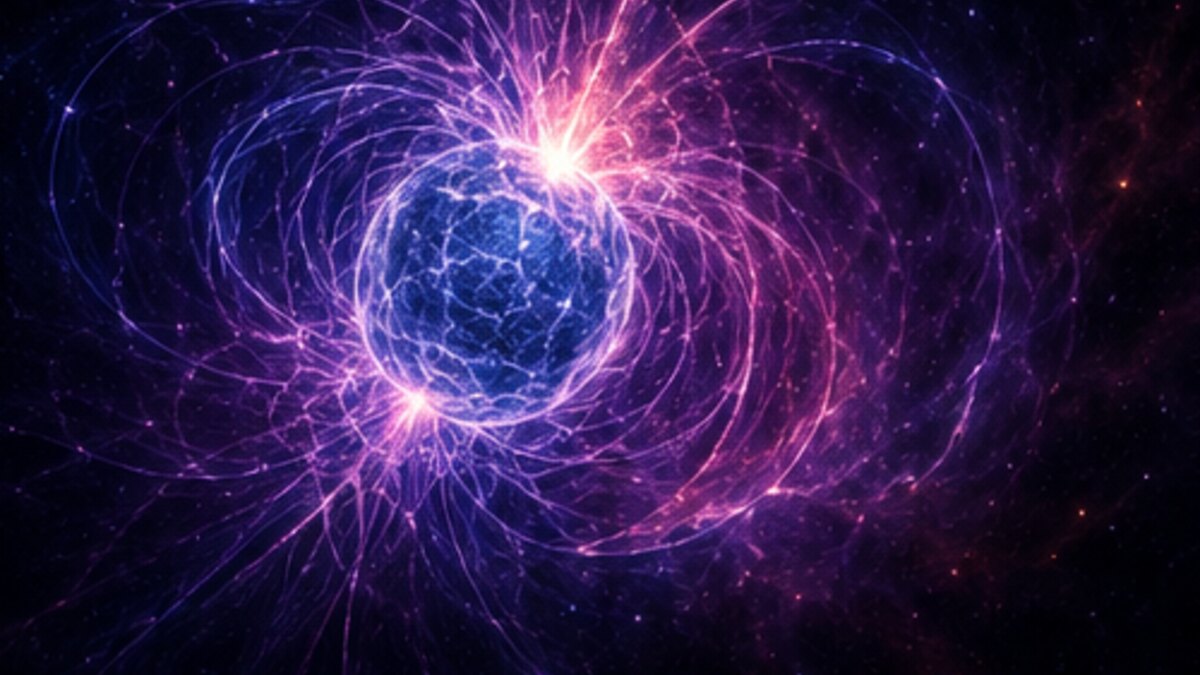
Magnetar
A magnetar is a neutron star with an extraordinarily strong magnetic field. Stress in that field can release powerful bursts of X-rays and gamma rays.
More scientific detail +
A neutron star with an exceptionally strong magnetic field. Magnetic stress powers bursts and giant flares, making magnetars among the most extreme laboratories for matter and fields.
20Black Holes
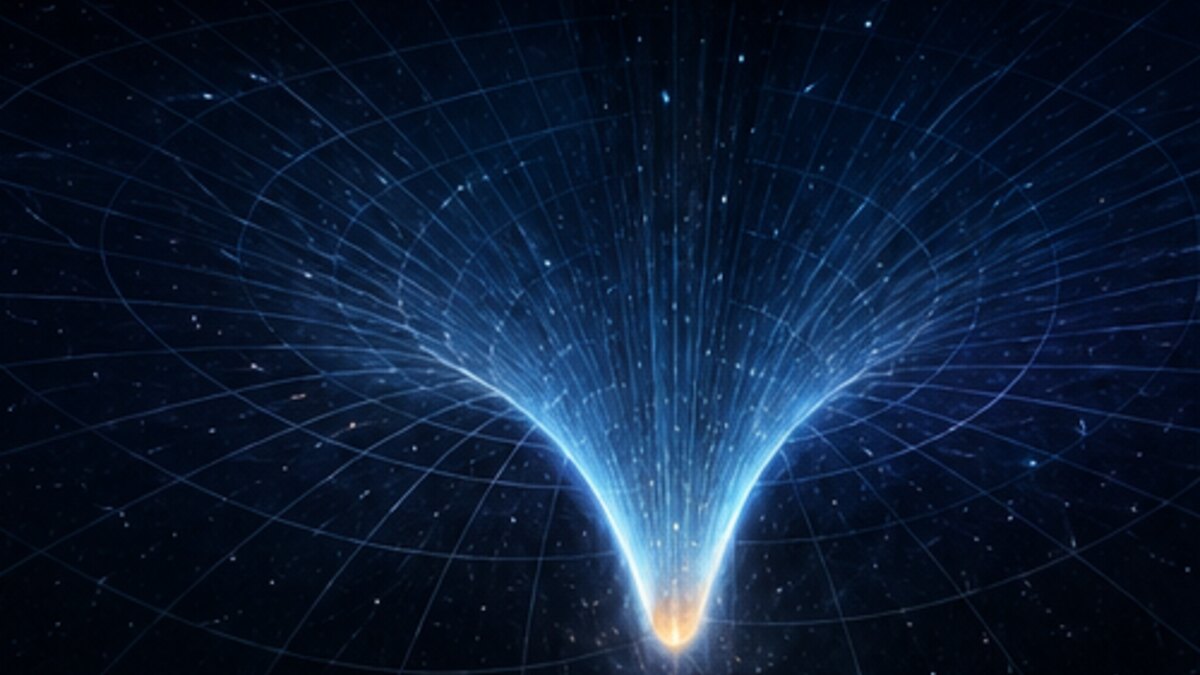
Event Horizon
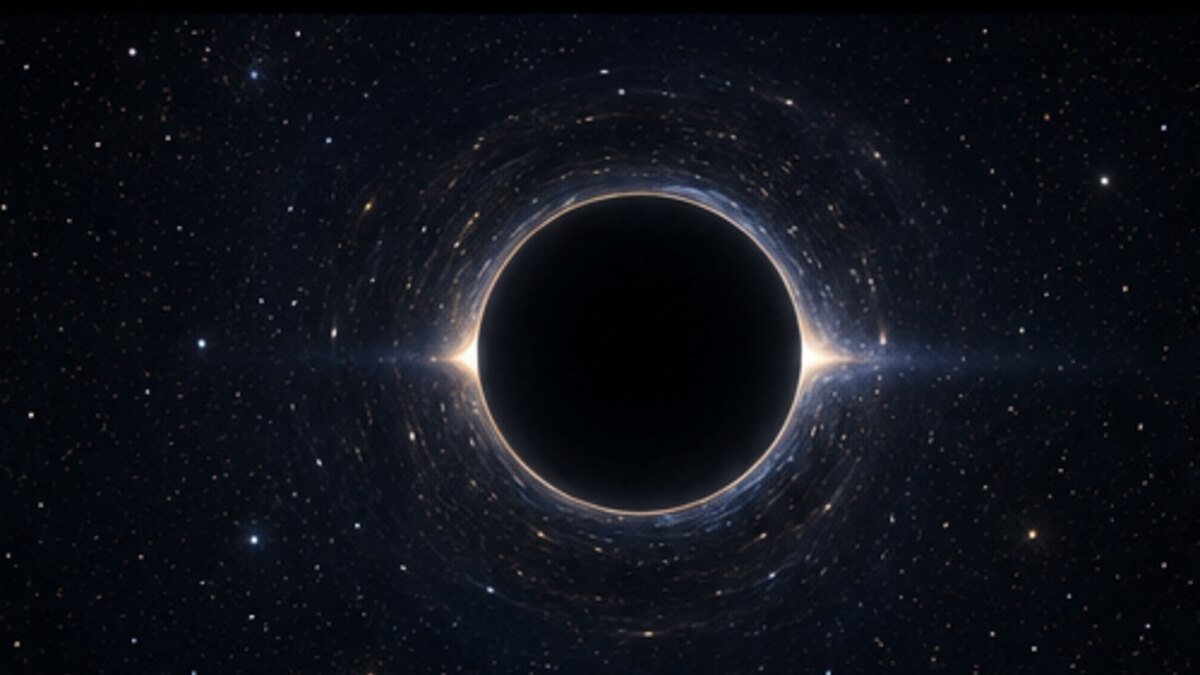
The event horizon is the boundary around a black hole beyond which nothing can return. It is not a solid surface; it is the point where every possible path through space and time leads farther inward.
More scientific detail +
The causal boundary surrounding a black hole beyond which no signal can return to the exterior. It is not a material surface; it is a feature of the connected fabric of space and time geometry.
21Black Holes
Singularity
A singularity is where today’s equations of general relativity stop giving sensible answers inside a black hole. It probably signals that the theory is incomplete there, rather than describing something scientists fully understand.
More scientific detail +
A region where a classical the connected fabric of space and time model predicts quantities such as curvature become undefined or infinite. Physicists generally interpret this as a sign that general relativity is incomplete at extreme quantum scales, not as a fully understood physical object.
22Black Holes
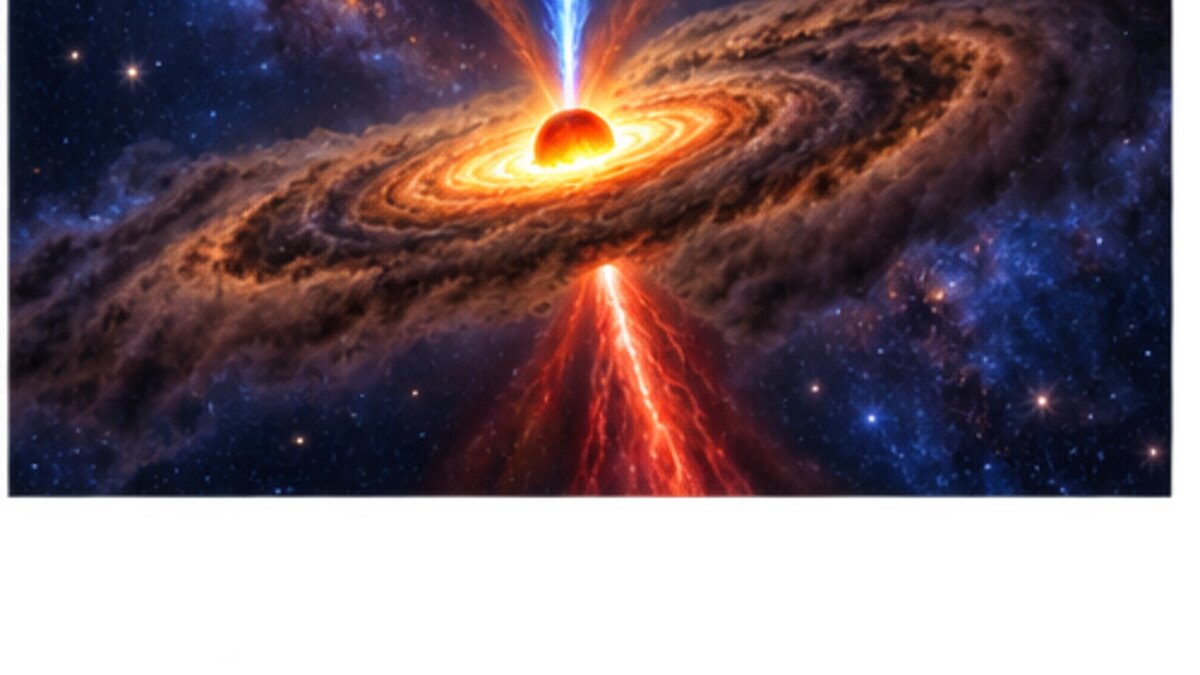
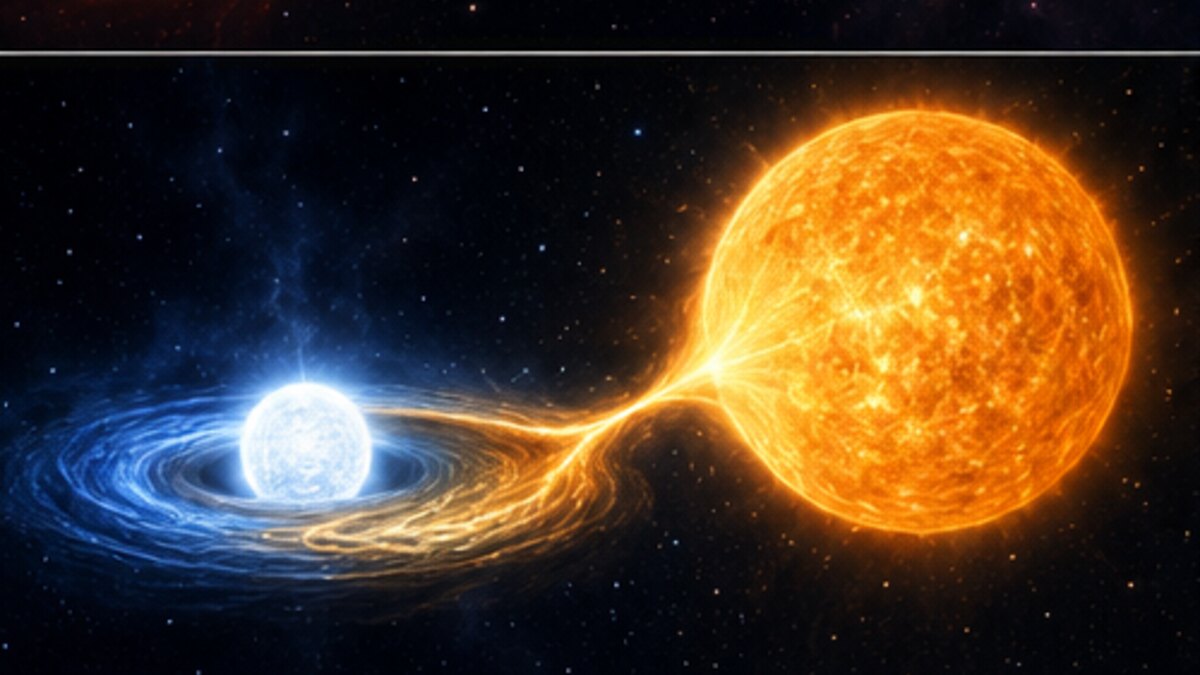
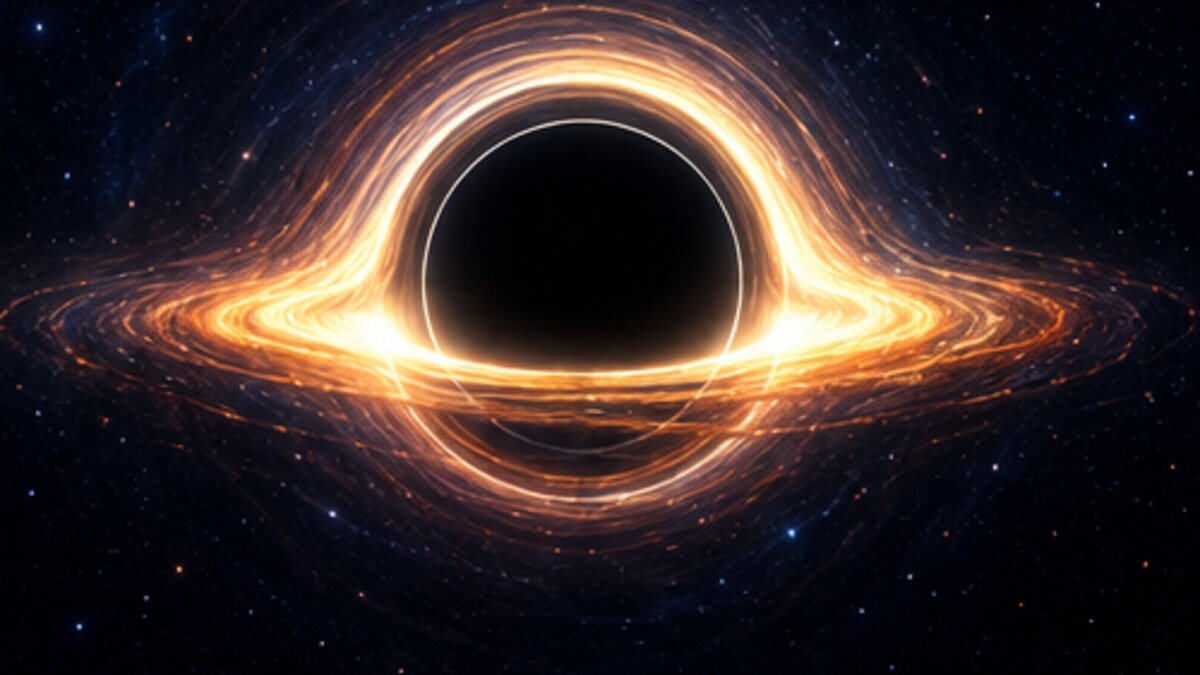
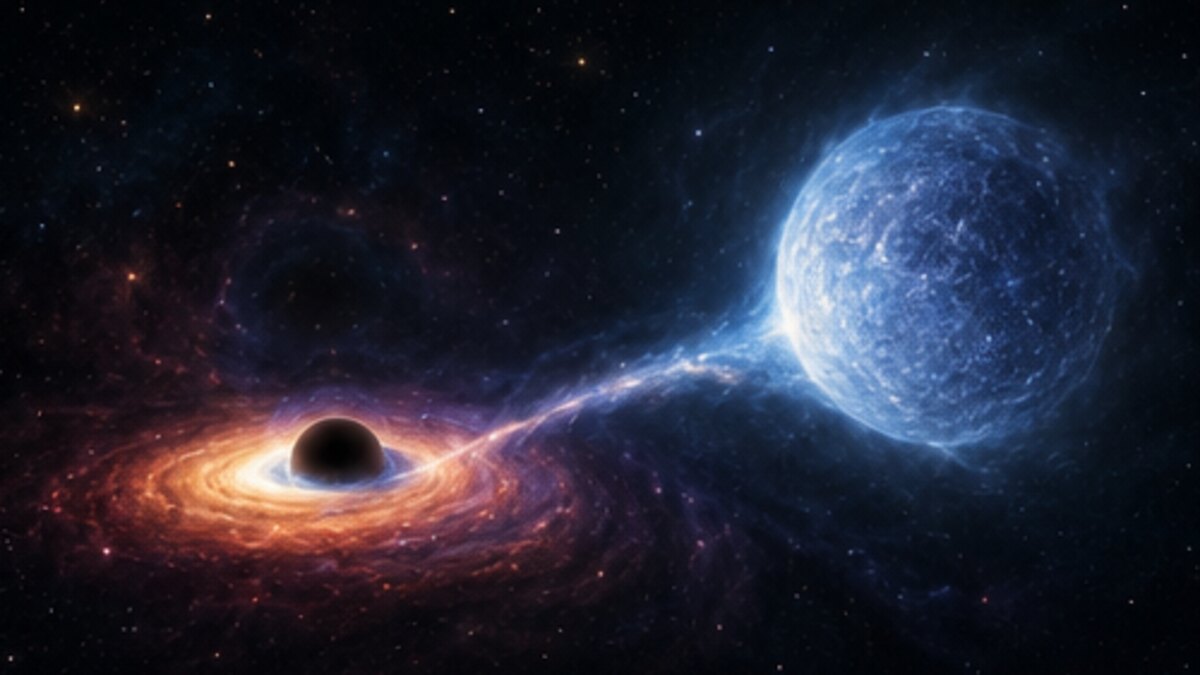
Accretion Disk
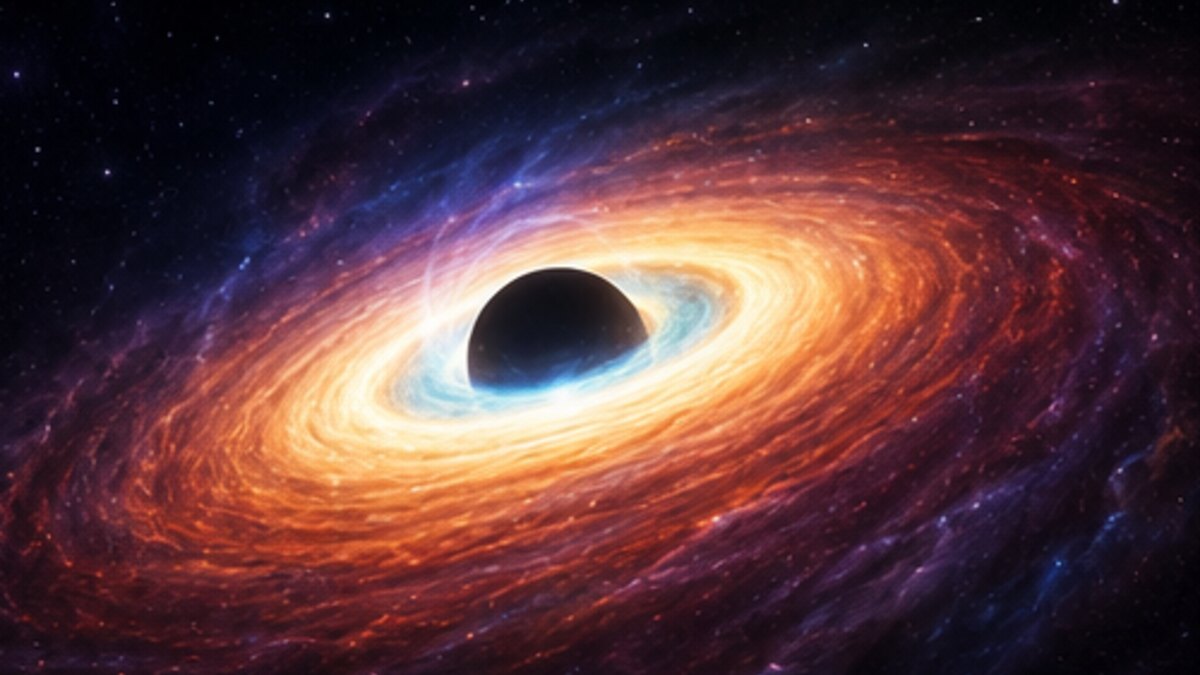
An accretion disk is a rotating ring of gas and dust falling toward a star, white dwarf, neutron star, or black hole. Friction and magnetic activity heat the material so strongly that the disk can glow brilliantly.
More scientific detail +
A rotating disk formed when gas or dust loses energy while orbiting a compact object. Friction-like magnetic turbulence heats the material, allowing black-hole disks to radiate intensely before matter crosses the horizon.
23Black Holes
Schwarzschild Radius
The Schwarzschild radius tells us how small a non-spinning mass would have to become before it formed a black hole. For a black hole, this radius marks the size of its event horizon.
More scientific detail +
The event-horizon radius of an ideal nonrotating, uncharged black hole, equal to 2GM/c². It grows linearly with mass and provides a useful scale for compactness.
24Relativity
Frame Dragging
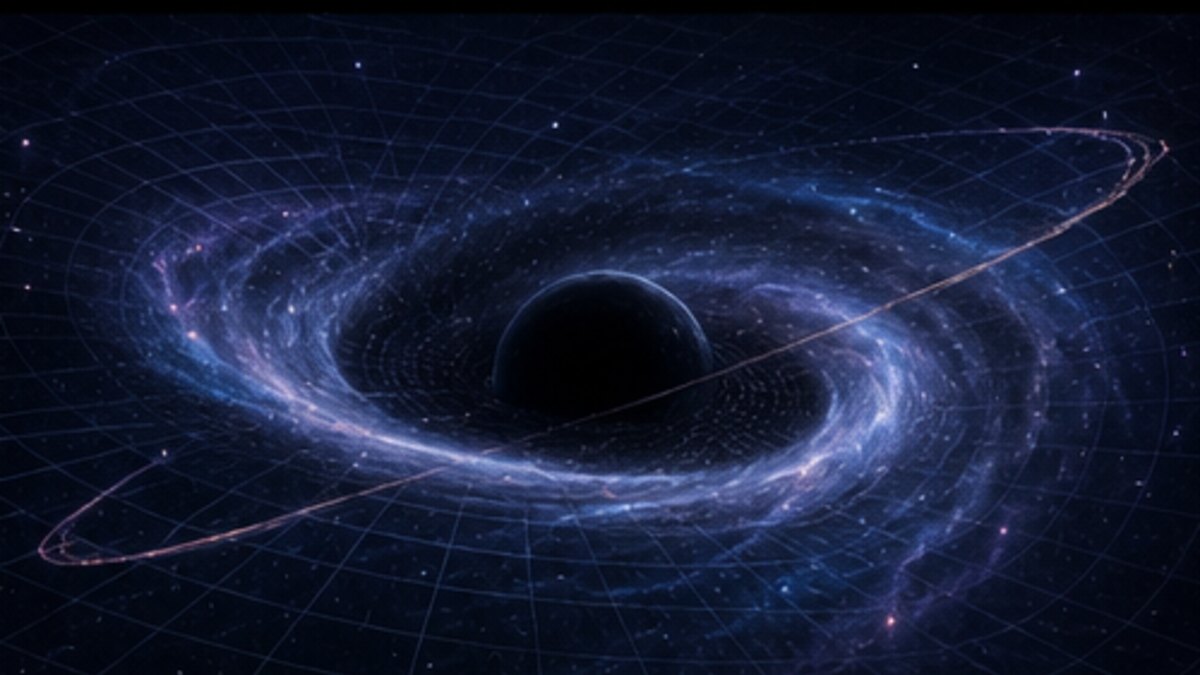
A rotating object slightly twists the space and time around it, an effect called frame dragging. The effect is tiny near Earth but can become extreme near a rapidly spinning black hole.
More scientific detail +
The twisting of local the connected fabric of space and time caused by a rotating mass. Near a spinning black hole, frame dragging becomes so strong that all observers inside the ergosphere must rotate in the same general direction.
25Black Holes
Hawking Radiation
Quantum theory predicts that black holes should release a faint thermal glow called Hawking radiation. This would make them lose mass extremely slowly, although the effect is far too weak to observe from ordinary astrophysical black holes today.
More scientific detail +
Thermal radiation predicted when quantum fields are analyzed around a black-hole horizon. It makes black holes lose mass extremely slowly; larger astrophysical black holes are colder and evaporate over fantastically long times.
26Black Holes
Stellar-Mass Black Hole
A stellar-mass black hole usually forms when the core of a massive star collapses. It contains several to dozens of times the Sun’s mass, packed inside an event horizon only tens or hundreds of kilometers across.
More scientific detail +
A black hole generally formed through the collapse of a massive star or related compact-object evolution. Typical known masses range from a few to tens of solar masses, with boundaries refined as observations improve.
27Black Holes
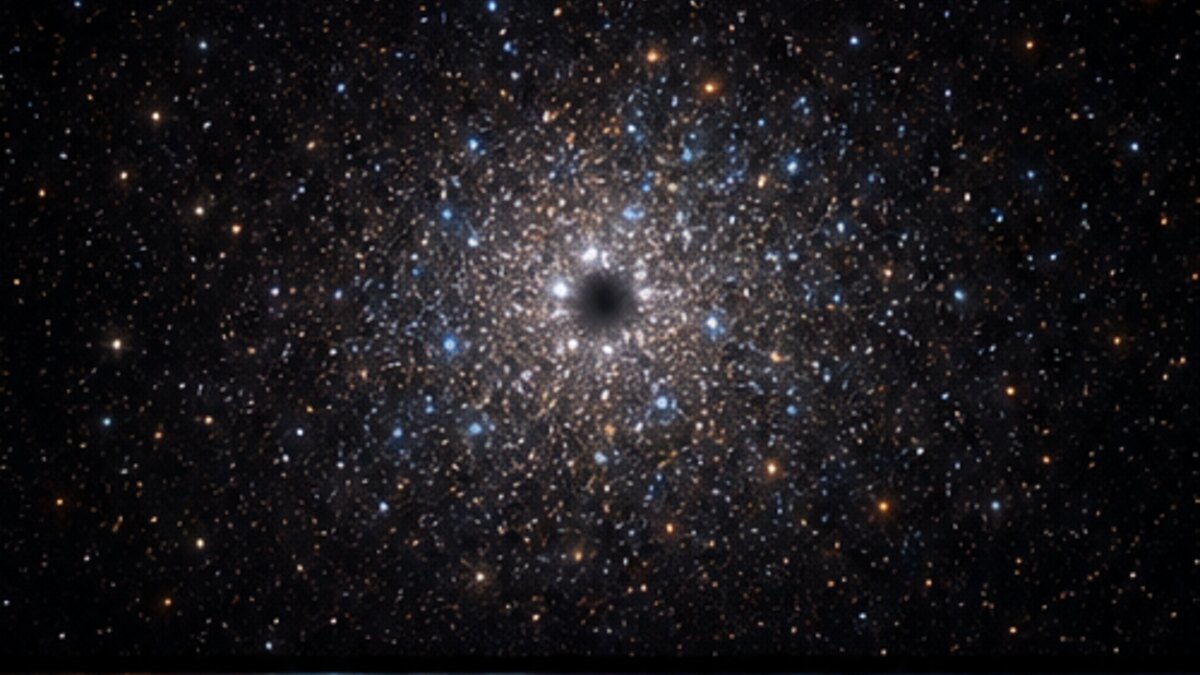
Intermediate-Mass Black Hole
An intermediate-mass black hole would sit between black holes made by stars and the giants found in galactic centers. Evidence for this middle group is growing, but these objects remain difficult to confirm.
More scientific detail +
A proposed and increasingly supported class between stellar and supermassive black holes, roughly hundreds to hundreds of thousands of solar masses. Candidates may form through repeated mergers, dense cluster processes, or direct collapse.
28Galaxies
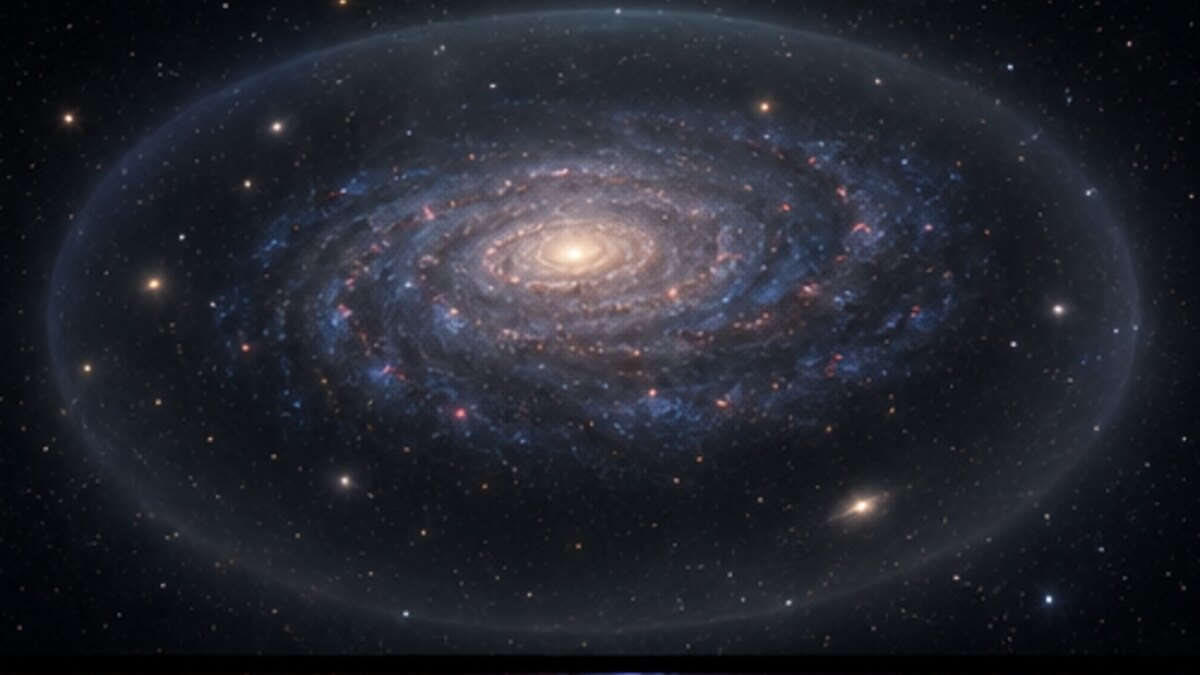
Galactic Halo
A galactic halo is the large, roughly spherical region surrounding a galaxy’s bright disk. It contains old stars, clusters, hot gas, and a much larger amount of unseen dark matter.
More scientific detail +
A roughly spherical region surrounding a galaxy’s visible disk and bulge. It contains old stars, globular clusters, hot gas, and a much more massive extended dark-matter component.
29Galaxies
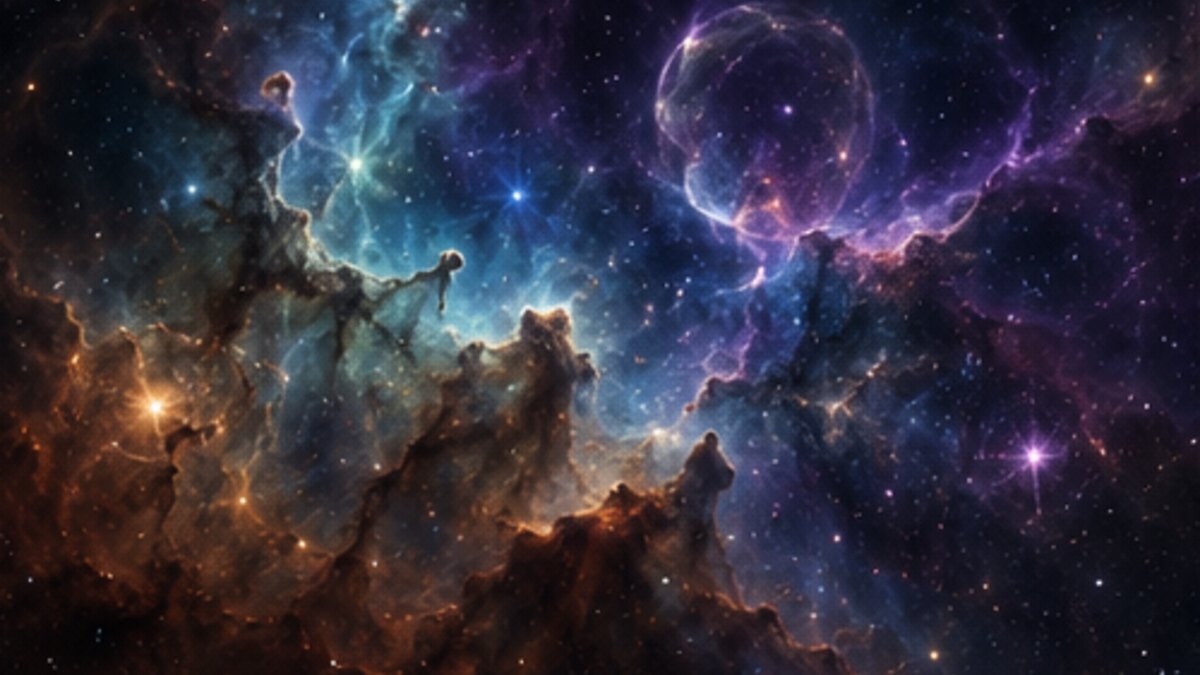
Interstellar Medium
The interstellar medium is everything found in the space between a galaxy’s stars: gas, dust, magnetic fields, energetic particles, and radiation. It is the raw material from which new stars and planets form.
More scientific detail +
The gas, dust, cosmic rays, magnetic fields, and radiation between stars in a galaxy. It cycles through cold clouds, star formation, stellar winds, supernova heating, and chemical enrichment.
30Galaxies
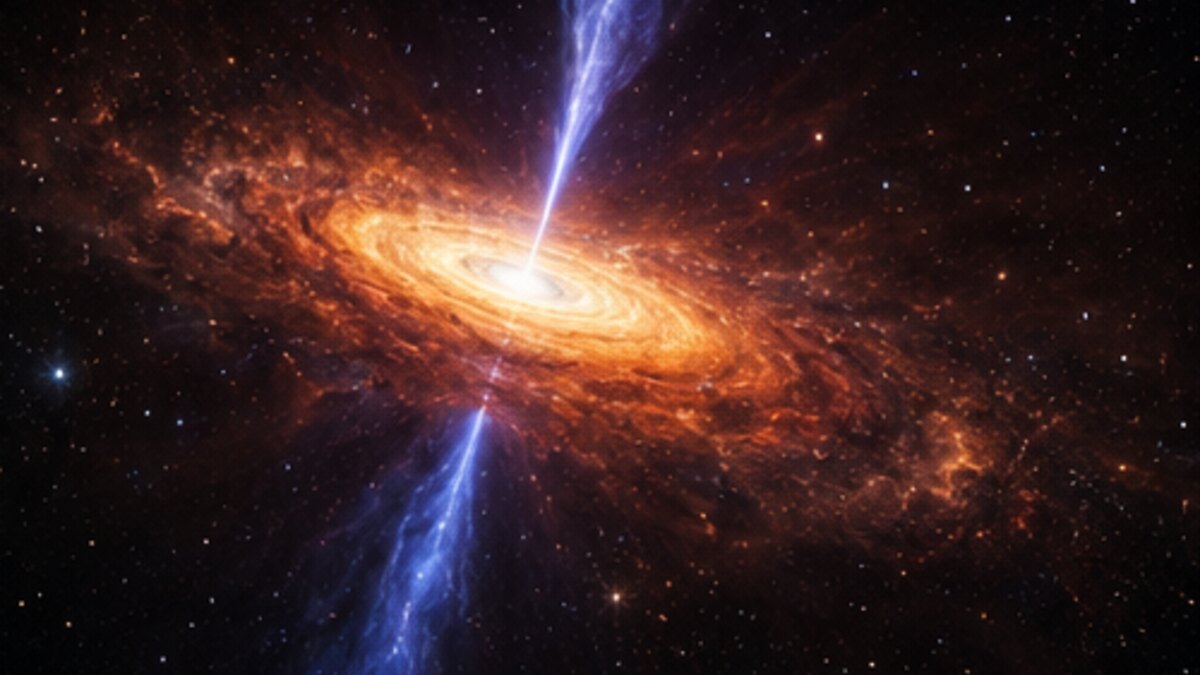
Active Galactic Nucleus
An active galactic nucleus is an unusually bright galactic center powered by matter falling toward a supermassive black hole. The falling material can release enormous energy before it crosses the event horizon.
More scientific detail +
A compact, energetic galactic center powered by matter accreting onto a supermassive black hole. Its appearance depends on power, viewing angle, dust, jets, and wavelength.
31Galaxies
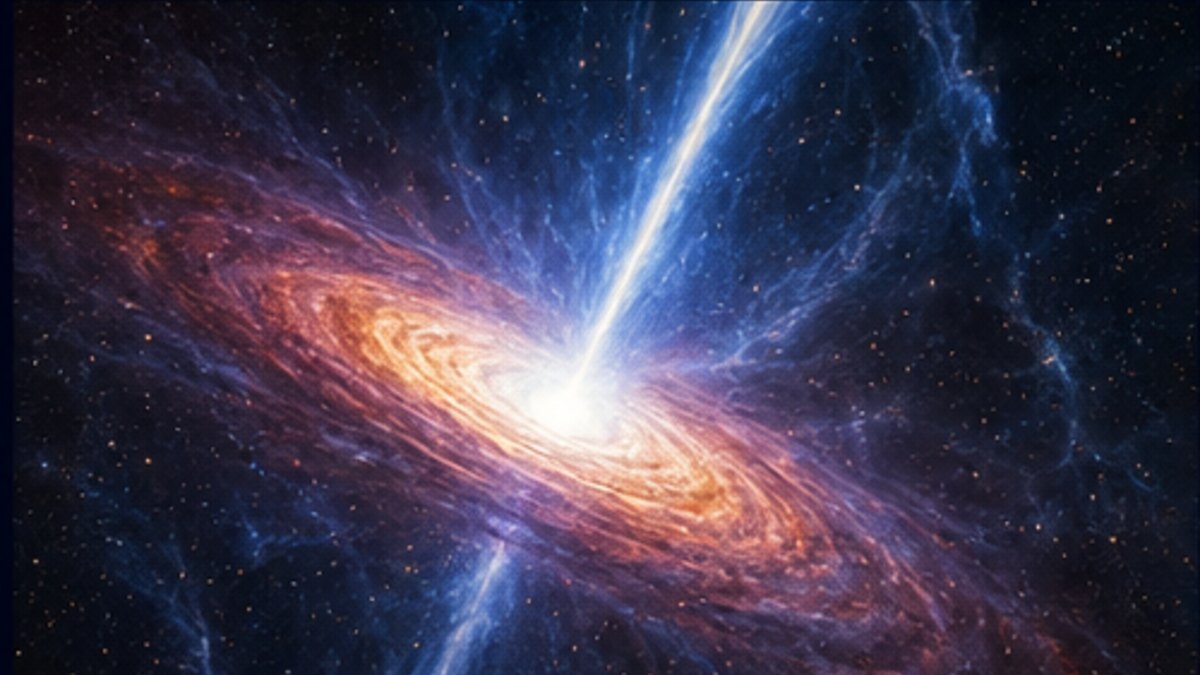
Quasar
A quasar is an extremely bright active galactic nucleus. It is powered by a rapidly feeding supermassive black hole and can be seen across most of the observable universe.
More scientific detail +
An extremely luminous active galactic nucleus visible across enormous cosmic distances. Quasars are powered by rapid the gradual buildup of matter (accretion) onto supermassive black holes and help probe the early universe and intervening matter.
32Galaxies
Blazar
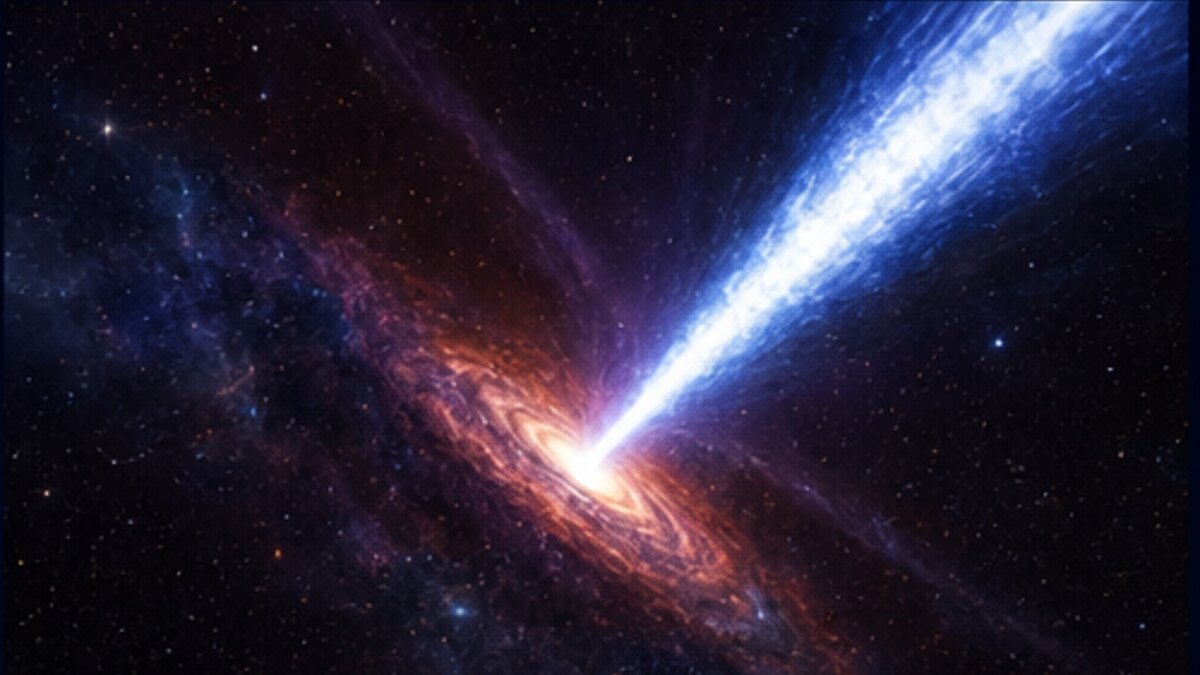
A blazar is an active galaxy whose high-speed jet points almost directly toward Earth. That alignment makes it look especially bright and allows its light to change rapidly.
More scientific detail +
An active galactic nucleus whose relativistic jet points close to our line of sight. Relativistic beaming makes blazars bright, rapidly variable, and strong emitters across the electromagnetic spectrum.
33Galaxies
Radio Galaxy
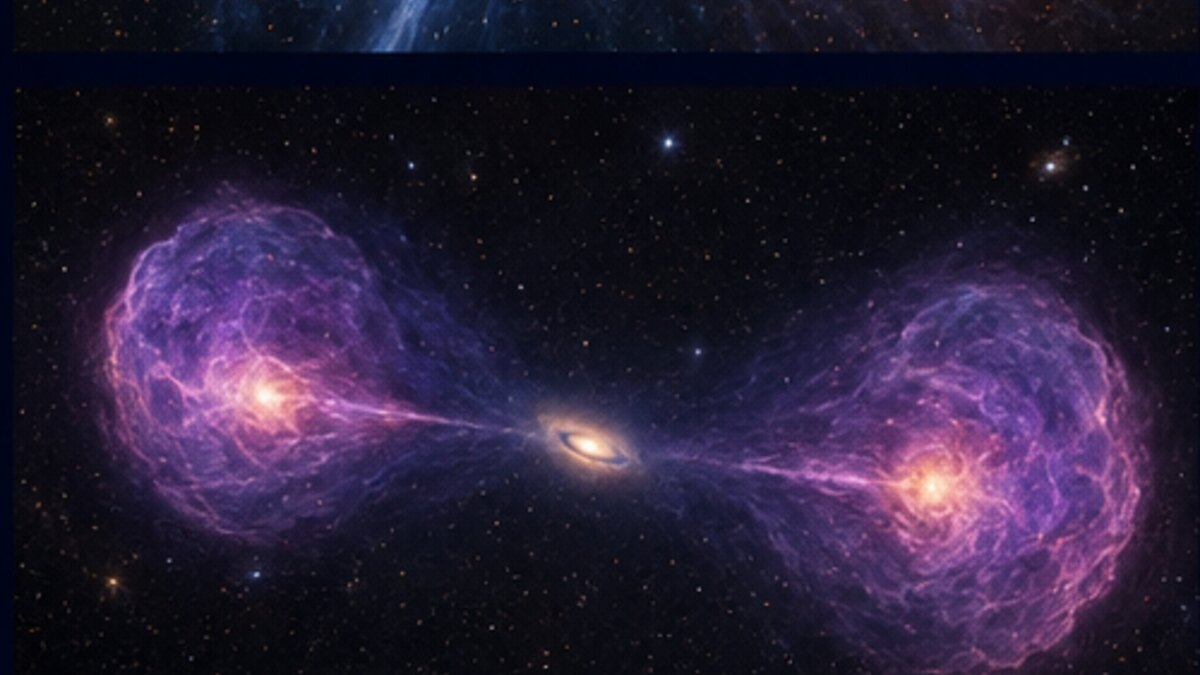
A radio galaxy launches powerful jets that create enormous radio-emitting clouds far beyond the galaxy’s visible stars. These structures show how a central black hole can affect a vast surrounding region.
More scientific detail +
An active galaxy with powerful radio-emitting jets and lobes extending far beyond its stars. Synchrotron radiation from relativistic electrons traces the interaction between jets and surrounding gas.
34Galaxies
Sagittarius A*
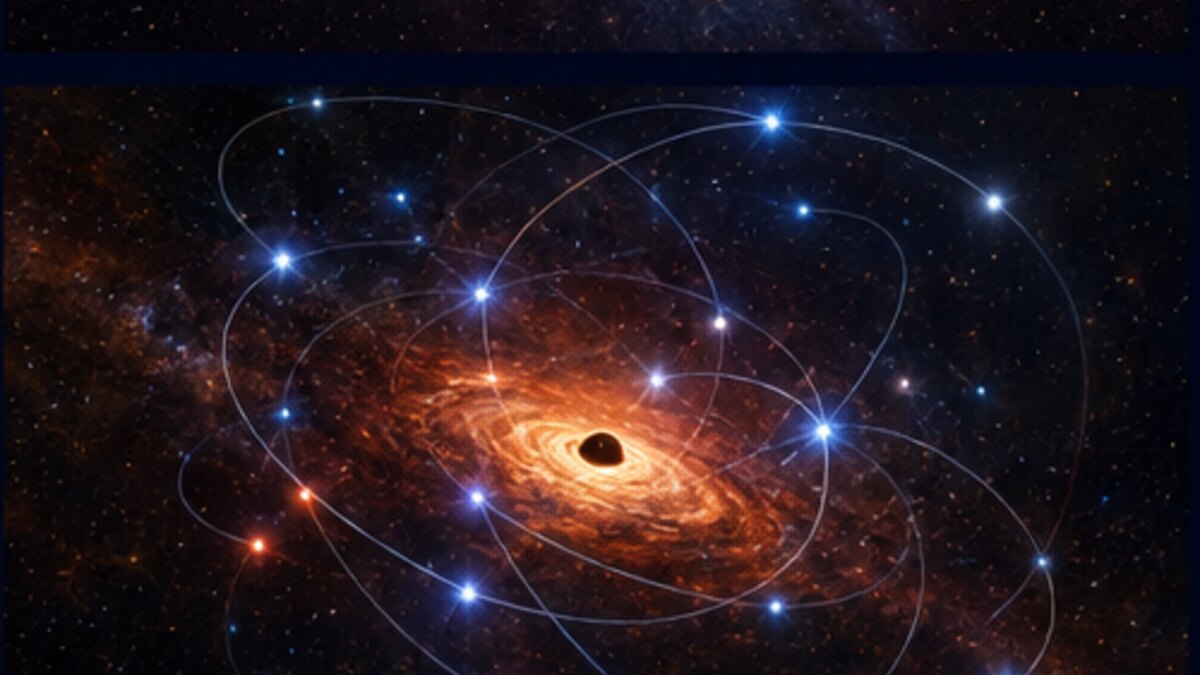
Sagittarius A* is the supermassive black hole at the center of our Milky Way. The fast orbits of nearby stars show that about four million Suns’ worth of mass is concentrated there.
More scientific detail +
The compact radio source associated with the Milky Way’s central supermassive black hole. Stellar orbits show that roughly four million solar masses are concentrated there, and horizon-scale observations reveal surrounding emission.
35Cosmology
Cosmic Dawn
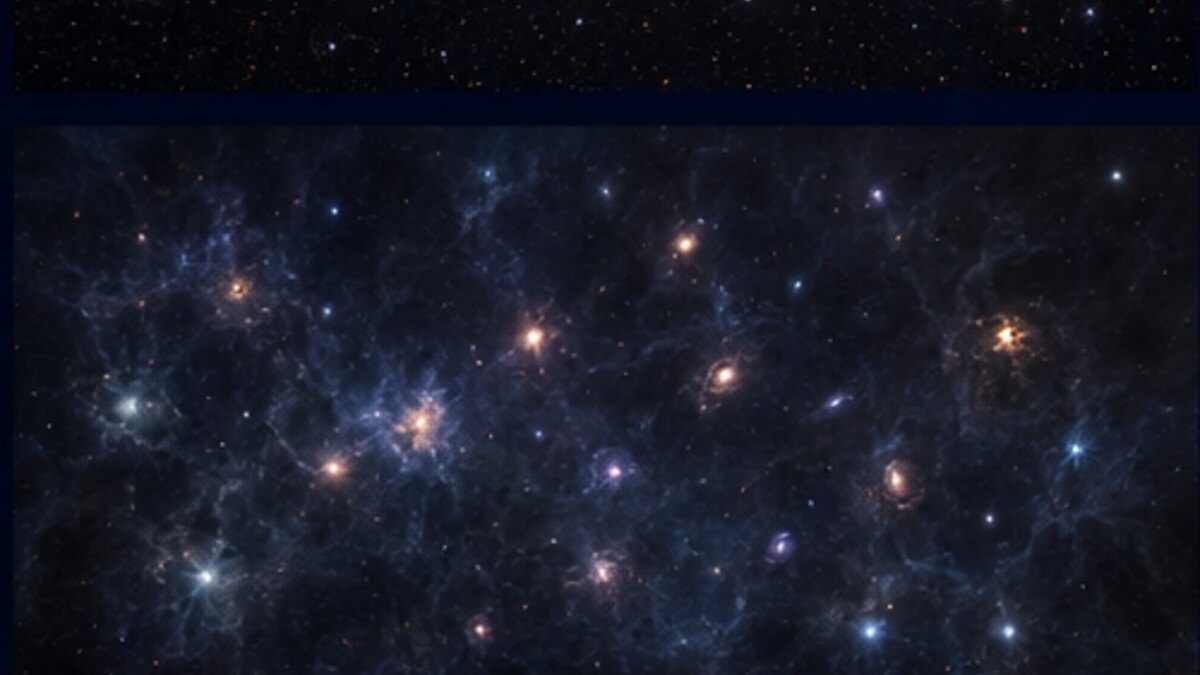
Cosmic dawn was the era when the first stars and galaxies began to shine. Their light ended the universe’s long dark period and started changing the gas between galaxies.
More scientific detail +
The era when the first stars and galaxies began shining after the cosmic dark ages. Their radiation and heavy-element production started transforming neutral intergalactic gas and building the visible universe.
36Cosmology
Reionization
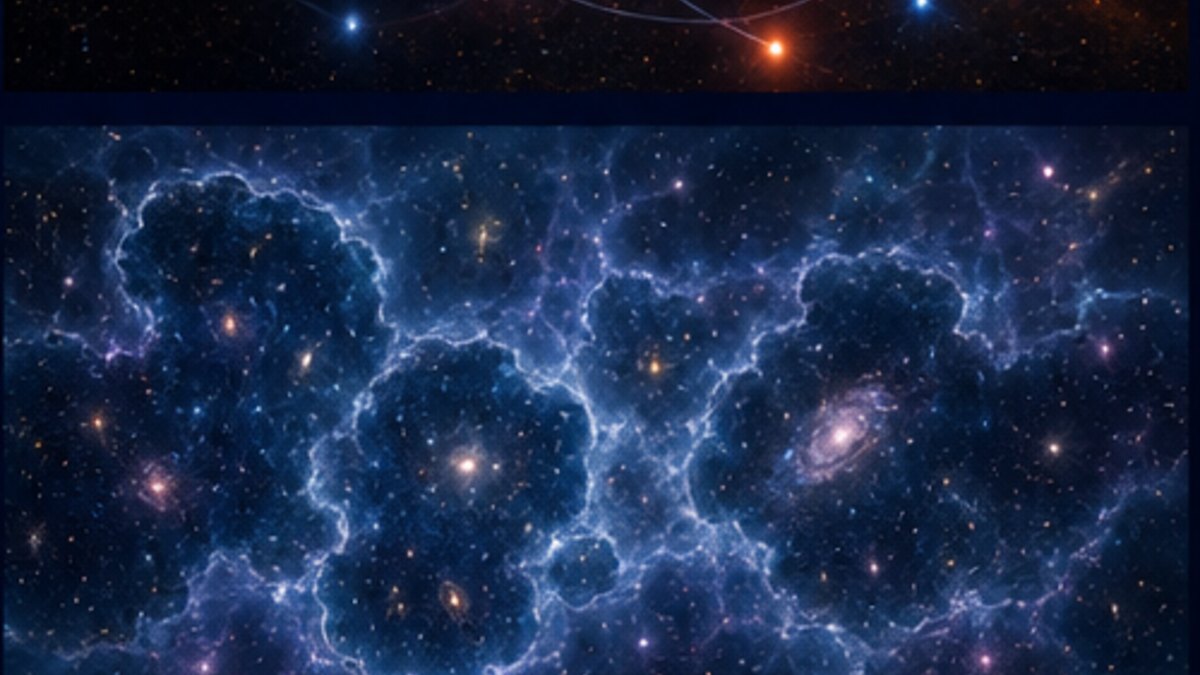
Reionization was the period when ultraviolet light from early stars and galaxies stripped electrons from much of the hydrogen between galaxies. It happened gradually in growing bubbles during the universe’s first billion years.
More scientific detail +
The extended period when ultraviolet radiation from early luminous sources ionized most intergalactic hydrogen. The process was patchy, with ionized bubbles growing and merging during the universe’s first billion years.
37Cosmology
Hubble Constant
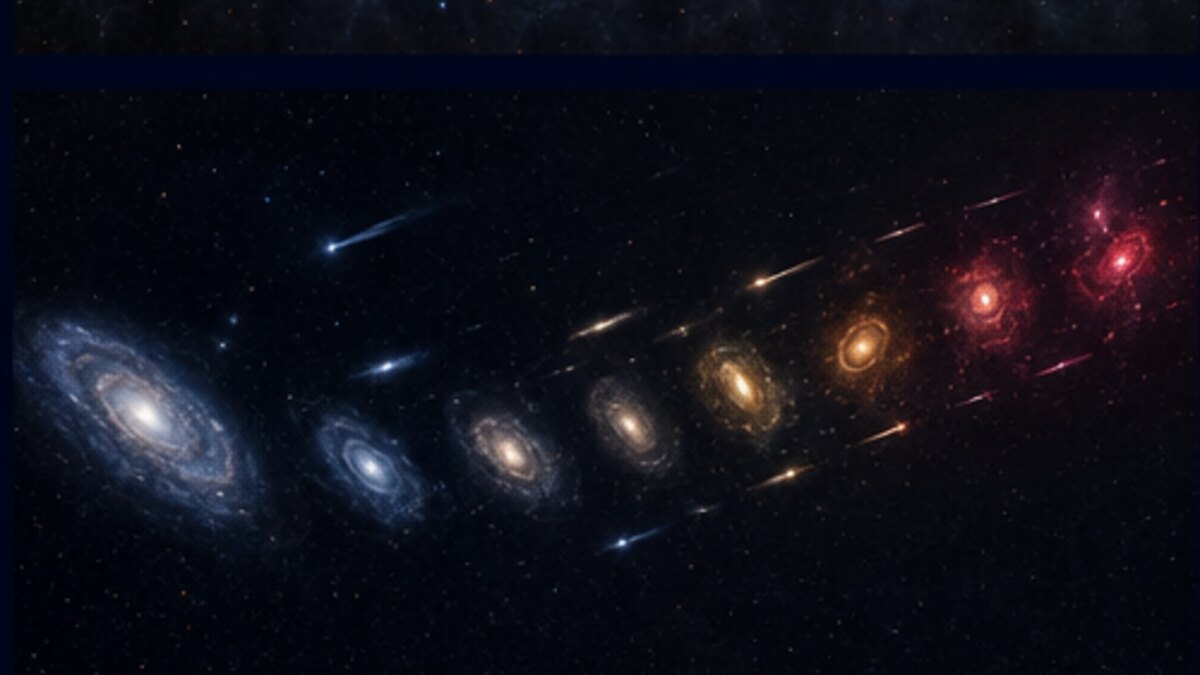
The Hubble constant describes how quickly the universe is expanding today. Different precise measurement methods currently give slightly different answers, creating an important puzzle for cosmologists.
More scientific detail +
The present-day proportionality between cosmic distance and recession rate in the smooth expansion model. Different high-precision methods currently yield values in tension, which may reflect hidden systematics or new physics.
38Cosmology
Critical Density
Critical density is the average amount of matter and energy that corresponds to a spatially flat universe. Measurements indicate that the universe is very close to this value.
More scientific detail +
The total mass-energy density associated with spatial flatness in standard cosmology. It depends on the expansion rate, and observations indicate the universe’s total density is very close to this value.
39Cosmology
Baryonic Matter
Baryonic matter is ordinary matter made mostly from protons and neutrons. Stars, planets, gas, dust, and people are all baryonic matter—even though together they make up only a small part of the universe.
More scientific detail +
Ordinary matter made primarily from protons and neutrons, including stars, planets, gas, dust, and living things. Despite dominating what we see directly, it accounts for only a small fraction of the cosmic energy budget.
40Cosmology
Vacuum Energy
Even apparently empty space may contain energy because quantum fields never become perfectly inactive. Vacuum energy could behave like dark energy, but theory and observation disagree enormously about how large it should be.
More scientific detail +
Energy associated with the lowest-energy state of quantum fields. A constant vacuum energy behaves gravitationally like a cosmological constant, but naive theoretical estimates disagree enormously with the observed dark-energy scale.
41Black Holes
Primordial Black Hole
A primordial black hole is a hypothetical black hole that may have formed from an unusually dense region soon after the universe began. None has been confirmed, but some could possibly account for a portion of dark matter.
More scientific detail +
A hypothetical black hole formed from unusually dense regions in the early universe rather than from a star. Searches across many mass ranges constrain their abundance; none has been confirmed, though they remain dark-matter candidates in limited windows.
42Planet Formation
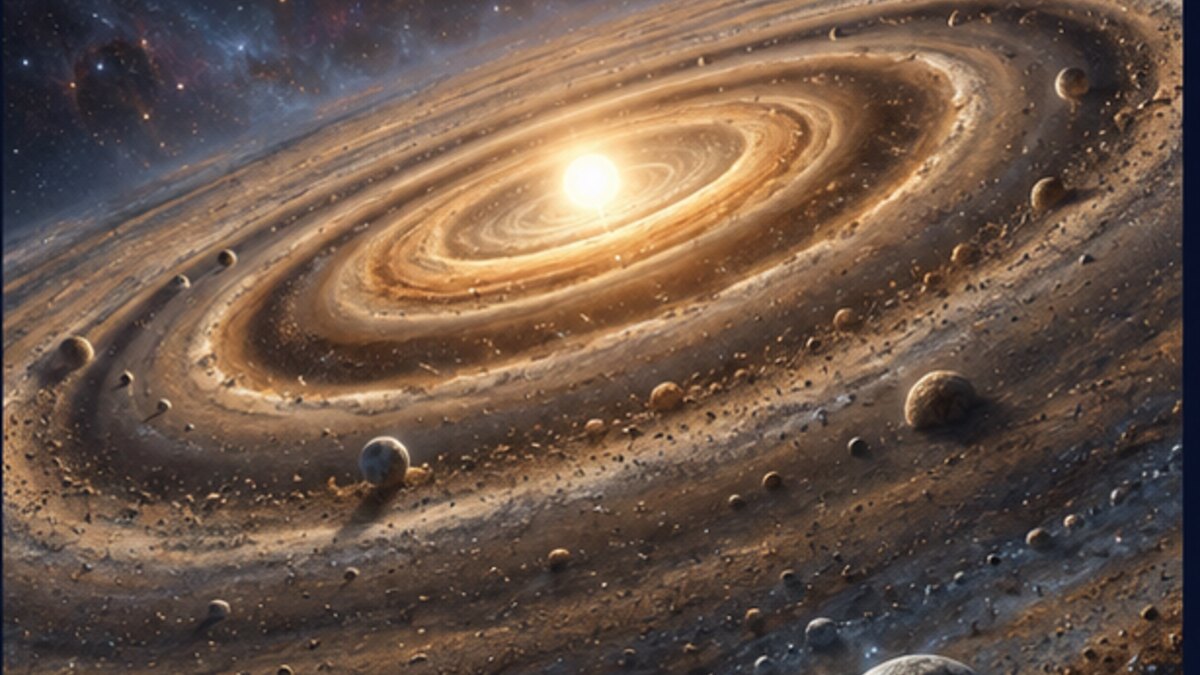
Protoplanetary Disk
A protoplanetary disk is a wide, rotating disk of gas and dust around a young star. Inside it, grains collide and grow until they become asteroids, moons, and planets.
More scientific detail +
A rotating disk of gas and dust surrounding a young star. Within it, grains grow into planetesimals and planets while gaps, rings, chemistry, migration, and gas loss shape the emerging system.
43Life in the Universe
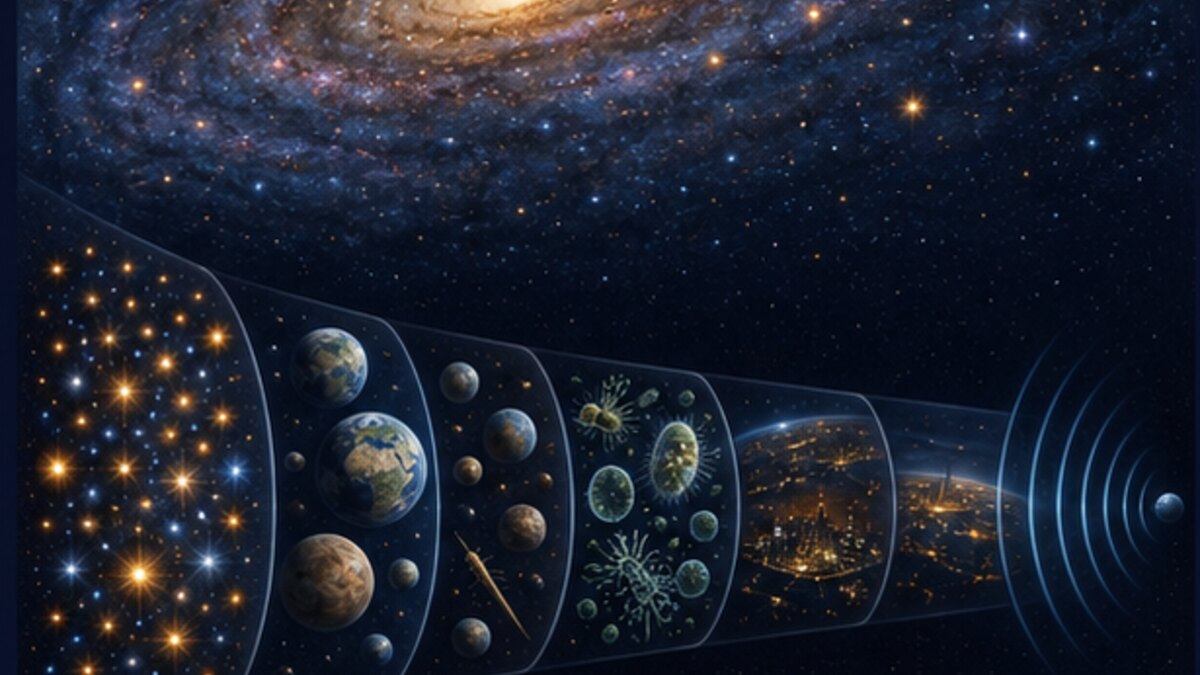
Drake Equation
The Drake Equation is a way to organize the factors that might determine how many detectable civilizations exist in our galaxy. It does not provide a dependable number yet; its value is showing us which questions and unknowns matter.
More scientific detail +
A framework that multiplies factors relevant to estimating the number of communicative civilizations in the Milky Way. It organizes uncertainty and research questions rather than producing a reliable answer from presently known values.
 01Light & Measurement