01CHAPTER
A cold cloud becomes a star-forming disk.
Collapse of the solar nebula
IN PLAIN LANGUAGE
Here is the big picture: A cold cloud becomes a star-forming disk. The main point to remember is this: Collapse amplified rotation.
See the fuller scientific explanation +
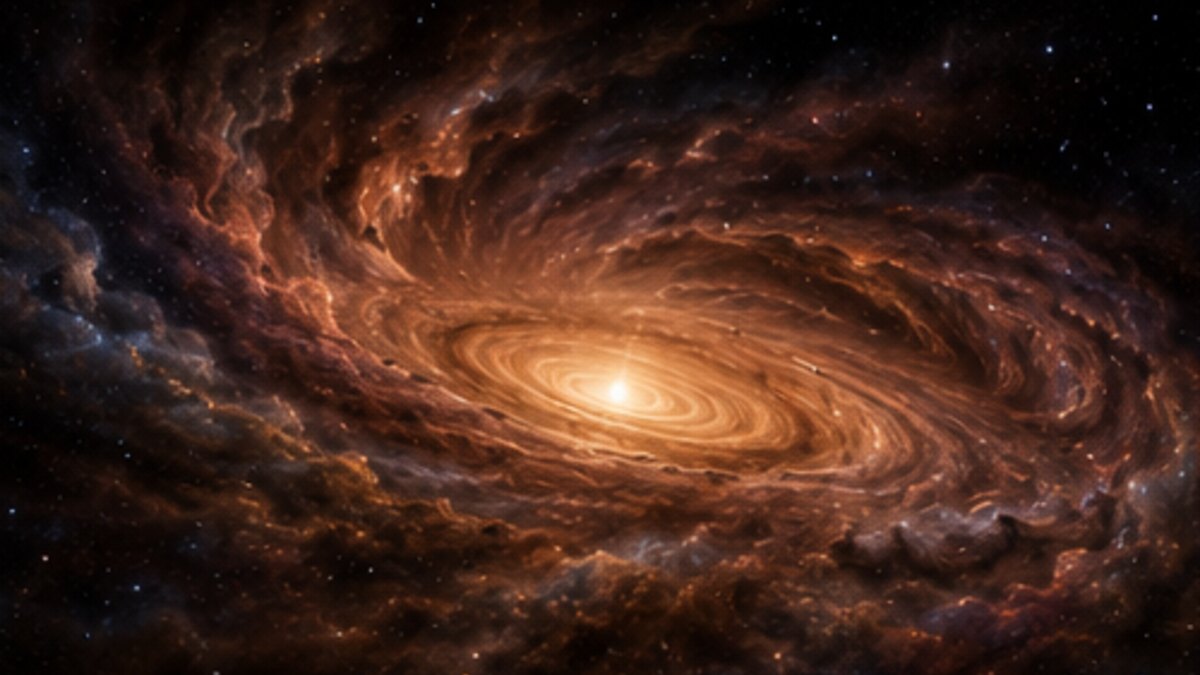
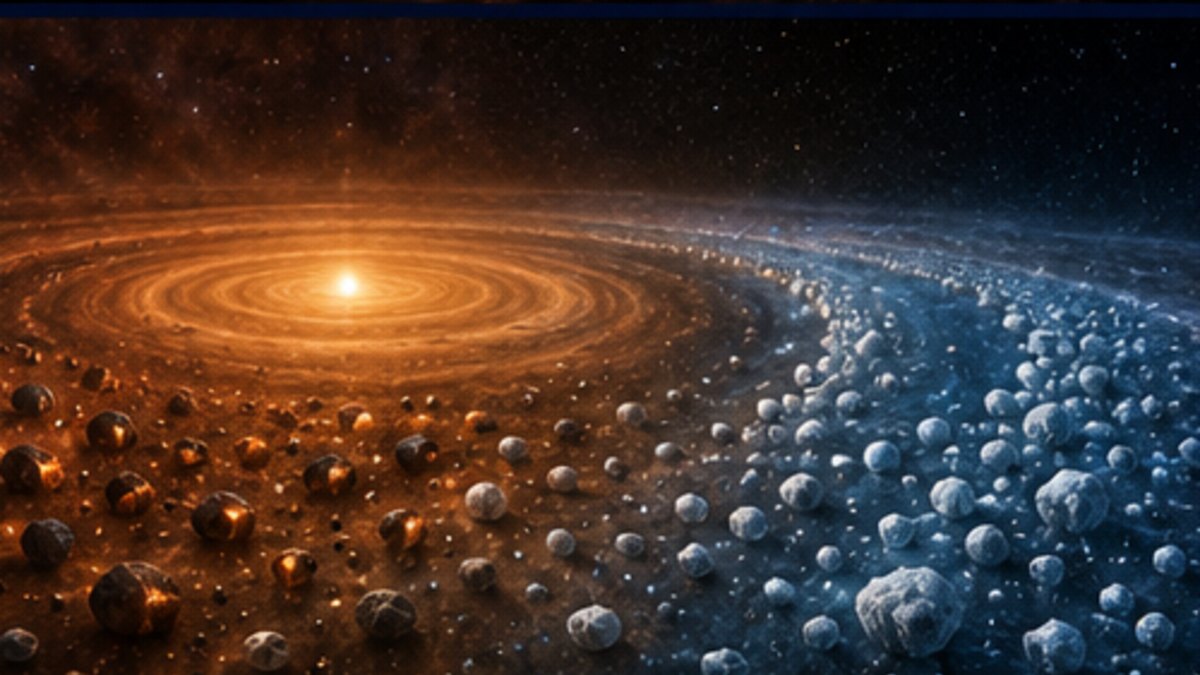
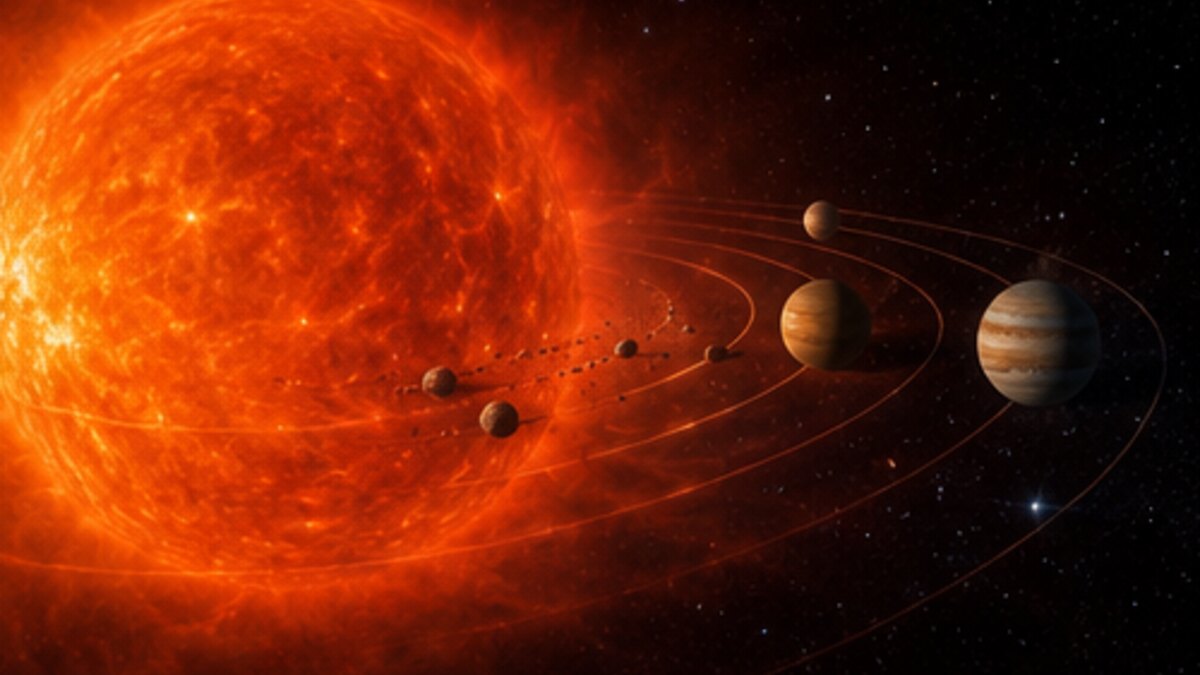
About 4.6 billion years ago, part of a molecular cloud collapsed under gravity. Conservation of rotational motion flattened the material into a rotating disk while most mass accumulated at the center. Heating and compression eventually ignited fusion in the proto-Sun.
Meteorite ages, chemical patterns, disk observations around young stars, and numerical models jointly support this nebular picture. It is a reconstruction from many independent clues rather than a photographed event.
THE POINTS TO REMEMBER
✦Collapse amplified rotation
✦A disk naturally follows from rotational motion
✦Meteorites preserve the earliest chronology
NEXT Now that this piece is in place, we can turn to Dust to planetesimals.