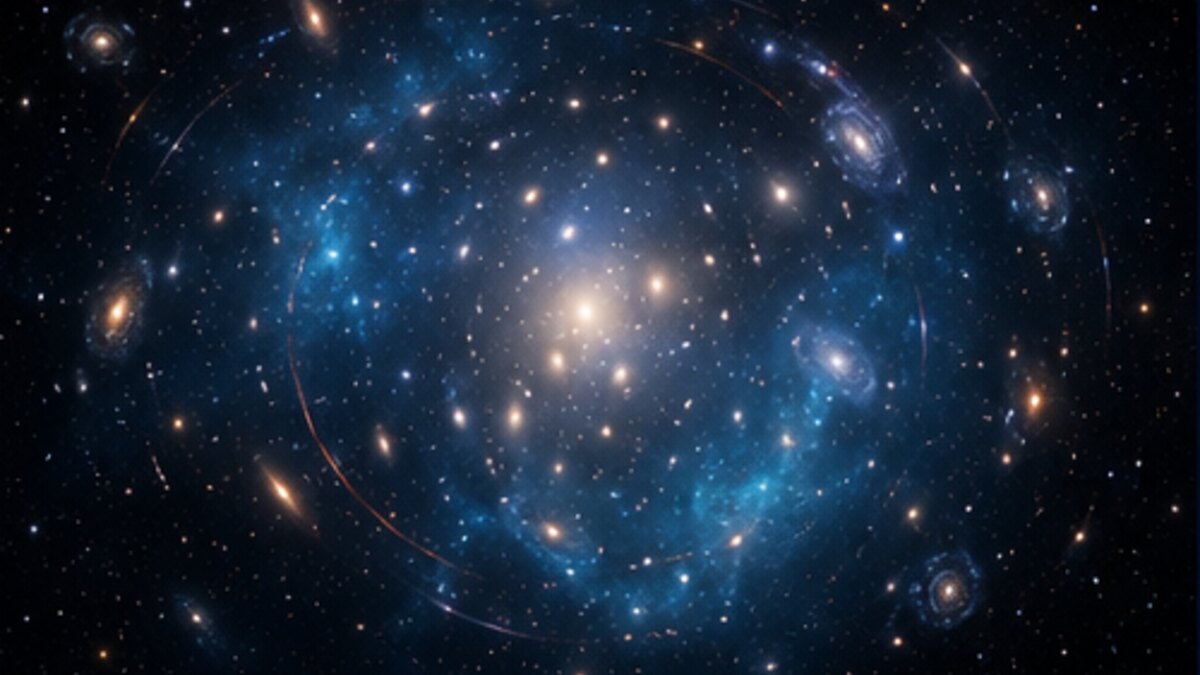
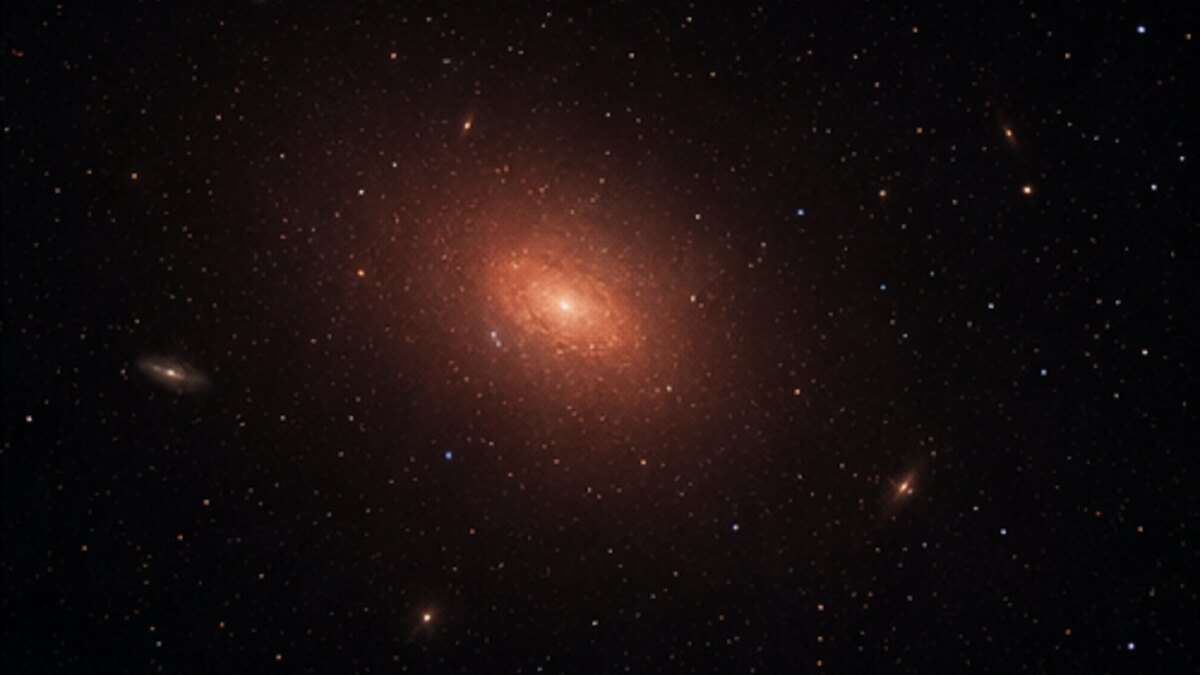
A galaxy is a huge, changing community of stars, gas, dust, planets, dark matter, and usually a central black hole. Galaxies grow by making stars, gathering gas, and merging with one another. Their shapes and colors are clues to what has happened during billions of years of change.
Start with the short explanation in each chapter. Open “Go a little deeper” only when you want more detail. The final line shows how the next chapter follows from the one you just read.
01CHAPTER
Galaxies grow inside the cosmic web.
From density fluctuations to halos
IN PLAIN LANGUAGE
Here is the big picture: Galaxies grow inside the cosmic web. The main point to remember is this: Dark matter supplies gravitational scaffolding.
See the fuller scientific explanation +
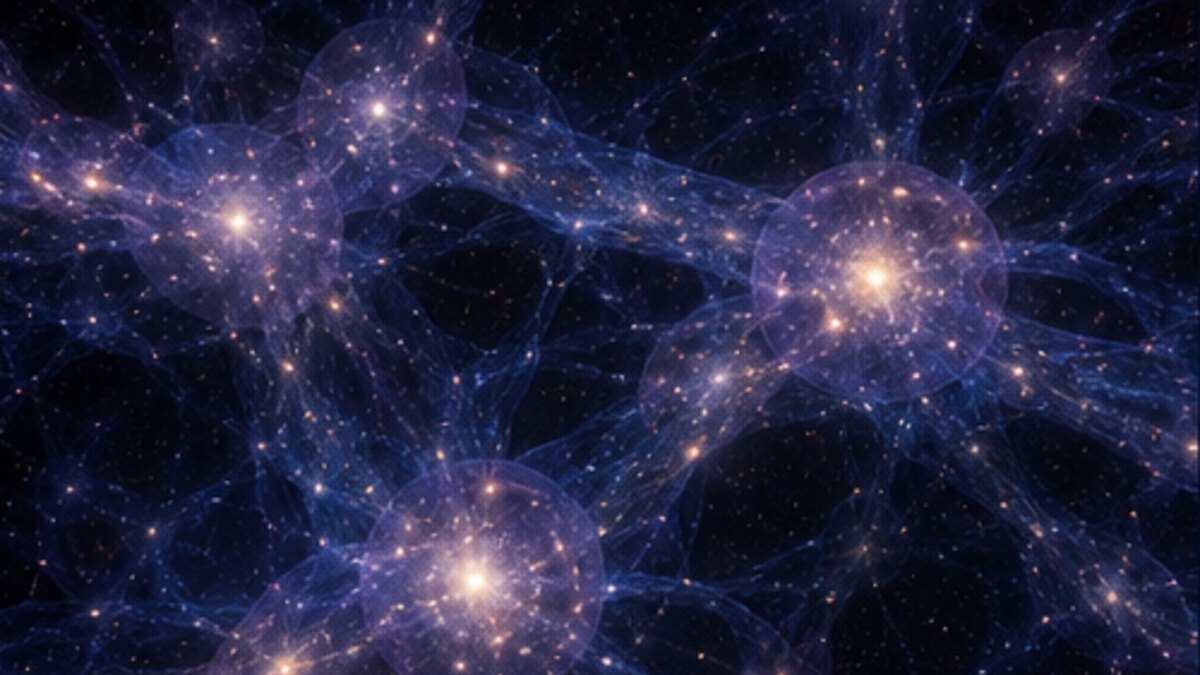
Tiny early density differences grew under gravity. Dark matter collapsed first into halos and filaments, providing potential wells into which ordinary gas could fall and cool.
Galaxy formation is therefore not an isolated collapse. It is a continuing exchange among halos, intergalactic gas, stars, black holes, satellites, and the larger cosmic environment.
THE POINTS TO REMEMBER
✦Dark matter supplies gravitational scaffolding
✦Gas must cool before forming stars
✦Environment changes a galaxy’s evolution
NEXT Now that this piece is in place, we can turn to The first galaxies.
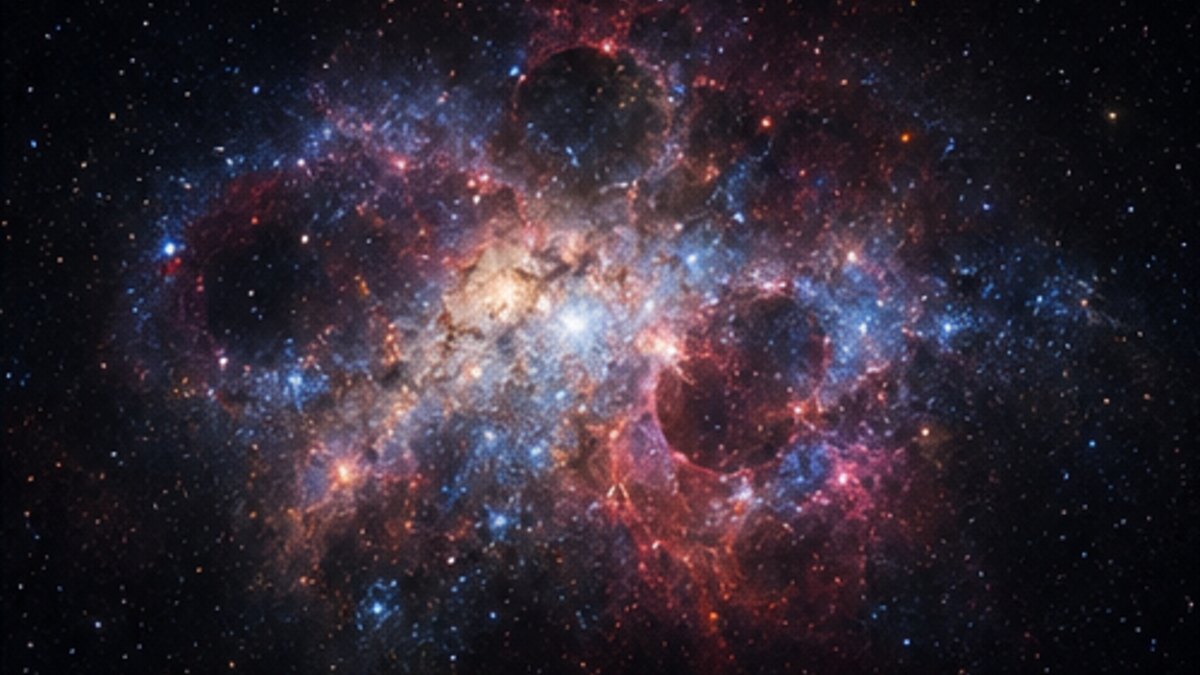
Galaxies occupy the knots and filaments of the cosmic web.
02CHAPTER
Cosmic dawn builds the earliest stellar systems.
The first galaxies
IN PLAIN LANGUAGE
Here is the big picture: Cosmic dawn builds the earliest stellar systems. The main point to remember is this: First galaxies hosted metal-poor stars.
See the fuller scientific explanation +
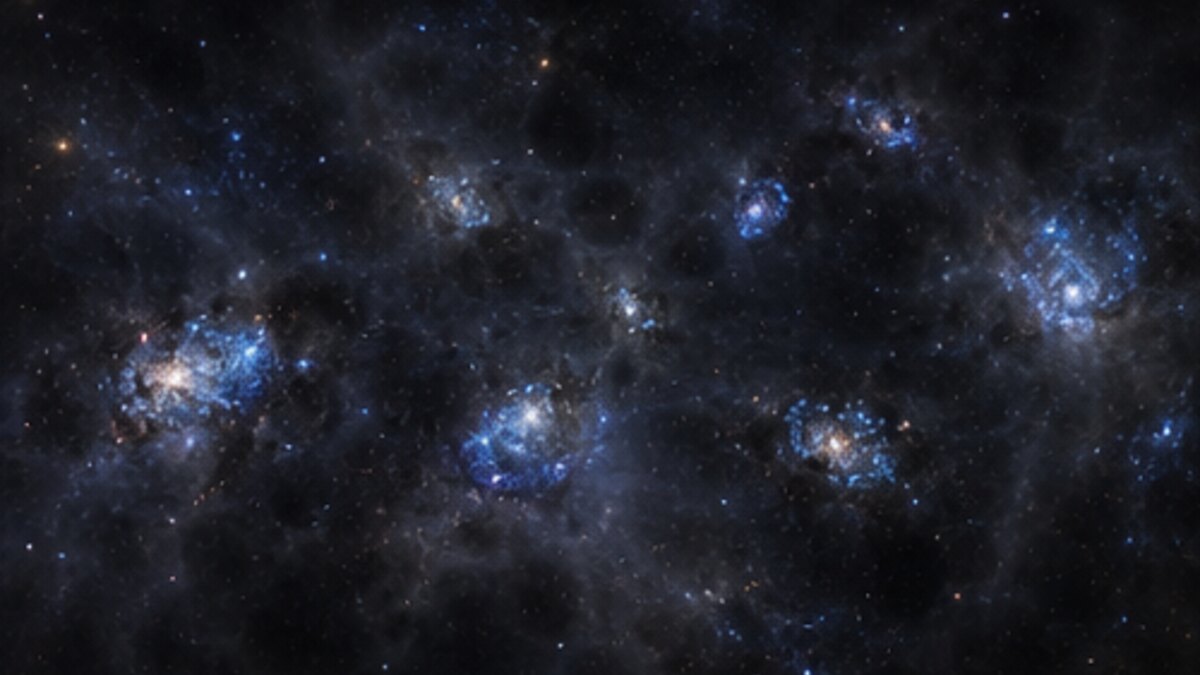
The first stars formed from nearly pristine hydrogen and helium. Their radiation, explosions, and chemical enrichment prepared gas for later generations and helped reionize intergalactic space.
Early galaxies were generally smaller, clumpier, and more rapidly changing than mature nearby systems. Webb observations are pushing direct study deep into this formative era.
THE POINTS TO REMEMBER
✦First galaxies hosted metal-poor stars
✦Rapid assembly produced irregular structures
✦Early light transformed intergalactic gas
NEXT Now that this piece is in place, we can turn to Spiral galaxies.
Young galaxies connect the first stars with the later visible universe.
03CHAPTER
Disks organize stars, gas, and waves.
Spiral galaxies
IN PLAIN LANGUAGE
Here is the big picture: Disks organize stars, gas, and waves. The main point to remember is this: Spiral arms are evolving patterns.
See the fuller scientific explanation +
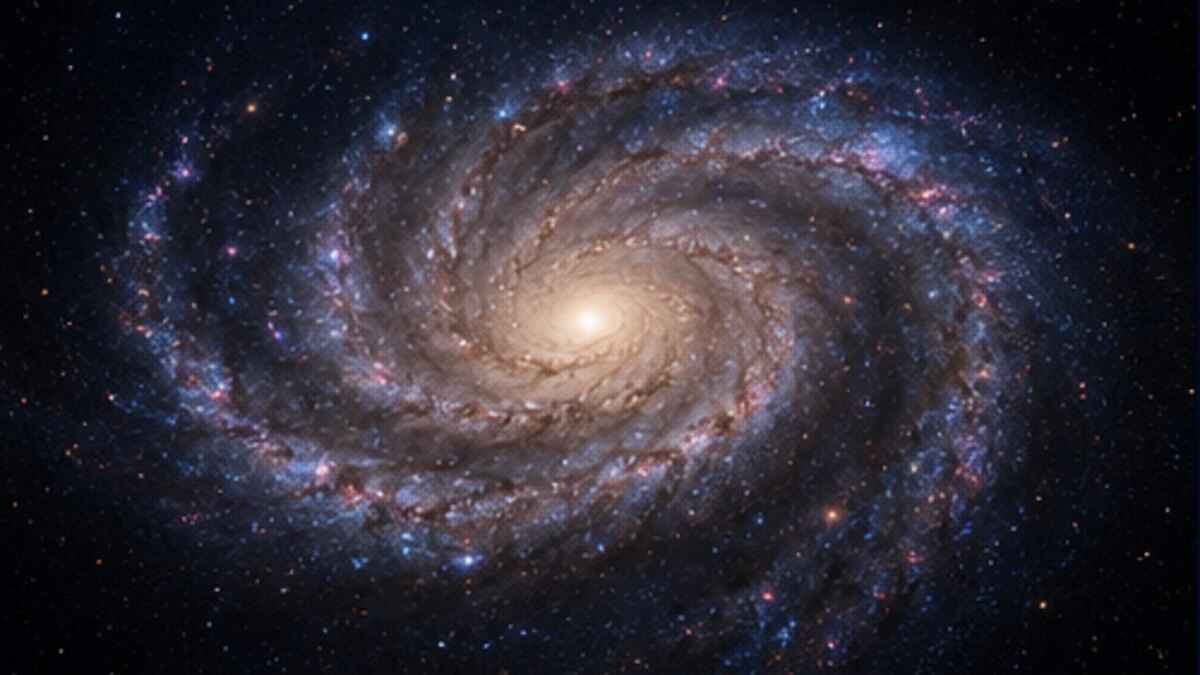
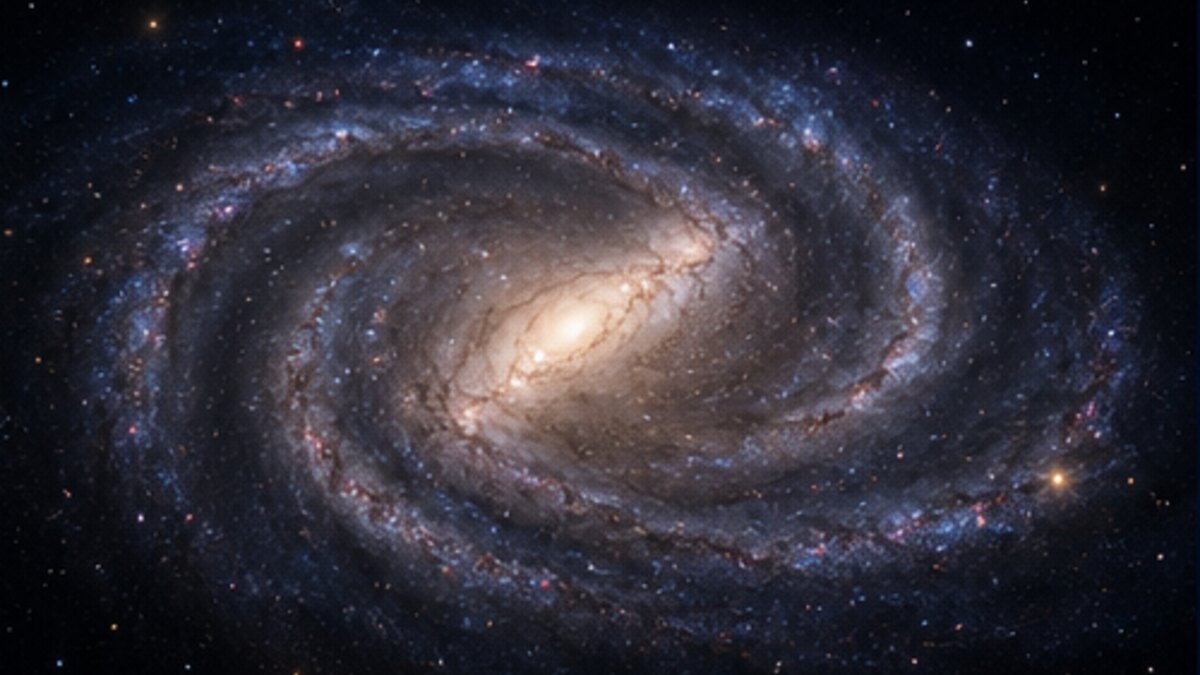
Spiral galaxies contain rotating disks, central bulges, dark halos, and often stellar bars. Their spiral arms are not fixed material spokes; they are patterns where gas compresses and young stars make the structure conspicuous.
Cold gas allows continued star formation, while bars and interactions can funnel material inward. Thin and thick disk populations preserve different phases of galactic history.
A spiral disk records rotation, star formation, and internal structure.
04CHAPTER
Not every galaxy builds an ordered disk.
Elliptical and irregular galaxies
IN PLAIN LANGUAGE
Here is the big picture: Not every galaxy builds an ordered disk. The main point to remember is this: Ellipticals are pressure-supported stellar systems.
See the fuller scientific explanation +
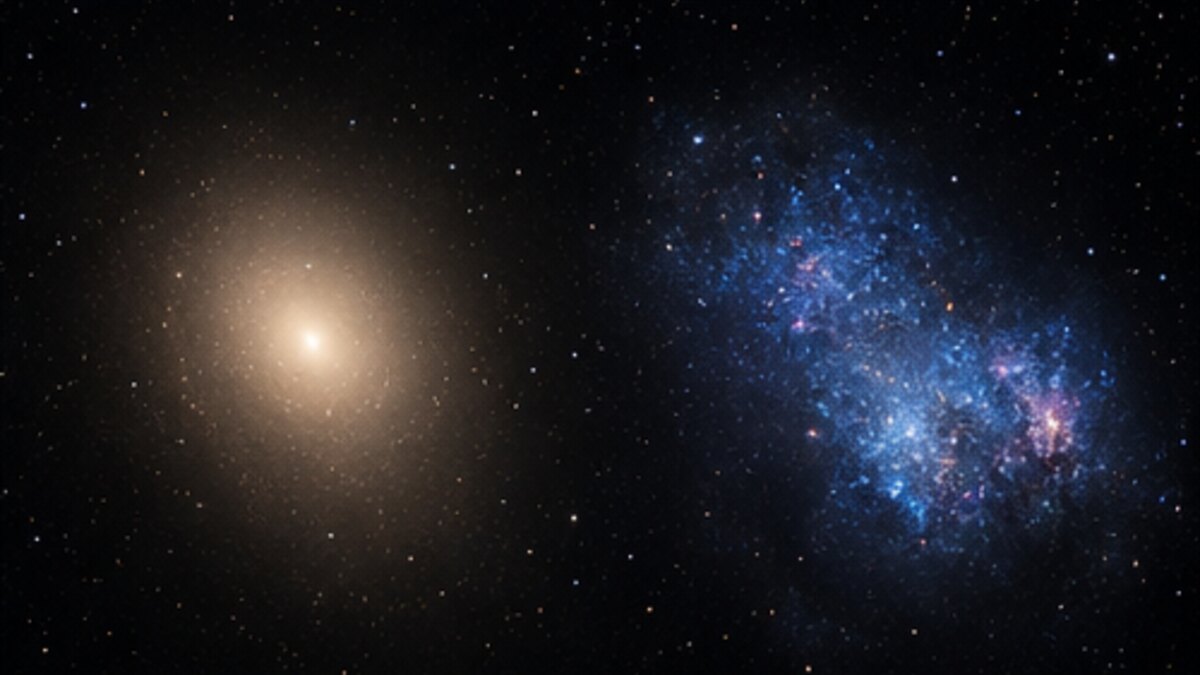
Elliptical galaxies range from small spheroids to giant systems dominating clusters. They usually contain older stars, less cold gas, and weaker current star formation than spirals.
Irregular galaxies may be low-mass systems, interaction-disturbed objects, or galaxies whose growth never produced a stable disk. Morphology is a snapshot of formation history, not a permanent label.
THE POINTS TO REMEMBER
✦Ellipticals are pressure-supported stellar systems
✦Irregular forms have several origins
✦Galaxy type can change through evolution
NEXT Now that this piece is in place, we can turn to The Milky Way.
Galaxy shapes reflect dynamics, gas supply, and environmental history.
05CHAPTER
Our barred spiral seen from within.
The Milky Way
IN PLAIN LANGUAGE
Here is the big picture: Our barred spiral seen from within. The main point to remember is this: The Milky Way is a barred spiral.
See the fuller scientific explanation +
The Milky Way contains a thin disk, thick disk, central bar and bulge, stellar halo, gas, dust, and an extended dark-matter halo. The Sun lies in the Orion Spur, far from the galactic center.
Because we observe from inside the disk, dust obscures visible light. Radio, infrared, stellar motions, chemical abundances, and large surveys reconstruct the galaxy’s three-dimensional structure.
THE POINTS TO REMEMBER
✦The Milky Way is a barred spiral
✦Different populations preserve different histories
The solar system orbits within one small region of a much larger galaxy.
06CHAPTER
Galaxies regulate their own growth.
Star formation and feedback
IN PLAIN LANGUAGE
Here is the big picture: Galaxies regulate their own growth. The main point to remember is this: Cold dense gas is necessary but not sufficient.
See the fuller scientific explanation +
Molecular clouds collapse into stars, but only a small fraction of gas becomes stars each dynamical time. Radiation, winds, jets, and supernovae heat and stir the surrounding medium.
Feedback can disperse clouds, drive galactic winds, and recycle enriched gas. It prevents simple runaway conversion of every available atom into stars.
Stellar birth and death continuously restructure galactic gas.
07CHAPTER
Small regions influence entire galaxies.
Central black holes and active nuclei
IN PLAIN LANGUAGE
Here is the big picture: Small regions influence entire galaxies. The main point to remember is this: the gradual buildup of matter (accretion) powers active nuclei.
See the fuller scientific explanation +
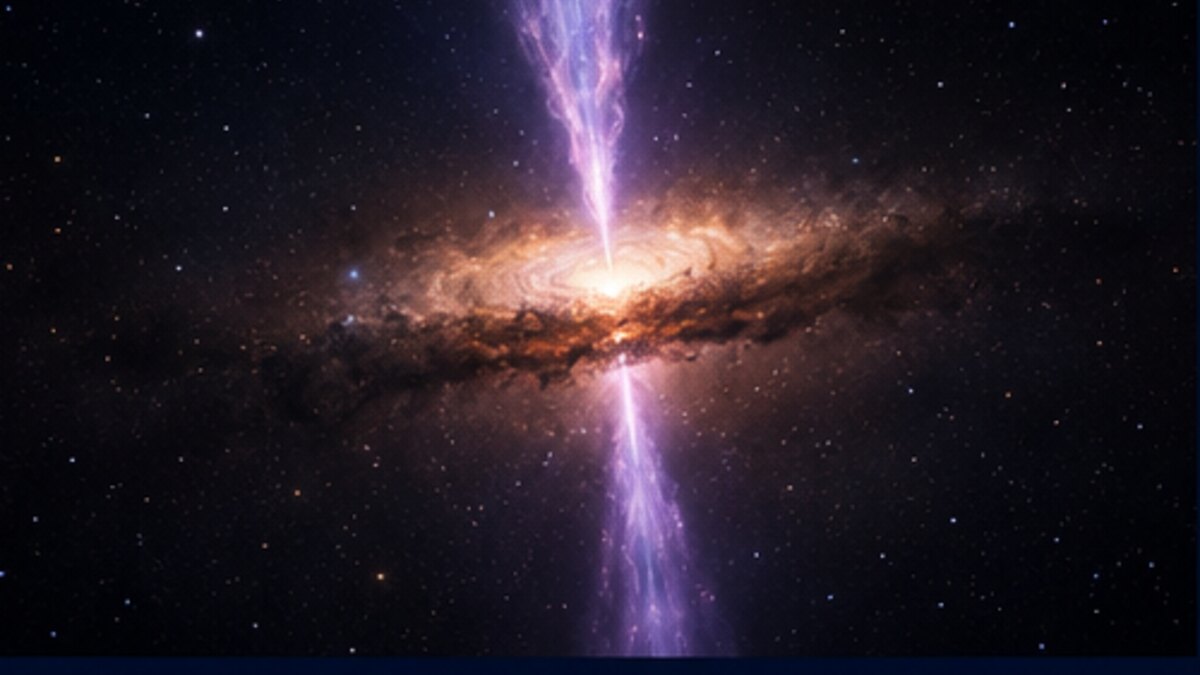
Most large galaxies host supermassive black holes. When gas accretes rapidly, the nucleus can shine as a quasar and launch jets or winds across intergalactic distances.
Energy from the nucleus can heat or expel star-forming gas. Correlations between black-hole mass and galactic bulges suggest that black holes and their hosts evolve together.
THE POINTS TO REMEMBER
✦the gradual buildup of matter (accretion) powers active nuclei
A feeding black hole can become the most luminous component of a galaxy.
08CHAPTER
Galaxies grow by combining.
Mergers and tidal encounters
IN PLAIN LANGUAGE
Here is the big picture: Galaxies grow by combining. The main point to remember is this: Gravity reshapes whole galaxies.
See the fuller scientific explanation +
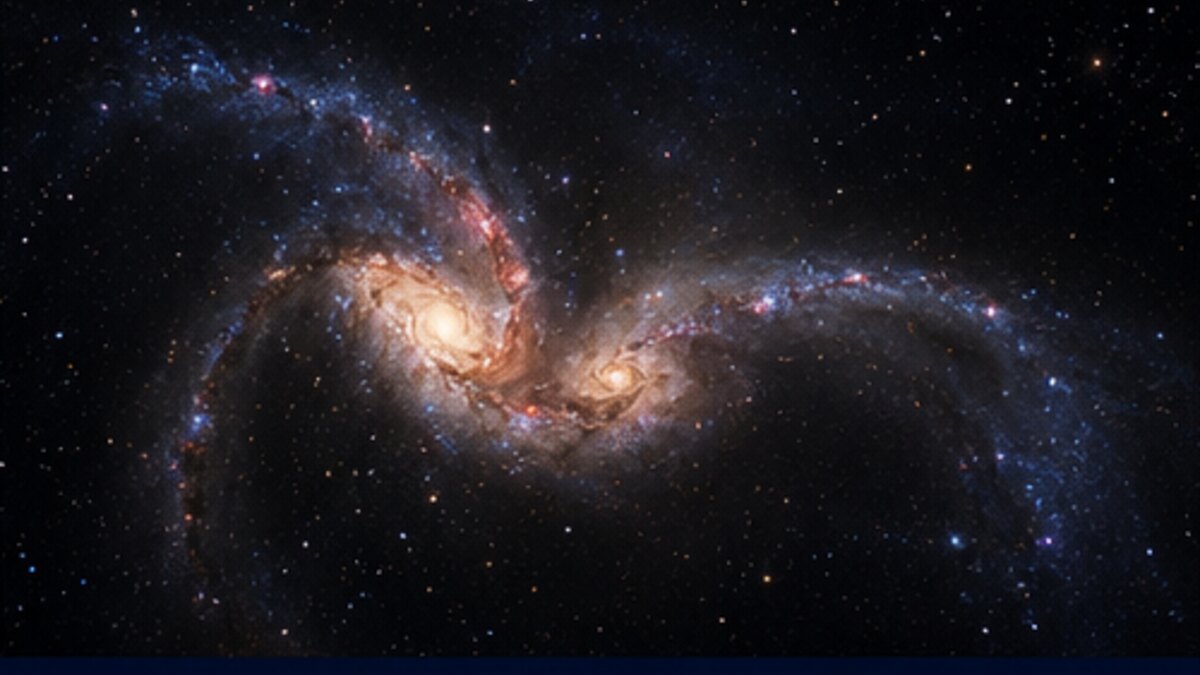
Close passages produce tidal tails, bridges, warped disks, and bursts of star formation. Major mergers can destroy ordered disks and build spheroidal remnants, while minor mergers gradually thicken and enlarge galaxies.
Stars rarely collide directly because they are widely separated, but gas clouds interact strongly. Central black holes may eventually form binaries and merge.
Interacting galaxies expose gravity operating on hundreds of thousands of light-years.
09CHAPTER
A galaxy’s neighborhood matters.
Clusters, groups, and environment
IN PLAIN LANGUAGE
Here is the big picture: A galaxy’s neighborhood matters. The main point to remember is this: Gas stripping can quench star formation.
See the fuller scientific explanation +
Most galaxies live in groups, while rich clusters contain hundreds or thousands. Hot intracluster gas, tidal forces, and high-speed encounters can strip a galaxy’s fuel and transform its morphology.
Clusters also act as gravitational lenses and cosmic laboratories for dark matter. Their galaxies, gas, and total gravitating mass can be measured separately.
Galaxy clusters combine stars, hot gas, dark matter, and strong environmental effects.
10CHAPTER
Growth eventually slows.
The long evolution of galaxies
IN PLAIN LANGUAGE
Here is the big picture: Growth eventually slows. The main point to remember is this: Quenching has several mechanisms.
See the fuller scientific explanation +
Galaxies acquire gas, form stars, merge, and lose or heat their fuel. A quenched galaxy may appear red because young blue stars are no longer being produced.
Future cosmic acceleration will isolate the Local Group from distant systems. The Milky Way and Andromeda are expected to merge, while star formation gradually fades as usable cold gas declines.
THE POINTS TO REMEMBER
✦Quenching has several mechanisms
✦Color traces stellar population age
✦Cosmic expansion shapes the remote future
Galaxies evolve from active growth toward increasingly quiet stellar populations.
THE ESSENTIAL THREAD
Three ideas worth keeping.
01Galaxies grow through inflow, star formation, and mergers.
02Dark-matter halos provide gravitational scaffolding.
03Feedback from stars and black holes regulates growth.